






Guyana’s Gas-to-Energy Project at Wales, Region Three, is moving into a critical stage of development, with the first gas turbine expected to undergo initial firing and testing in December as the Government works to expand national electricity generation and keep pace with rapidly rising demand.
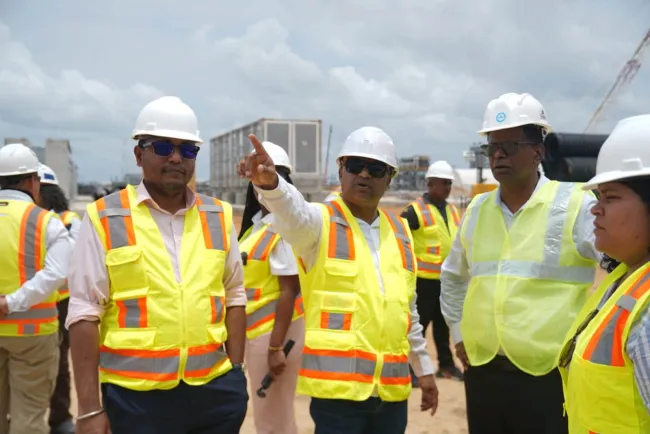
Minister of Public Utilities and Aviation Deodat Indar recently visited the project site to assess ongoing construction and installation works. During the visit, he said preparations are advancing to enable the first turbine to receive natural gas, with key components of the facility being installed and brought into operation.
Among the infrastructure being developed are the natural gas liquefaction plant, sludge catcher, associated piping and other systems required to support the movement and processing of gas before it is used for electricity generation.
The first turbine is expected to contribute approximately 57 megawatts (MW) of additional electricity to Guyana’s national grid. This will represent an important increase in available generation capacity at a time when electricity consumption is growing across households, businesses and industries.
Phase One of the Gas-to-Energy Project is designed to generate a total of 300 MW of electricity. The project is expected to significantly strengthen Guyana’s power-generation capacity and provide additional support to the country’s rapidly expanding economy.
 The Wales Gas-To-Energy Project
Minister Indar emphasised the urgency of bringing new generation capacity online, particularly as extreme temperatures continue to push electricity consumption higher. Increased use of air-conditioning and other electrical appliances during periods of intense heat places additional pressure on the national grid.
“The grid needs the power. There’s El Niño happening, there’s a heat wave, people are using a lot of electricity in Guyana, and we have to meet that demand,” Indar said.
The Wales facility is being developed through the coordinated efforts of multiple technical and construction teams. According to the minister, approximately 1,300 workers are currently engaged at the project site, reflecting the scale of the development and the level of activity underway.
Once the first turbine completes its initial firing and testing, engineers will continue with the necessary commissioning activities before the unit is brought fully online and integrated into the national electricity system.
The complete Phase One generation facility is expected to comprise four gas turbines and two steam turbines, which together are designed to deliver the targeted 300 MW of electricity. A dedicated substation is also being established as part of the project to facilitate the transmission of electricity generated at Wales into the national grid.
The transmission infrastructure is an important component of the wider Gas-to-Energy programme. With additional generation coming online, Guyana must also have sufficient transmission capacity to move electricity from the plant to areas where demand is highest.
To support this requirement, the Government is simultaneously undertaking major upgrades to the national transmission network. Minister Indar said approximately 425 kilometres of new transmission lines are being constructed to improve the distribution of electricity, strengthen the network and reduce pressure on existing infrastructure.
The investment in generation and transmission is taking place as Guyana experiences rapid economic expansion. Growing residential communities, new commercial developments, industrial activity and major infrastructure projects are all contributing to higher electricity consumption.
 Electricity towers at the Wales Gas-To-Energy Plant
The Wales Gas-to-Energy Project is therefore expected to become a major component of Guyana’s future electricity system. By utilising natural gas to generate power, the project is intended to provide additional and more reliable generation capacity while supporting the country’s broader economic development.
As work progresses towards the first turbine’s initial firing in December, attention will increasingly turn to testing, commissioning and the eventual integration of the new capacity into the national grid.
With electricity demand continuing to rise, the successful completion and commissioning of the Wales facility will be critical to ensuring that Guyana’s power system can keep pace with the country’s rapidly changing economic and energy needs.