


The Cancer in the Commonwealth: a Lancet Oncology Commission report is scheduled to be officially launched on November 4, 2026, at the Commonwealth Heads of Government Meeting (CHOGM 2026), according to announcements by The Lancet Oncology on the social media platform X. The report culminates a study that has lasted three years. The decision to launch the report in Antigua and Barbuda during the Commonwealth Heads of Government Meeting 2026 was made during the 2026 Inaugural Commonwealth Health Coordination Forum in Geneva. The Chair of that first Forum was Guyana’s Ambassador in Geneva, Dr Leslie Ramsammy.
At that first forum, President Irfaan Ali made a virtual appearance. He stated, “Guyana applauds the Commonwealth for leading the fight against Non-Communicable Diseases (NCDs), especially the bold, necessary goal to eliminate cervical cancer by 2050. Guyana is also clear that no one country can end this form of cancer alone. This is why Guyana welcomes deeper collaboration across the Commonwealth and beyond.”
Minister Frank Anthony will be a panellist when the report is launched today (November 3) at the side-lines of the Commonwealth Heads Meeting. The First Lady of Guyana will be part of the launching. One of the strategies that will be implemented to ensure a more comprehensive cancer response around the world is the mobilisation of First Ladies as champions in the fight against cancer. Guyana’s First Lady will be among the pioneering group of First Ladies that will champion an expanded response to the cancer crisis around the Commonwealth and the world. Ambassador Leslie Ramsammy will make an opening address at the launch. We reproduce part of his address in this week’s Rumination column.
I’m truly sorry that I cannot join you in person today, but I’m with you completely in purpose.
That cancer control is on the very packed agenda at the Commonwealth Heads of Government Meeting, in front of Heads of Government, Ministers, First Ladies, and spouses, tells us something important: cancer is not just a matter for Health Ministries but for leaders too.
I was privileged to chair the inaugural Commonwealth Health Coordination Forum last May in Geneva. Ministers of Health, Ambassadors, High Commissioners, and more than 60 partner organisations came together under one theme: Shaping the Future of Cancer Across the Commonwealth.
We wanted to find where Commonwealth cooperation could add practical value on diagnosis, treatment, palliative care, and on the data we need to plan and hold ourselves accountable. The reason we could ask those questions with confidence was that the Commission produced the evidence which was the foundation for all our discussions.
So, today’s launch completes a long journey that we have all taken together, that Geneva helped to shape, and I could not be prouder to see it arrive at the Commonwealth Heads of Government Meeting in Antigua and Barbuda.
Excellencies, let me say it as simply as I can: Cancer is a test of the whole health system. A woman cannot be screened for cervical cancer if there is no primary care clinic near her home. A child’s leukaemia cannot be diagnosed without a working laboratory. A man with prostate cancer cannot be treated without trained staff, essential medicines, and functioning referral pathways. And no one should face the end of life without palliative care. Each of those components also serves people with diabetes, heart disease, maternal health, and infectious disease. That is why cancer control is not a separate, vertical programme.
When we strengthen services for cancer, we strengthen services for everyone. When we invest in primary care, workforce, diagnostics, and data, we also strengthen our response to cancer.
As a former Minister of Health, I know how difficult choices are when budgets are tight and every investment seems to compete with another. That’s why the Commission’s evidence matters so much. By demonstrating that every dollar invested in scaling up cancer control returns between 16 and 24 dollars in health and economic benefits, it shows that investments in cancer control are among the best that Governments can make.
And for the first time, through the Commonwealth Observatory for Health Systems and Cancer Control, our policymakers will have contextual information across some 800 health-system and cancer-control variables. Good data allow us to make good policy. So let me make three requests.
First, let’s make cancer control part of our national plans for universal health coverage. Prevention, early detection, treatment and palliative care belong in the essential package.
Second, let’s learn from one another. The Commonwealth allows a small island state and a large country to sit together as equals. Antigua and Barbuda’s work on cervical cancer elimination is exactly the kind of experience we must share. Third, let’s keep our promises. The Commission has given us the evidence, and the Coordination Forum in Geneva has a shared direction. The Commonwealth Heads of Government Meeting 2026 must now give us the political will to deliver. CARICOM in 2007 in the Port of Spain and the Commonwealth in 2008 in Geneva gave political leadership and issued a call for action on the NCDs that led to the first UN high-level meeting on the NCDs. Let CHOGM 2026 do the same for cancer.
Subscribe to Updates
Get the latest news from DemocracyGuyana.com
Guyana’s leadership role in the commonwealth and global fight against cancer
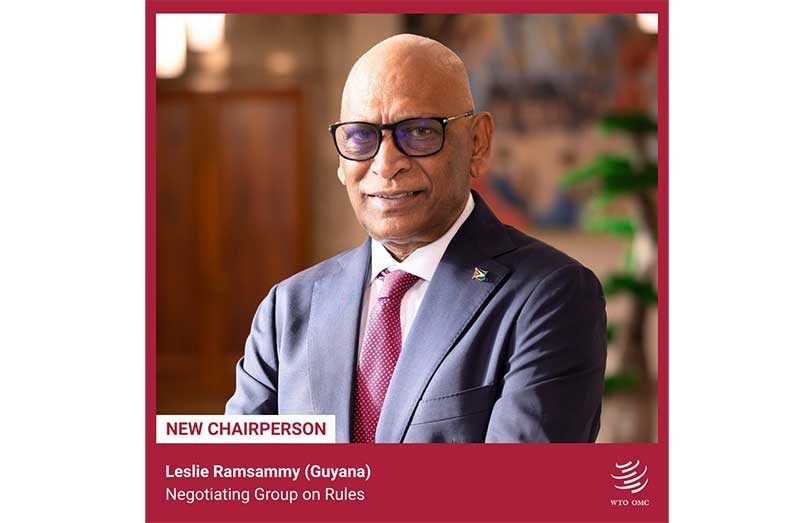
New chairperson, Dr. Leslie Ramsammy