






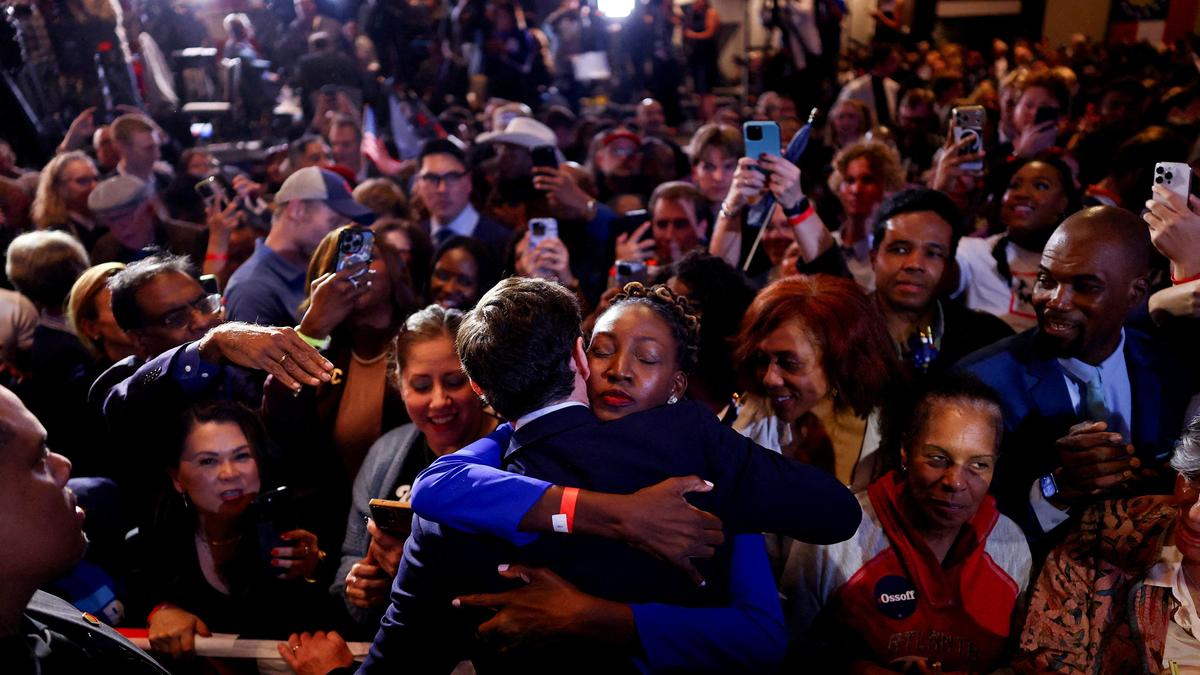
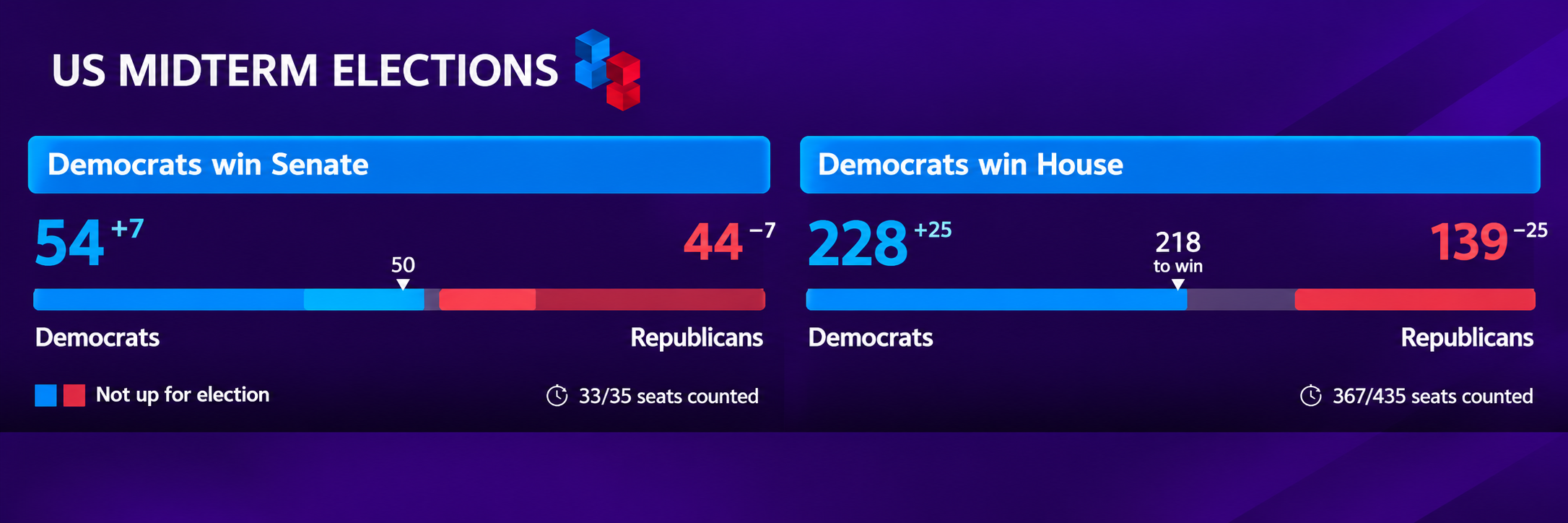
The Democratic Party has secured a major victory in the 2026 United States midterm elections, dealing a significant political setback to President Donald Trump and his Republican Party. The results mark a major shift in the political landscape of Washington, with Democrats making substantial gains in Congress and challenging the Republican administration’s control over the legislative agenda.
The midterm elections, held halfway through the president’s four-year term, are widely viewed as a referendum on the administration’s performance, policies and leadership. The Democratic victory signals growing voter dissatisfaction with the Republican leadership and could have far-reaching consequences for the remainder of Trump’s presidency.
The victory is particularly significant because Democrats managed to defeat Republican candidates in several traditionally conservative states, demonstrating the breadth of the political shift. Among the notable Senate victories were races in Texas, Kansas, Iowa, South Carolina, North Carolina, Ohio and Maine. In Maine, Democrat Troy Jackson defeated five-term Republican Senator Susan Collins, ending her nearly three-decade tenure. In Kansas, Democrat Adam Hamilton secured a historic Senate victory, becoming the firs Democrat elected to the seat since 1932.
In Texas, Democrats achieved another major breakthrough, with James Talarico winning a Senate seat and Gina Hinojosa defeating Republican Governor Greg Abbott. The results marked a significant change in a state that has long been a stronghold of the Republican Party. Democrats also recorded important victories in the House of Representatives, flipping several Republican-held districts across Pennsylvania, Kentucky, Arizona, North Carolina, Wisconsin and New Jersey.
The election also produced historic milestones. In Michigan, Democrat Abdul El-Sayed defeated Republican Mike Rogers, becoming the first Muslim elected to the US Senate. Meanwhile, former Atlanta Mayor Keisha Lance Bottoms won the Georgia gubernatorial race, becoming the first Black woman elected governor in American history.

Economic concerns and Iran conflict influence election
The cost of living emerged as one of the central issues influencing voters. Rising fuel prices, inflation, tariffs and concerns about the broader economy contributed to dissatisfaction with the Republican administration. Trump’s decision to pursue military action against Iran also became a major issue during the campaign, with the conflict adding to concerns over energy prices and the country’s foreign policy direction.
According to exit polls, around half of voters viewed the midterm elections as an opportunity to express their dissatisfaction with Trump, while approximately three-quarters said they were angry or dissatisfied with the direction of the country. Around 70 per cent also wanted Congress to exercise stronger checks and balances on presidential power.
Trump responds to Democratic victory
Reacting to the results, Trump congratulated the Democrats and acknowledged that they had performed well in the elections. In an interview with Fox News, he said the party had worked hard for the victory. He also acknowledged that the conflict with Iran may have contributed to the Republican defeat.
However, Trump rejected the suggestion that the outcome represented a personal setback for him, arguing that he had not been on the ballot. He also indicated his willingness to accept the election results and work with Democratic lawmakers.

At the same time, Trump signalled that he would use his presidential veto power against legislation passed by Democrats that he considers unacceptable. His response suggests that cooperation between the White House and the newly strengthened Democratic Congress could remain difficult.
What the Democratic victory means for Trump’s presidency
The Democratic takeover of both chambers of Congress is expected to significantly reshape American politics during the final two years of Trump’s current presidential term. With control of the House and Senate, Democrats will have greater authority to influence legislation, scrutinise government decisions, investigate the administration and challenge presidential appointments.
The victory could also lead to increased congressional investigations into the administration’s handling of the Iran conflict, immigration policies and allegations of corruption. Democrats may also seek to block or delay key Republican policy proposals and demand greater accountability from the White House.
The new Congress is expected to begin its work in January 2027, ushering in a period of divided government in Washington. While Democrats will have greater legislative influence, Trump’s presidential veto power will remain an important obstacle to their proposals.
The 2026 midterm results therefore represent more than a change in congressional control. They mark a significant political warning for Trump and the Republican Party, highlighting voter concerns over the economy, foreign policy and the direction of the country. The coming months will reveal how effectively Democrats use their newly acquired power and how the Trump administration responds to a Congress increasingly determined to challenge its agenda.