






Guyana’s Committee of Supply signed off on nearly $12.9 billion in supplementary funding on Monday evening, with the bulk of the money earmarked for a power grid that is struggling to keep pace with the country’s rapid growth — and a chunk set aside to continue construction on a new terminal at the Cheddi Jagan International Airport.
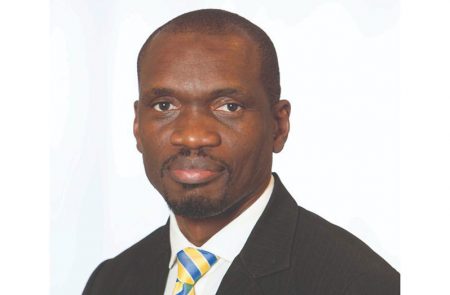
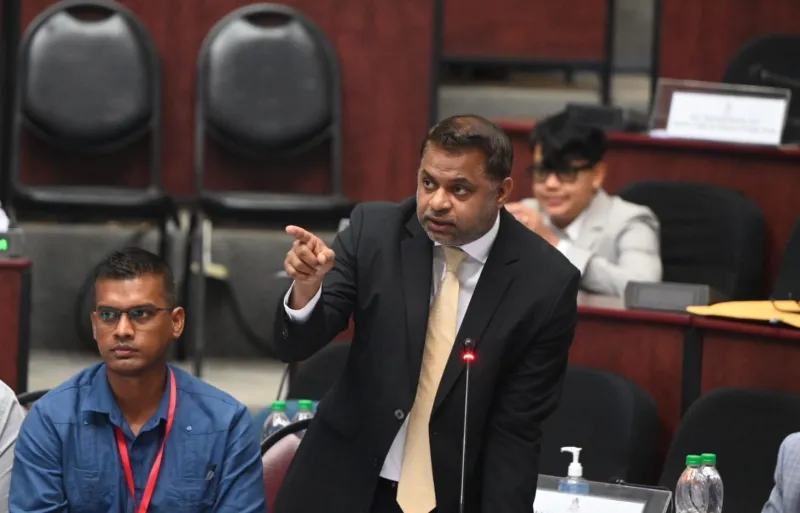
Minister of Public Utilities and Aviation Deodat Indar made the case for the allocation before the committee and was candid about the pressure on the electricity system. He said demand on the national grid runs between 250 and 260 megawatts on any given night, and the country simply does not have enough generation capacity to meet it. “That is why you have these outages,” he told the committee, “because we are running neck and neck.”
It is not for lack of effort. Power generation has grown by 20 per cent compared with last year, a significant jump by any measure. But Guyana’s economy is expanding so quickly — new homes, new businesses, new communities, and around 70,000 streetlights installed in recent years — that demand is outpacing supply almost as fast as capacity can be added.
Of the total supplementary allocation, $11.33 billion is allocated to electricity services. The largest share of that — $8 billion — goes directly to Guyana Power and Light to cover fuel purchases, with additional funds directed to the smaller power entities serving Linden, Mabaruma, Mahdia, Port Kaituma, Moruca, and Matthews Ridge.
Linden is a particular pressure point. The town’s peak electricity demand has climbed from roughly 14 megawatts to 16.9 megawatts, and the government has committed to adding three more megawatts of capacity there. That effort hit a snag when a generator sent to the community had to be returned due to technical problems, and the additional $2.4 billion in fuel funding is meant to bridge the gap in the meantime.
Out in the hinterland, $52.44 million has been set aside for two additional diesel generators with a combined output of 3.2 megawatts — a targeted fix to prevent power shortfalls in remote communities over the coming months as longer-term solutions are developed.
The airport situation tells a different kind of growth story. When the government took office in 2020, four airlines were flying into Guyana. This year, that number stands at 16. The existing facilities at CJIA were simply not built for that level of traffic, and they have hit their limits.
The $1.56 billion allocated for the airport will be used to settle outstanding payments owed to the contractor building Terminal 2 — a facility expected to span roughly 180,000 square feet when complete. If construction stays on schedule, the new terminal should be ready in early 2028, giving the country the capacity to handle the passenger volumes that its booming oil economy continues to attract.
Taken together, the supplementary funding reflects a government working to keep essential infrastructure from falling behind an economy that is growing faster than almost anyone anticipated. The power grid needs to catch up. The airport needs to expand. And the money approved on Monday is part of Guyana’s plan to close that gap.