
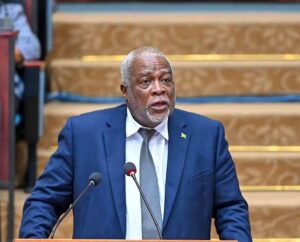





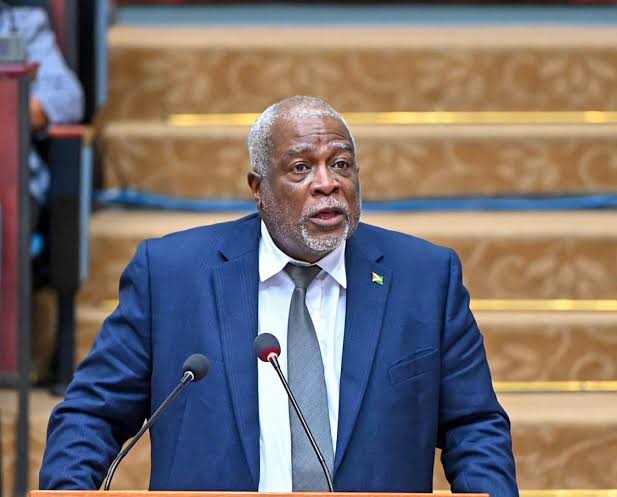
The Gas-to-Energy project in Wales, West Bank Demerara is moving forward, and no amount of opposition questioning will slow it down. That was the message Prime Minister Mark Phillips delivered during Monday’s Committee of Supply sitting, as he defended a request for an additional $24.7 billion to keep Guyana’s most ambitious energy infrastructure project on course.
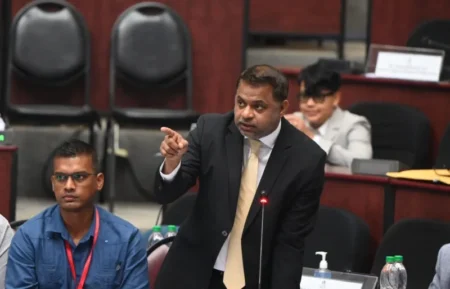
The request drew sharp questions from Opposition MP Terrence Campbell, who pointed to the billions already poured into the project and asked why more money was needed and what had driven costs up. Phillips did not shy away from the numbers. The total project cost has risen from an original US$759 million to approximately US$956 million — an increase of roughly US$200 million — and the Prime Minister walked the committee through where that money is going.
The largest share of the additional allocation — about $12.1 billion — goes to Lindsayca, the main GtE contractor. Another $4.25 billion is earmarked for Siemens Energy, which is manufacturing the turbines for the project’s Phase Two. The remainder covers substations, outstanding payments for land acquisition, project management, technical advisory services, and a national control centre.
The Siemens payments drew particular attention, and Phillips explained the logic plainly. Turbines are not off-the-shelf items. They must be manufactured, and because global demand for power-generation equipment is high while the number of manufacturers remains limited, lead times have grown significantly. Paying early — what the industry calls “long-lead” payments — secures Guyana’s place in the production queue and keeps Phase Two on schedule. Without those upfront commitments, the country risks being pushed back in the queue and missing its 2030 Phase Two target.
That second phase is crucial. Once complete, the Wales facility will house a 600-megawatt combined-cycle power plant fuelled by natural gas piped from the Stabroek Block offshore. Phase One alone delivers 300 megawatts — enough to fundamentally reshape Guyana’s energy landscape and end the chronic blackouts that have plagued the country for decades. Phase Two doubles that capacity.
Regarding the current phase, Phillips acknowledged delays but said the project remains firmly on track. Initial turbine commissioning is targeted for the end of 2026, with Phase One expected to be fully completed in 2027. All turbines, he said, should be operating by the end of the first quarter of next year.
On cost controls, Phillips told the committee that Amendment Five to the project contract has already been signed, and Amendment Six is pending. Together, the two amendments cap further cost increases and introduce penalties for any schedule slippage — mechanisms designed to give the government more leverage over the contractor going forward. Of the additional US$200 million, US$130 million has already been paid out, with US$70 million still to come.
Could there be more funding requests down the line? Phillips was careful not to make a promise he could not keep. He said he could not guarantee there would be none, but expressed confidence that the contractual amendments now in place would be sufficient to see the project through to completion.
The Gas-to-Energy project has never been without controversy. Its cost has risen, its timeline has shifted, and the opposition has repeatedly questioned whether the government has a firm grip on the numbers. But for Prime Minister Phillips, the answer to those concerns is clear: no pausing, no stalling, and no holding anything up. The country needs the power. The gas is there. And the project, he made clear, is not stopping.