




-Immigration officers testify on passport records used in handwriting comparisons involving Lawrence and Lowenfield
The prosecution in the 2020 election fraud trial is seeking to establish that Volda Lawrence signed the disputed March 5 Form 24 declaration, relying on a handwriting expert’s opinion that the signature bearing her name and signatures on her passport applications appeared to have been written by the same person.
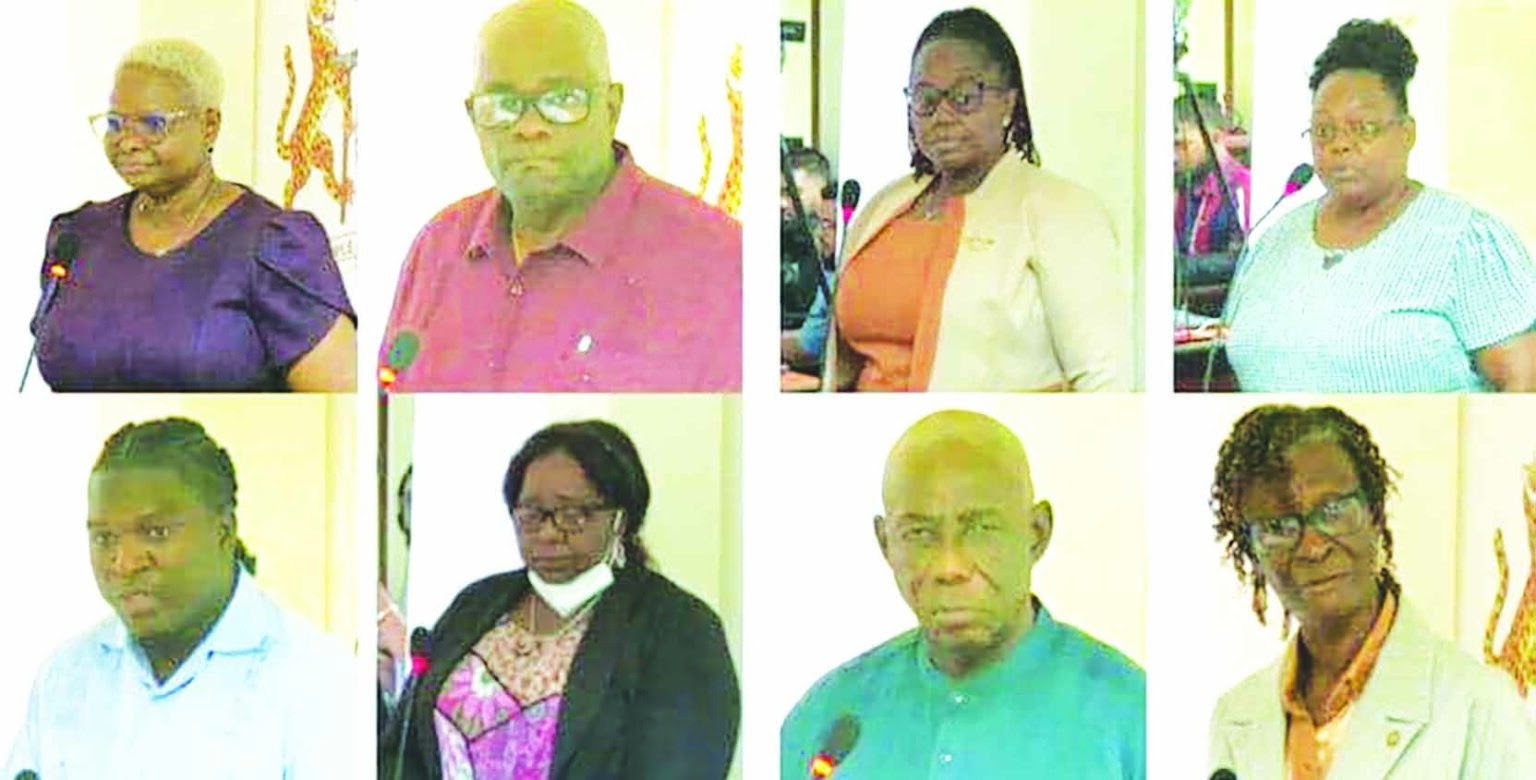
Passport evidence relating to former Chief Election Officer Keith Lowenfield also featured in Monday’s court proceedings, with immigration officer Odessa Isaacs McCaulay identifying a signature he provided while applying for a replacement passport.
The evidence forms part of the prosecution’s effort to establish the authorship of signatures on election-related documents. The expert’s opinion is evidence for the court to assess, rather than a judicial finding that any disputed document was signed by a particular person.
Detective Inspector Ameer Mohamed previously testified that he compared signatures bearing Lawrence’s name on passport applications from 2010, 2015 and 2020 with the signature on the disputed declaration issued by then Region Four Returning Officer Clairmont Mingo on March 5, 2020.
In his expert opinion, the signatures appeared to share the same author.
The Form 24 required the signatures of the returning officer and a party representative. The prosecution is seeking to establish whether the signature bearing Lawrence’s name was hers.
The declaration formed part of the disputed election process that preceded the eventual declaration of a PPP/C victory.
At the Georgetown Magistrates’ Court, immigration officer Anneka Armstrong gave evidence about the processing of Lawrence’s passport applications, the records containing signatures used in Mohamed’s comparison.
Armstrong testified that two applications had been made for Lawrence through the Ministry of Foreign Affairs, one for a regular passport and another for a diplomatic passport. Lawrence was serving as Minister of Health when she applied for the diplomatic passport.
The officer said she scanned the relevant documents and forwarded them to her supervisor in accordance with established procedure.
McCaulay’s testimony concerned Lowenfield’s lost-passport application. She identified his signature in the passport documentation, explaining that he had signed on an electronic keypad in her presence and that the signature corresponded with the one on his application.
Her evidence also addressed the requirement that passport applicants sign for themselves, rather than have another person sign on their behalf. That testimony provided a basis for identifying Lowenfield’s passport signature as a comparison specimen.
The documents identified in connection with the Lowenfield comparison include his passport application and an affidavit concerning his lost passport, together with three election-related documents dated July 10, July 11 and July 31, 2020.
The July 10 document concerns a clarification on a request to prepare and submit an election report. The July 11 document concerns the submission of the General and Regional Elections Report, while the July 31 document concerns the preparation and submission of an election report.
The immigration testimony addresses the identification and processing of the passport signatures used for comparison. The expert’s assessment of the disputed signatures, and the weight to be attached to that evidence, remain matters for the court.
Cross-examination was deferred until the next hearing as the prosecution continues presenting its case.