






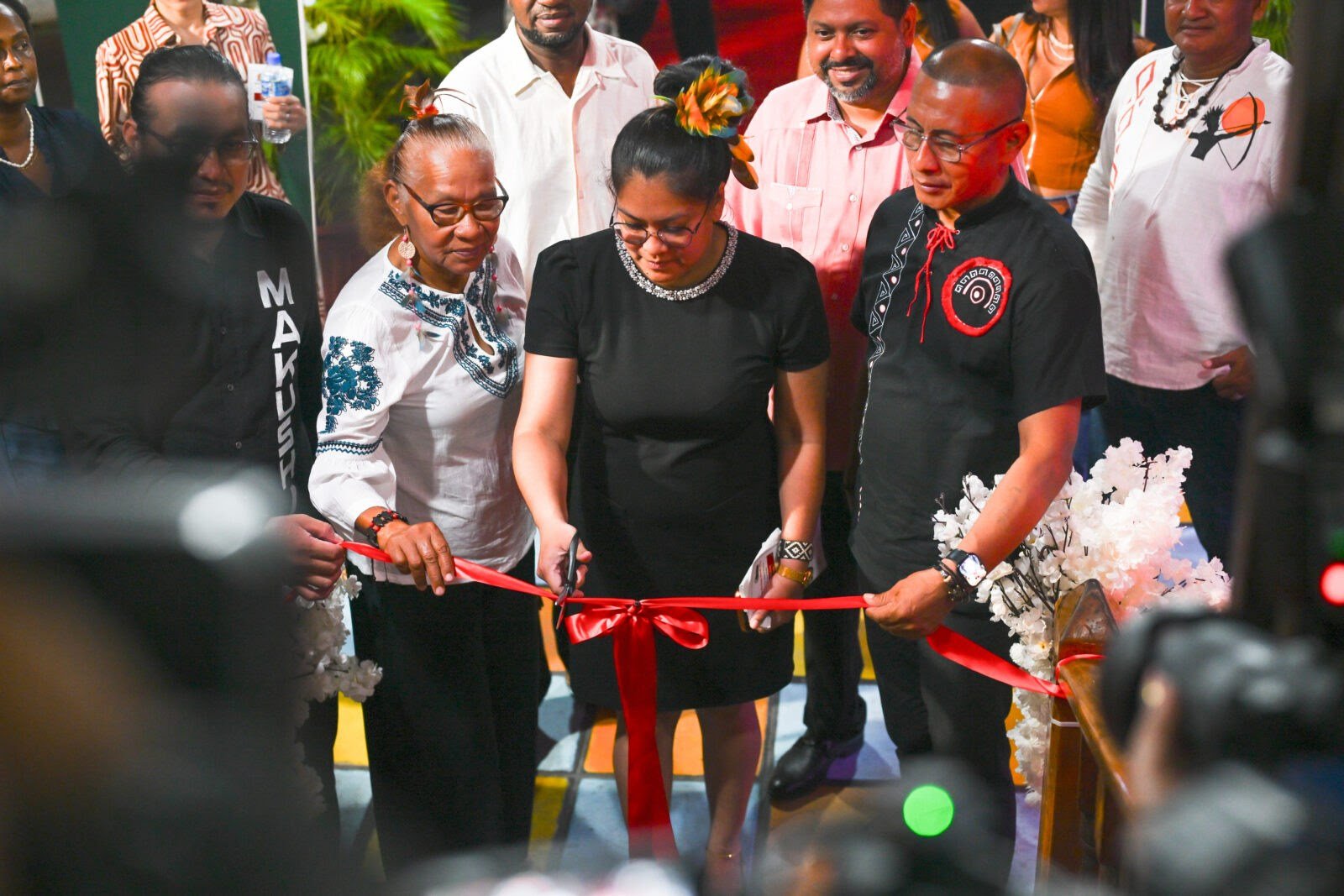
Minister of Amerindian Affairs Sarah Browne-Shadeek officially opened the annual Amerindian Art Exhibition and Fashion Show at Castellani House, bringing together artists, designers, cultural enthusiasts and members of the public as Guyana continues its observances of Amerindian Heritage Month.
The event provided a platform for Indigenous artists to showcase their creativity while highlighting the importance of preserving and celebrating the traditions, identity and cultural heritage of Guyana’s Indigenous peoples.
Delivering the feature address, Minister Browne-Shadeek emphasised the central role of artistic expression in maintaining Indigenous identity.
 Minister of Amerindian Affairs Sarah Browne-Shadeek
“Art and culture define who we are as Indigenous people,” the minister said.
She stressed the importance of creating opportunities for Indigenous artists to present their work, gain recognition and inspire others to explore their creative abilities.
The exhibition features works by several prominent Guyanese Indigenous artists, including Ronald Taylor, Dillion Craig, Demion Mack and Courtney Douglas. Their creations demonstrate the depth and diversity of Indigenous artistic expression while bringing traditional themes, stories and cultural influences into contemporary forms of art.
Minister Browne-Shadeek also encouraged young Guyanese to consider pursuing careers in the arts, acknowledging that artists often face significant challenges in developing their craft and building sustainable careers.
She noted that supporting local artists is not only about recognising individual talent but also about protecting Guyana’s cultural heritage for future generations. Providing Indigenous creatives with platforms to display and promote their work, she said, is essential to ensuring that artistic traditions remain an active part of the country’s cultural landscape.
The exhibition also sparked important conversations among artists and visitors about the need to preserve Indigenous identity at a time when some traditional practices and languages are facing decline.
Makushi artist Demion Mack highlighted the challenges confronting Indigenous communities, particularly the gradual disappearance of Indigenous languages among younger generations.
“If you go to my village, you won’t find a little child speaking Makushi anymore,” Mack said, pointing to the increasing dominance of English in many Indigenous communities.
For Mack, art represents an important way of keeping cultural traditions visible and relevant. Through his fabric paintings and designs inspired by Indigenous traditions, he hopes to encourage people to embrace Indigenous art and incorporate it into everyday life, including through the clothing they wear.
He believes that making Indigenous-inspired art more visible can help younger generations reconnect with their heritage and develop a stronger appreciation for the traditions of their ancestors.
Visitors to the exhibition similarly recognised the importance of the event in celebrating Guyana’s diverse cultural identity.
Destiny Hinds, one of the visitors, described the exhibition as a meaningful reminder of the country’s origins and the artistic talent that exists across Guyana’s regions.
“I think it’s important because it connects us to what started our country in the first place,” she said.
Hinds further stressed the importance of ensuring that cultural heritage remains an integral part of the national identity, noting that “Every fabric of what connects us to our heritage has to be a part of Guyanese culture.”
This year’s exhibition also served as a tribute to the late Anna Isles, whose decades of dedication contributed significantly to the development and promotion of Indigenous art and communities across Guyana.
Isles played an important role in coordinating the annual Amerindian Heritage Month Art Exhibition and worked closely with artists through the George Simon Project. Her efforts helped provide Indigenous creatives with opportunities to exhibit their work, tell their stories and connect their artistic expressions with wider audiences.
Her contribution reflects the important role individuals can play in preserving cultural heritage beyond formal institutions and government programmes. Through years of dedicated work, Isles helped create spaces where Indigenous artists could develop, showcase and celebrate their creativity.
The tribute to Isles also served as a reminder that the progress being made by today’s generation of Indigenous artists has been supported by the dedication of cultural pioneers who worked quietly over many years to establish opportunities for Indigenous creatives.
As Amerindian Heritage Month continues, the annual exhibition and fashion show demonstrates that Indigenous culture remains a living and evolving part of Guyana’s national identity. Through paintings, textiles, fashion and other creative forms, Indigenous artists are preserving traditional knowledge while finding new ways to share their stories with contemporary audiences.
The event ultimately reinforced a broader message: protecting Guyana’s Indigenous heritage requires more than remembering the past. It requires supporting the artists, young people, communities and cultural practitioners who are keeping those traditions alive today.