





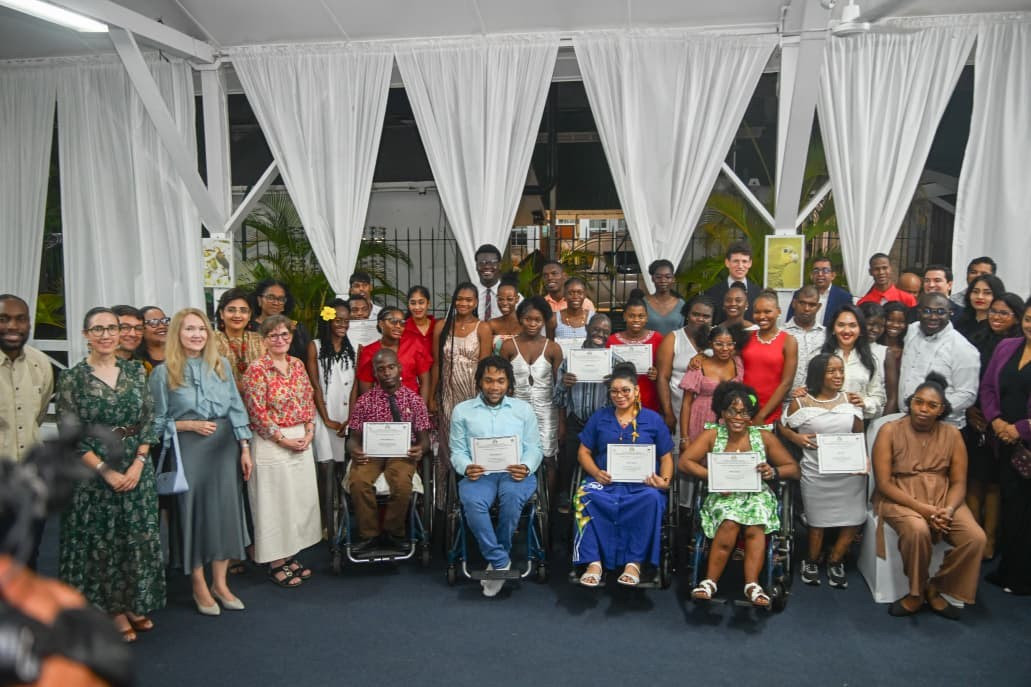
More than 30 Guyanese with disabilities walked across a graduation stage this week, certificates in hand, after completing a five-day job readiness and soft skills training programme run by the Ministry of Labour and Manpower Planning. It was a small ceremony by most measures — but it sits within a much larger ambition.
President Dr Mohamed Irfaan Ali has committed to integrating 5,000 persons with disabilities into the national labour force, and Thursday’s graduation was one more step toward making that number a reality rather than a pledge.
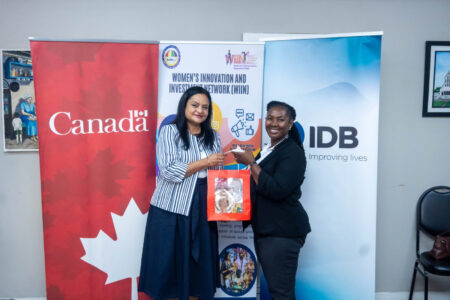
First Lady Arya Ali, who addressed the graduates, made clear that the government’s approach goes beyond teaching people skills and wishing them luck. The other half of the equation — the part that often gets overlooked — is making sure workplaces are actually ready to receive them. “Persons with disabilities do not need sympathy,” she told those gathered. “They need equitable opportunities to demonstrate their abilities and realize their ambitions.”
 First Lady Arya Ali, speaking at the graduation ceremony
That distinction matters. Skills training without accessible, accommodating workplaces produces qualified candidates who still cannot get through the door. The First Lady said both sides of that gap need to close simultaneously, and she called on employers across the public and private sectors to take that responsibility seriously. Several private sector companies have already signalled their willingness to bring programme participants on board, and she encouraged others to follow.
The graduation feeds into a broader framework being built through the First Lady’s National InclusAbility Initiative, which includes the Centre for Equity, Opportunity and Innovation — a facility that has already produced results. Earlier this year, 84 persons with disabilities completed a skills training programme run by the Board of Industrial Training at the centre in Region Six, adding to a growing pipeline of job-ready candidates.
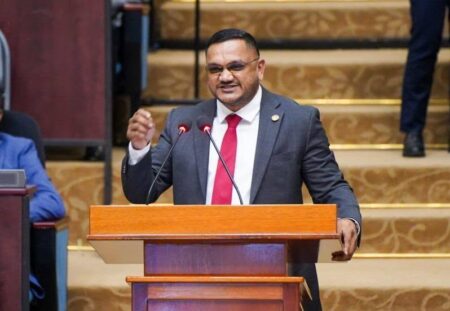
Minister of Labour and Manpower Planning Keoma Griffith pushed the conversation further, urging graduates not to limit their sights to finding a job within someone else’s company. With financing available through the Guyana Development Bank, he said, entrepreneurship is a genuine path — and one the government wants to see more people from the disability community pursue. “We want you to set the pace,” he told graduates. “We want you to challenge persons who are establishing businesses. We want you to compete with our private sector and make meaningful contributions to our country.”
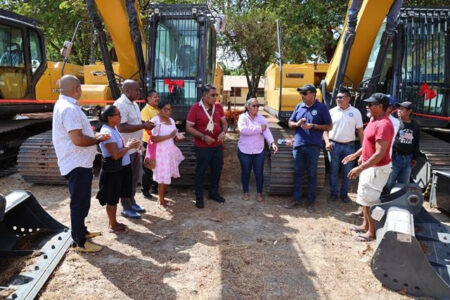
 Region Six graduates who completed their training
He also noted that his own ministry has already begun walking the talk, integrating persons with disabilities into its own workforce. Work is underway to review the country’s labour laws and occupational safety and health legislation, with an eye toward making the legal framework more supportive of inclusive employment.
On the practical side, the First Lady announced a new initiative that addresses one of the most basic barriers many persons with disabilities face every day: getting into public buildings in the first place. Her office, working in partnership with Men on Mission, will designate and clearly mark accessible parking spaces at government ministries and other public locations across the country — a straightforward measure, but one that makes an immediate difference in how independently people can move through public life.
 Minister of Labour and Manpower Planning, Keoma Griffith, handing over a certificate to one of the graduates
Taken together, the training programmes, the legislative review, the employer outreach, and the accessibility improvements sketch the outline of a policy that is trying to be comprehensive rather than symbolic. Whether the target of 5,000 workforce entrants is met will depend on how consistently these pieces are delivered — but the direction, at least, is clear.