




To begin with, it is imperative to inform the world that Venezuela is a failed state and that its citizens are fleeing to the USA, Canada, Trinidad and Tobago and Guyana to seek asylum. Guyana has been generous, accepting thousands of Venezuelans on humanitarian grounds.
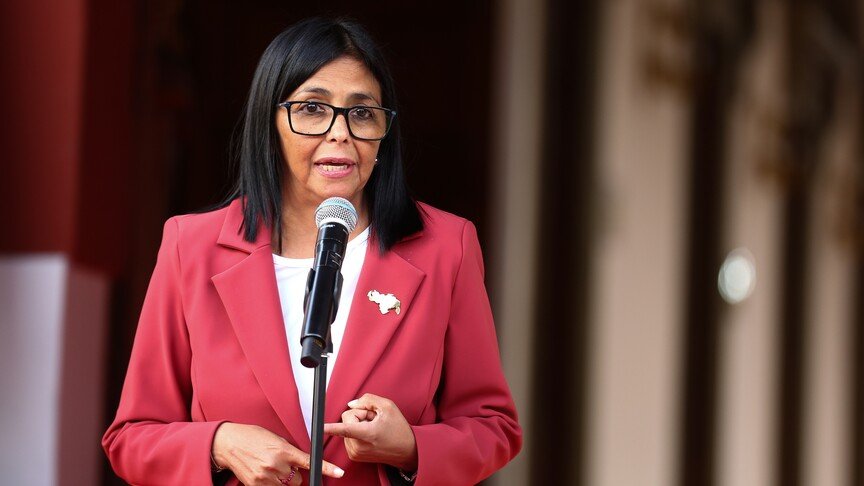
The former President of Venezuela, Maduro, was elected through election rigging, and the present self-appointed President, Rodriguez, is part of that election-rigging circus. No one takes this woman President seriously except Trump, who keeps changing his mind daily.
No one knows what is going on in the war between the USA and Iran. Global pundits say that Iran has the upper hand, which keeps shifting, and that the Iranians now control the Strait of Hormuz. Aircraft carriers and fighter jets do not win wars, but ground troops could be a possibility. The whole world knows that Asia is the biggest graveyard for US soldiers. Hence, there is fear and hesitation about Trump sending ground troops to Iran. Without ground troops, the US cannot claim to have won the war against Iran.
Venezuela today finds itself trapped in a vicious cycle that diverts attention from its citizens’ misery by claiming land from Guyana and Brazil. Instead of focusing on rebuilding its economy, stabilising its institutions, and improving the lives of its citizens, the country’s leadership has chosen a far more dangerous path—reviving and escalating a territorial claim against Guyana that has already been settled by history and international law. This is not a policy rooted in justice; it is a calculated distraction designed to divert attention from deep domestic failures.
At the heart of this controversy lies the Essequibo region, a vast, resource-rich area that comprises nearly two-thirds of Guyana’s territory. The matter, however, is not in dispute. In 1899, an international tribunal in Paris issued a legally binding arbitral award that clearly defined the boundary between Venezuela and what was then British Guiana. Venezuela not only participated in that arbitration but also accepted the outcome for decades. It was only in 1962, long after the matter had been settled, that Venezuela revived its objections—raising serious questions about the political motives behind its sudden reversal.
Today, Guyana has taken the responsible and lawful course by bringing the matter before the International Court of Justice. This demonstrates a commitment to peace, diplomacy, and international norms. By contrast, Venezuela has sought to undermine the court’s authority while simultaneously escalating tensions through referenda and aggressive rhetoric. The difference is clear:
Guyana is relying on law and legitimacy, whereas Venezuela appears to rely on pressure and provocation.
The reality is that Venezuela’s foreign policy on this issue is closely tied to its internal crisis. Despite possessing some of the world’s largest oil reserves, the country has struggled with economic mismanagement, inflation, and mass migration. Millions of Venezuelans have been forced to leave their homeland in search of essentials such as food, healthcare, and employment. Rather than addressing these urgent issues, the leadership has chosen to project strength externally by reviving a territorial dispute that resonates with nationalist sentiment.
The discovery of significant offshore oil reserves in Guyana in recent years has only intensified Venezuela’s interest in the Essequibo region. What was once a dormant claim has now become central to its political narrative. However, access to natural resources does not justify territorial expansion. International law cannot be rewritten to accommodate economic desperation or political opportunism.
From a geopolitical perspective, the situation is also revealing. Venezuela has long positioned itself in opposition to the United States, often framing its actions through an anti-American lens. Yet this posture has done little to improve its global standing or domestic conditions. At the same time, Guyana has maintained constructive relationships with multiple global powers, including the United States, India, and China. This balanced approach strengthens Guyana’s position on the international stage and reinforces its legitimacy.
For Guyana, engaging countries such as India and China is not about confrontation but about reinforcing diplomatic support and ensuring regional stability. Both nations are emerging as influential global powers with a strong interest in maintaining international order and respecting sovereignty. Their involvement, whether diplomatic or economic, could further isolate any attempt to destabilise Guyana’s territorial integrity. Venezuela, therefore, risks miscalculating the broader international response if it continues on this path.
It is also important to recognise that linguistic or colonial labels do not define Guyana. While it is an English-speaking nation with a British colonial past, it is also deeply connected to India, China and Africa, and other parts of the world through its people, culture, and history. This diversity strengthens its identity and global partnerships, making any attempt to undermine its sovereignty even more untenable.
Venezuela’s continued pursuit of the Essequibo claim is not only legally weak but also strategically dangerous. It risks escalating tensions in a region that has largely remained peaceful and cooperative. More importantly, it diverts attention from the real challenges facing the Venezuelan people—challenges that cannot be solved by territorial claims or political theatrics.
In the end, the path forward is clear. Guyana is choosing law, diplomacy, and international cooperation. Venezuela must decide whether to persist with a confrontational, ultimately unproductive strategy or to turn its focus inward to address the needs of its own people. The world is watching, and history will not be kind to those who choose distraction over responsibility.4589