






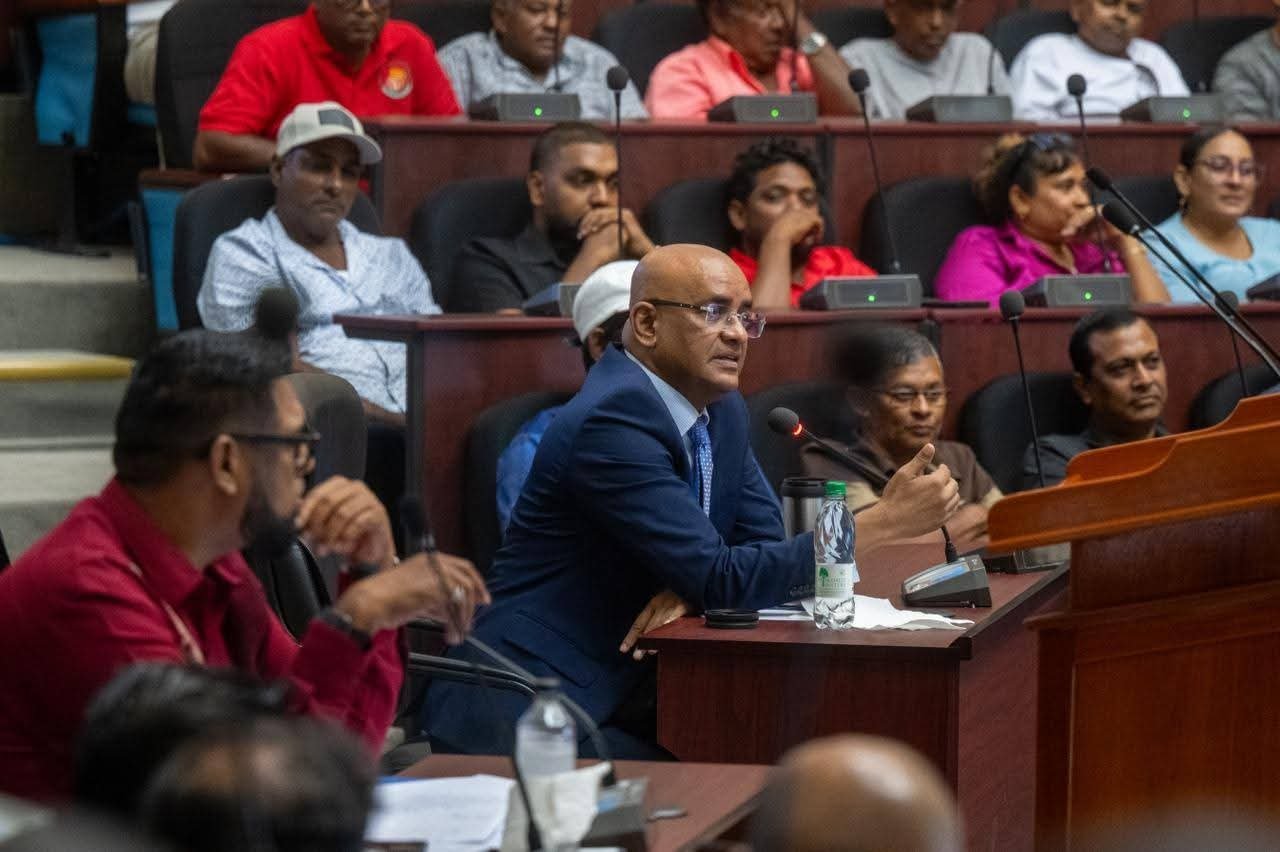
Vice President Dr Bharrat Jagdeo has reaffirmed the government’s commitment to supporting rice farmers as the industry faces mounting economic challenges driven by global developments. His remarks were made during a meeting with farmers convened by President Dr Mohamed Irfaan Ali on Thursday.
Addressing stakeholders, Dr Jagdeo outlined two immediate concerns affecting rice production: declining global rice prices and a sharp rise in the cost of key inputs. He explained that these pressures are being exacerbated by broader geopolitical tensions, particularly the ongoing tensions between the United States and Iran, which are influencing global markets and supply chains.
One major concern is the surge in fertiliser prices, which have risen by nearly 50 per cent worldwide. At the same time, fuel costs have jumped by around 30 per cent, adding further strain on farmers already grappling with reduced market returns. Dr Jagdeo noted that these external factors remain beyond the government’s control, highlighting that approximately 20 per cent of the world’s oil supply passes through the Strait of Hormuz, making it a critical chokepoint vulnerable to geopolitical instability.
Despite these challenges, the Vice President urged farmers to remain optimistic, citing the government’s sustained investment in the rice sector. He outlined major drainage and irrigation initiatives underway in Regions Five and Six, including the construction of about 125 kilometres of dams and the rehabilitation of more than 800 kilometres of canals. Additionally, dozens of fixed and mobile pumps are being installed to improve water management across farming areas.
These infrastructure projects, funded by Guyana’s forest carbon revenues, are expected to unlock approximately 100,000 acres of new agricultural land upon completion, significantly boosting production capacity.
Dr Jagdeo also revealed that the government has moved ahead with plans to enhance post-harvest capabilities. Bids have already been received for the development of drying and storage facilities, enabling farmers to retain their paddy rather than sell it immediately at unfavourable prices. This, he explained, will strengthen farmers’ negotiating position and help stabilise incomes.
Highlighting past interventions, the Vice President reminded farmers that the government had previously removed a 50 per cent fuel tax, a move valued at roughly US$400 million annually. However, he cautioned that this measure has already exhausted much of the government’s capacity to cushion against further increases in global fuel prices.
He emphasised that President Ali remains committed to assisting farmers to navigate the current difficulties and to addressing longer-term structural issues within the industry.
Since taking office in 2020, the administration has introduced several support measures, including billions of dollars in fertiliser subsidies, direct payments of $300 per bag of paddy to farmers, and the removal of VAT and duties on agricultural machinery and fuel to reduce production costs.
Dr Jagdeo underscored that government support for the rice industry has been consistent over decades, dating back to the leadership of former President Cheddi Jagan and continuing to the present.
Another key policy shift has been the reversal of land rental and drainage and irrigation charges introduced by the previous APNU+AFC administration between 2015 and 2020. During that period, farmers faced significantly higher fees, but the current government’s decision to reduce those rates is now saving small and medium-scale farmers an estimated $1.6 billion annually.
By combining immediate relief measures with long-term investments, the government aims to shield the rice industry from global shocks and position it for sustained growth in the years ahead.