






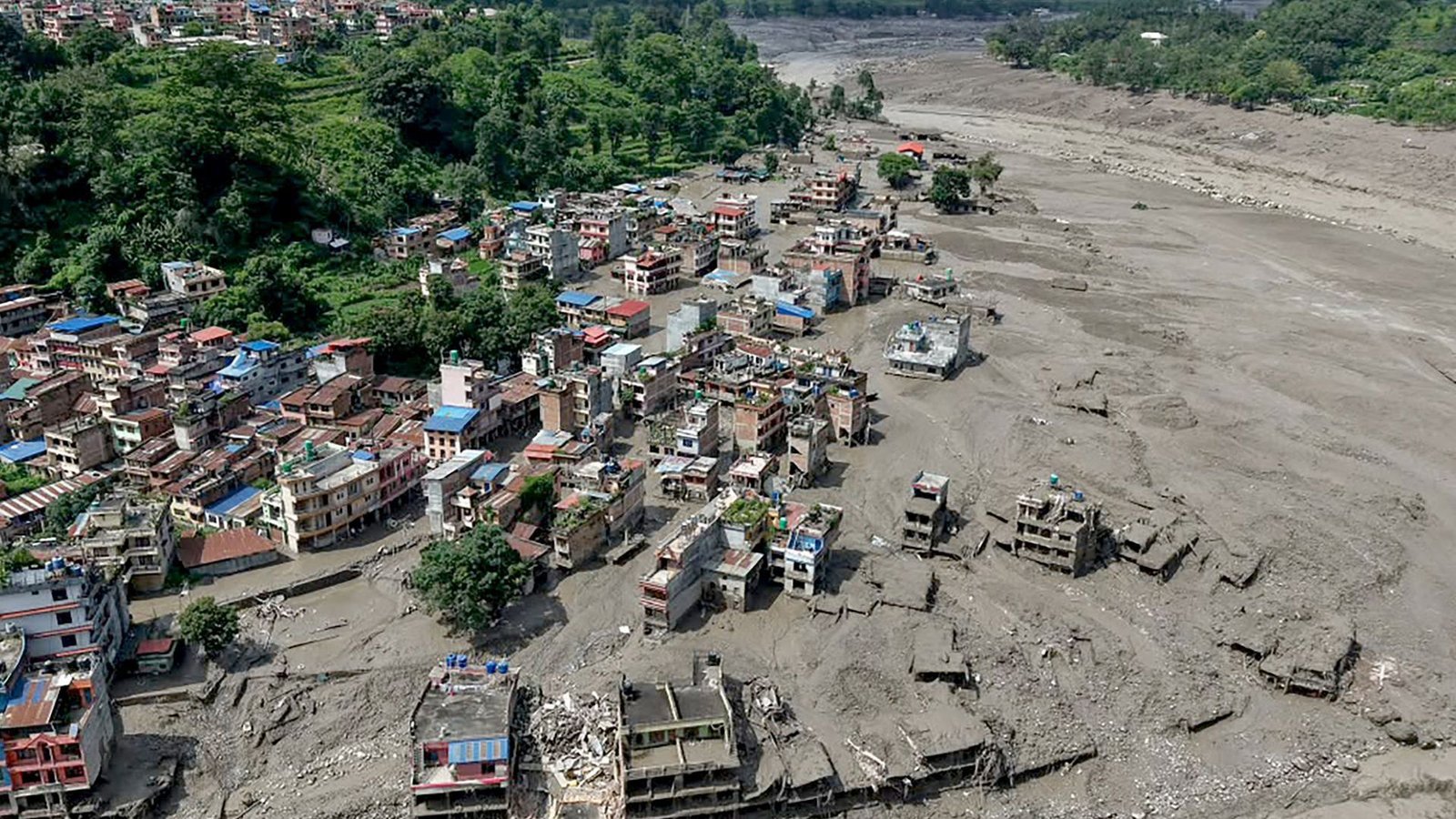
The devastating floods that struck Nepal and Tibet on August 26 have become a rapidly unfolding humanitarian disaster, with the latest figures showing hundreds of deaths and more than 1,300 people reported missing across the two sides of the border. Nepalese authorities have reported a death toll of around 270, while Tibet has reported three deaths and more than 550 people missing. Rescue operations are continuing as authorities struggle to reach isolated communities and identify those who remain unaccounted for.
The disaster has also affected a large number of foreign nationals. Nepal’s Tourism Board has reported that hundreds of foreigners are among those missing, including people from India, the United States, the United Kingdom, Australia and several other countries. Many were travelling through the region as tourists or pilgrims heading towards Mount Kailash and other important destinations in the Himalayas.
Scientists are now investigating what caused the extraordinary surge of water, mud and rock. Initial reports suggested an earthquake, but the US Geological Survey later determined that the seismic signal was associated with a major glacier collapse rather than a conventional earthquake. Experts believe an ice-and-rock avalanche released enormous quantities of debris into the river system, producing the devastating flood downstream.
Researchers describe the event as a possible cascading hazard, in which one natural event triggers a series of others. A collapse of glacier ice and rock can create a landslide or debris flow, which can block a river and form a temporary lake. If that natural barrier suddenly fails, a powerful wave of water, mud and rock can travel downstream at tremendous speed, leaving communities with very little time to react.
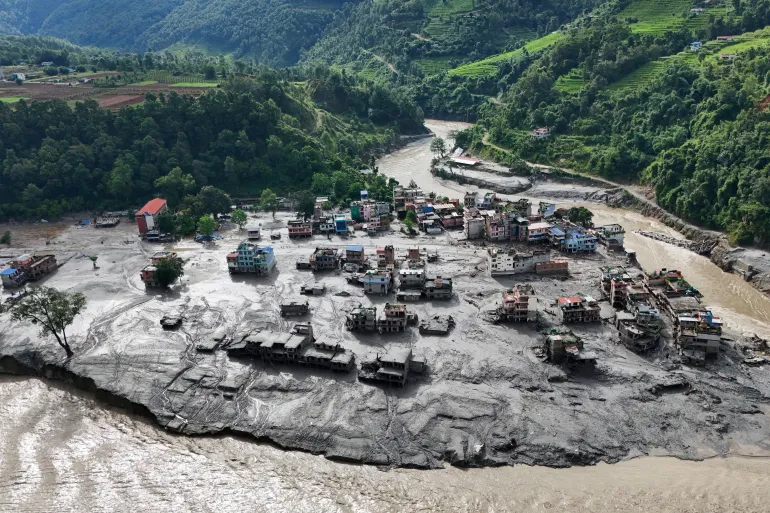
The scale of the physical destruction has been enormous. Reports indicate that around 40 kilometres of roads and dozens of bridges have been damaged or destroyed, while homes, hydropower facilities and other infrastructure have been swept away. The destruction of transport routes has made rescue operations extremely difficult, forcing authorities to rely heavily on helicopters to reach stranded people and deliver emergency supplies.
Another major concern is the possibility of a second flood. Chinese authorities are monitoring a barrier lake created by debris near the Nepal border. Officials have warned that the natural blockage could fail, potentially sending another surge downstream. With rain continuing in parts of the region, authorities are closely monitoring the lake and surrounding slopes for signs of further instability.
The disaster is also renewing concerns about the changing Himalayan environment. Scientists say warming temperatures are altering glaciers, snow and frozen ground across the region. While it is too early to say that climate change directly caused this particular event, researchers warn that a warmer climate can contribute to glacier instability and increase the potential for dangerous interactions between ice, rock and water.
For Nepal, the immediate priority remains finding survivors, recovering those who have died and providing shelter and medical assistance to displaced communities. But for scientists, the disaster represents something more: a warning about the increasingly complex risks facing Himalayan settlements. The latest research suggests that future disaster planning will need to look beyond rainfall and conventional flooding and instead account for the interconnected behaviour of glaciers, mountains, rivers and changing climate conditions.