






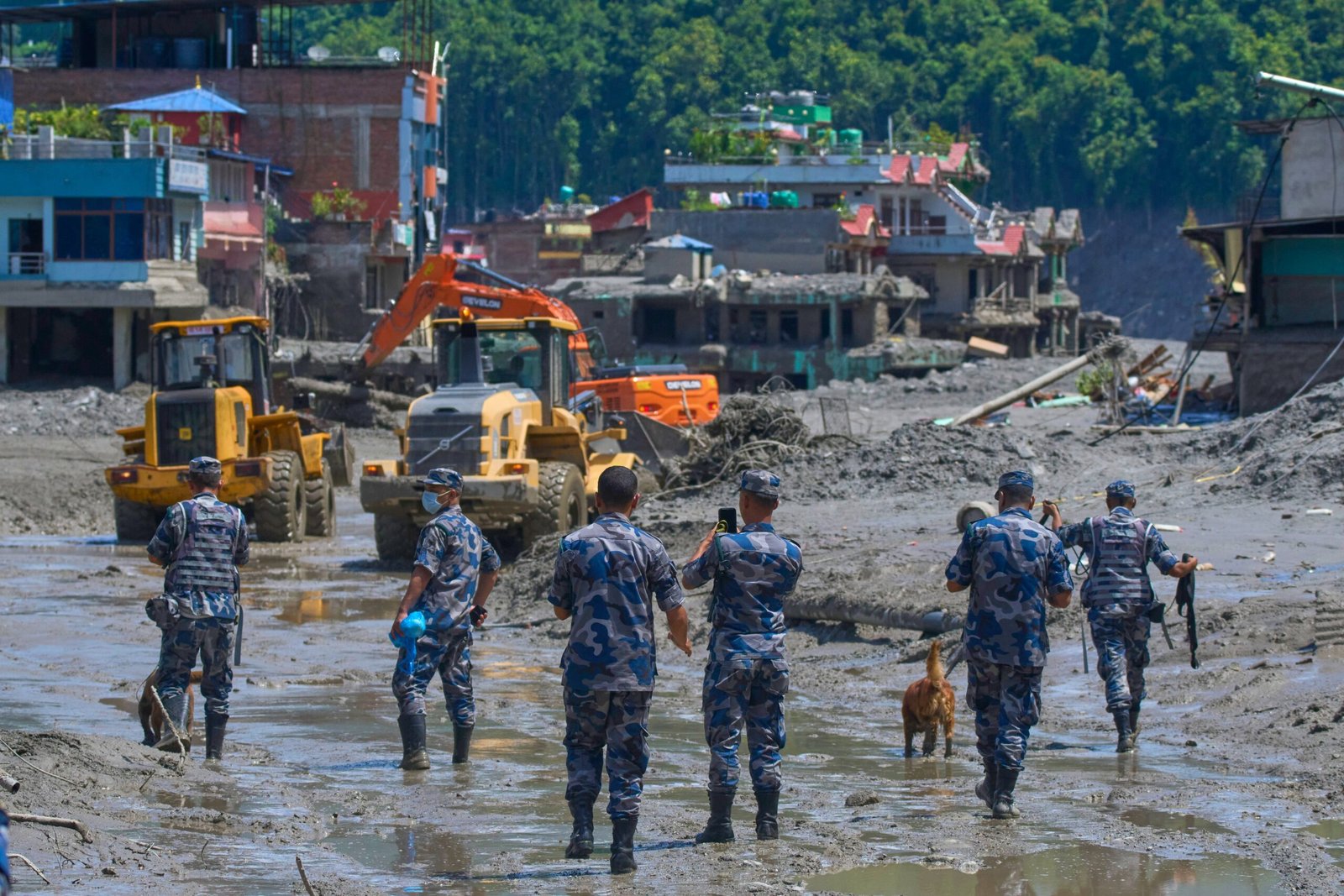
Nepal is facing one of its most devastating natural disasters in recent years after catastrophic flash floods swept through parts of the Himalayan region, leaving hundreds dead, thousands missing and large areas cut off from the rest of the country. According to the latest reports, 903 people have been confirmed dead in Nepal, while 4,247 people remain missing. The disaster has also caused deaths and disappearances across the border in Tibet, with rescue teams continuing to search through destroyed settlements and infrastructure.
The disaster began on August 26 after a massive glacial collapse and rockfall in the Himalayan region sent huge volumes of water, mud and debris into river systems along the Nepal-Tibet border. The sudden surge caused rivers including the Bhotekoshi and Trishuli to rise dramatically, sweeping away homes, bridges, roads, vehicles and other infrastructure. The scale of destruction has made access to several affected communities extremely difficult.
Rasuwa and Other Border Areas Among the Worst Hit
Nepal’s Rasuwa district, close to the Chinese border, has been among the worst-affected areas. Entire sections of communities were inundated or buried under mud and debris, while important transport links were destroyed. Rescue workers have been searching through damaged settlements for survivors and bodies, often working in unstable terrain and difficult weather conditions.
The disaster has also severely affected areas along the Bhotekoshi and Trishuli river systems. Roads and bridges washed away by the floods have disrupted ground access, forcing authorities to rely heavily on helicopters and other aerial resources to evacuate stranded people and deliver emergency supplies.
Rescue Operations Continue Despite Dangerous Conditions
Nepalese security forces and emergency responders remain engaged in a large-scale search-and-rescue operation. Operations were temporarily disrupted after a landslide-created barrier lake on the Tibetan side began overflowing, raising fears of another sudden surge downstream. Authorities subsequently resumed rescue efforts as the immediate threat eased.
Rescuers are also facing major challenges at hydropower facilities in the flood-hit region. Teams have been working to reach workers believed to be trapped inside tunnels after floodwaters and debris entered hydropower infrastructure. The difficult terrain, damaged roads and continuing risk of landslides have slowed the operation.
Thousands Still Unaccounted For
The number of missing people remains one of the biggest concerns. Nepal’s latest figures indicate that 4,247 people are still missing, including hundreds of foreign nationals. Authorities are continuing to update the lists as survivors are located and recovered bodies are identified.
The large number of missing people has also created an enormous identification challenge. In some areas, bodies have been recovered in large numbers while local facilities struggle to accommodate them. Authorities have begun using DNA sampling and other identification procedures to help families determine the fate of missing relatives.
International Assistance Expands
The scale of the disaster has prompted international assistance. Nepal has sought specialist support for rescue and recovery operations, while neighbouring countries and other governments have offered personnel, equipment and financial assistance.
Malaysia, for example, has announced plans to deploy its Special Malaysia Disaster Assistance and Rescue Team (SMART) to Nepal to support search-and-rescue efforts and has committed US$1 million in aid. Other international teams and humanitarian organisations are also assisting with relief and recovery efforts.
Nepal’s government has also indicated that the country will require substantial resources for reconstruction. Finance Minister figures reported by Reuters suggested that rebuilding damaged infrastructure could require around $4 billion to $5 billion, highlighting the enormous economic impact of the disaster.
Fresh Flood Threat Remains
Even as rescue teams continue searching for survivors, authorities remain concerned about additional flooding and landslides. Heavy rainfall and unstable mountain terrain could trigger further flash floods, particularly in areas where rivers are already swollen and slopes have been weakened by the disaster.
Officials have therefore maintained heightened alerts in several vulnerable districts. Communities living close to rivers and unstable slopes have been urged to remain cautious as emergency teams continue monitoring water levels and weather conditions.
A Long Road to Recovery
For survivors, the disaster has moved beyond an immediate rescue emergency into a humanitarian and rebuilding crisis. Thousands of people have been displaced, homes and businesses have been destroyed, and essential infrastructure has been severely damaged.
As rescue teams continue their search, authorities are now facing the difficult tasks of identifying victims, supporting displaced families, restoring roads and bridges, reopening essential services and assessing the full economic damage. The final death toll is expected to remain uncertain until search operations are completed and missing-person records are verified.
The Nepal floods have once again highlighted the vulnerability of Himalayan communities to sudden glacial and mountain-related disasters. For the families still waiting for news of missing relatives, however, the immediate priority remains clear: finding survivors, recovering the missing and delivering emergency assistance to communities devastated by the unprecedented floods.