






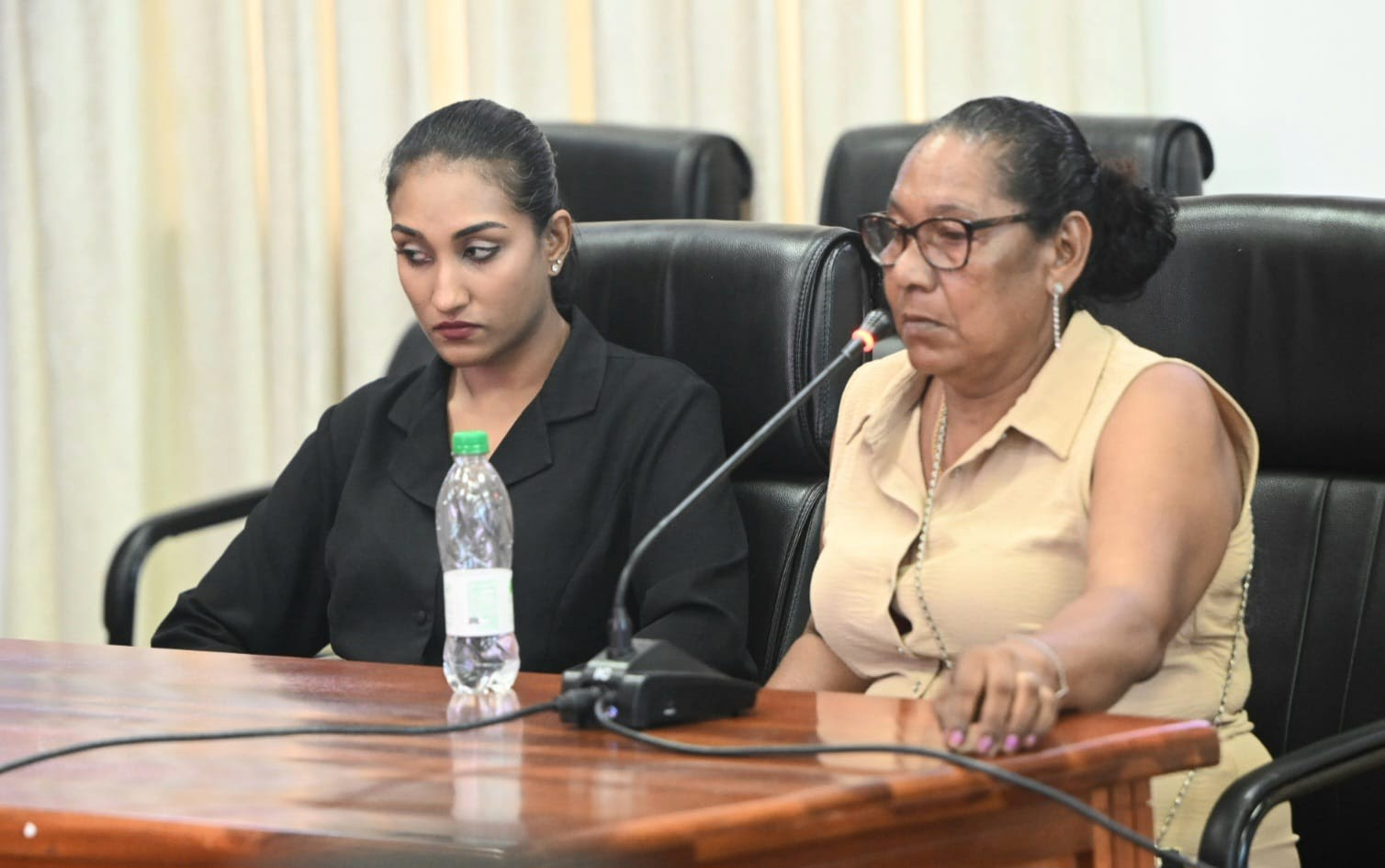
The devastating aftermath of the MV Barima sinking was brought into focus on Monday as Samantha Ramitt recounted the frantic search for her children after receiving an early-morning telephone call informing her that the vessel had gone down.
Appearing before the Presidential Commission of Inquiry (COI), Ramitt described the moment she learned of the disaster and the desperate efforts that followed to locate her family. Her testimony came shortly after her mother, Helena Moonsammy, gave an emotional account of surviving the sinking while losing four of the eight grandchildren who were travelling with her.
“I will never forget the day. I will never forget the morning call,” Ramitt told the commission.
The children had been travelling with their grandmother on what was supposed to be a school-holiday trip to her hometown in Region One. Instead, the journey ended in tragedy, leaving the family devastated.
Ramitt recalled receiving a call from her eldest child at approximately 4:00 am. She subsequently made her way to Charity to search for her relatives among those who had survived. She told the commission that a colleague assisted her in arranging transportation to the location.
Upon reaching Charity, she was reunited with her mother and the surviving boys. However, four of the eight children who had been aboard the vessel were dead.
During questioning, Ramitt provided an update on the condition of her surviving 12-year-old son, explaining that he was gradually recovering but continued to experience fear associated with travelling by water. She said the experience had left a lasting impression on him, describing it as a nightmare.
Commissioners also questioned her about photographs taken aboard the vessel before the incident. Ramitt confirmed that she had received pictures showing the children during the journey.
Earlier, Moonsammy recounted the terrifying moments when the vessel began sinking. She testified that she was holding her two-year-old grandson, Vince Wong, when falling cargo struck him and knocked him from her arms. His body has still not been recovered.
The other three children who lost their lives were identified as Viviana Sadruddin, 12; Akeelah Rodrigues, nine; and Robina Hernandez, eight.
The four children who survived were Kesha Webber, 13; Deliana Webber, 13; Renaldo Rodrigues, 12; and Akeishaw Webber, 11.
Moonsammy told the commission that she had purchased the tickets for the journey on Tuesday, July 14, but was not asked to produce the receipts when boarding the vessel on July 18.
Having travelled the route almost 20 times over a period exceeding 15 years, she said she was familiar with the journey. However, nothing had prepared her for the events that unfolded during this particular voyage.
Recounting her struggle to escape, Moonsammy said she became trapped beneath the vessel as water flooded the passenger compartment. She was unable to swim and described struggling to hold her breath while attempting to free herself from the cargo obstructing her path.
She recalled hearing children crying as the situation deteriorated, describing the frightening sounds as the vessel went under.
“I can’t breathe. I can’t breathe no more,” she recalled telling herself during the ordeal.
Moonsammy eventually managed to escape and, together with another survivor, held on to a box while struggling to remain afloat. She testified that she spent approximately nine hours in the water, suffering from cramps before fishermen came to her rescue close to 7:00 am the following morning.
She was subsequently transferred between Coast Guard vessels before being placed in a speedboat and transported to Charity for medical treatment.
Her evidence also raised concerns about the conditions aboard the MV Barima before the sinking. Moonsammy said goods had occupied the passenger benches, forcing the children to sit on the floor. She eventually found a place beneath a bench towards the rear of the vessel.
She further recalled seeing numerous bags of chicken feed inside the passenger area, noting that she had not encountered such a quantity of cargo on her previous journeys.
Another issue raised during her testimony concerned the absence of emergency communication. Moonsammy said no warning or announcement was made over a loudspeaker before the vessel overturned. She also testified that the life jackets were kept in a locker above the passenger benches, which was secured with a padlock.
As the grandmother recounted the experience, commissioners allowed her time to pause and compose herself, recognising the emotional difficulty of revisiting the tragedy.
At the conclusion of her testimony, one commissioner acknowledged the magnitude of the family’s suffering and expressed regret over the losses.
The commission also thanked Moonsammy for coming forward, noting that her account could contribute to recommendations aimed at preventing similar incidents in the future.
The successive testimonies from Moonsammy and her daughter have provided the inquiry with personal accounts of the tragedy, highlighting not only the loss of four young lives but also the questions surrounding passenger safety, cargo arrangements, emergency procedures and the availability of life-saving equipment aboard the vessel.