






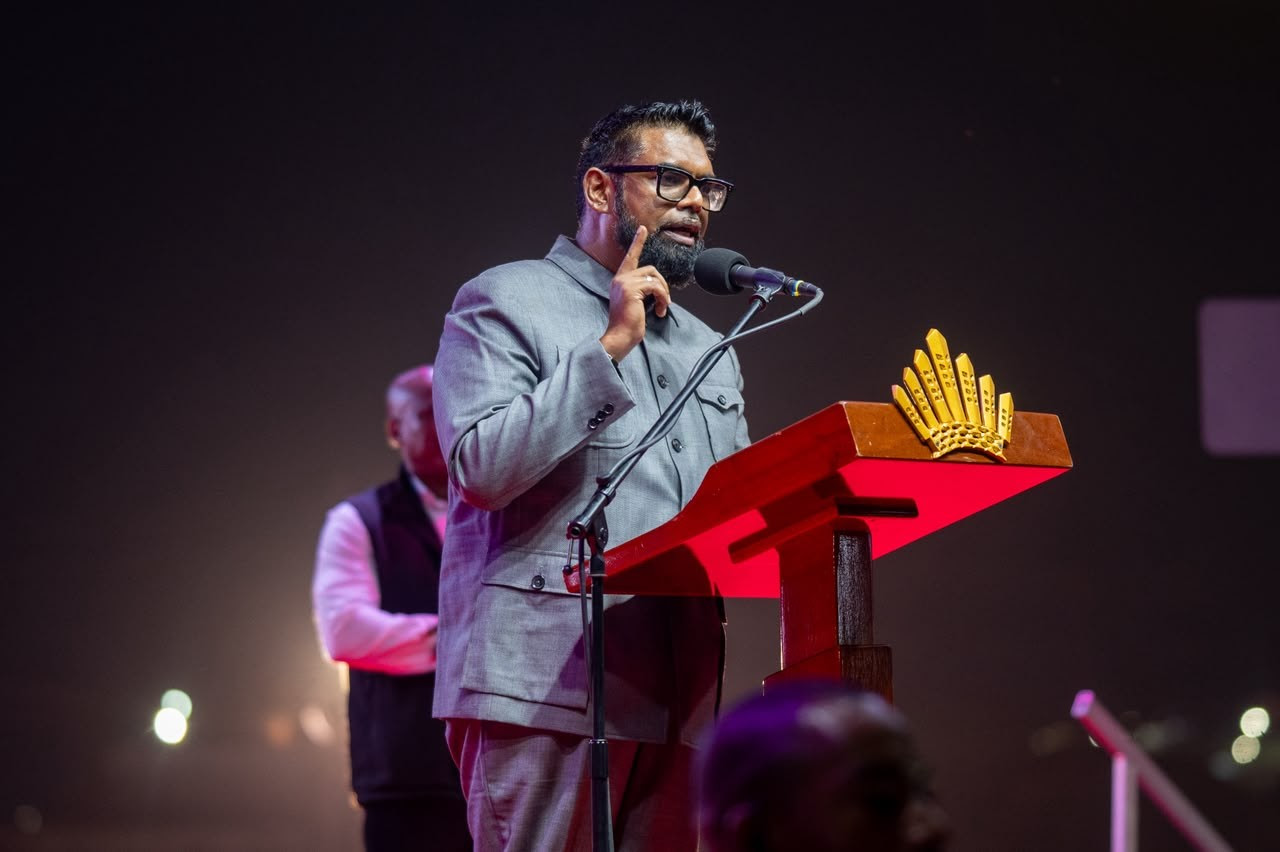
President Dr Mohamed Irfaan Ali reiterated on Sunday that every Guyanese has a right to development, regardless of political affiliation, as he commissioned the four-lane Samuel Archibald Hinds River Bridge in Linden.
The president described the bridge as one of several investments in Linden and a link in an all-weather road network that will connect Guyana’s coast to the hinterland and Brazil. He said the Soesdyke–Linden Highway upgrade and improvements to the Linden–Lethem corridor are still to come.

“Development is a right of citizenship, not a reward for political allegiance,” President Ali stated while addressing the opening ceremony.
“This is how infrastructure transforms national fortunes. It does not merely take people from one place to another, It brings markets closer, makes investment more viable, opens communities to new possibilities, and turns geographic position into economic advantage,” the Guyanese leader added.
He traced the network to the national development strategy of the post-1992 period, which envisaged a country linked by roads and bridges. That included a North-South National Highway from Georgetown to Lethem and a bridge to replace the Kurupukari ferry.
“It was a vision that understood that roads and instruments of economic transformation, social mobility, and national cohesion require much more than money. It required a vision, strategy, and commitment by those who care. Today, that vision is being realised piece by piece across Guyana, and this bridge is an integral part of that national undertaking,” he said.
The new bridge replaces the old single-lane Mackenzie-Wismar structure, which was built to move bauxite across the Demerara River. It has two lanes in each direction and dedicated pedestrian facilities.
President Ali said the government’s investment in Linden goes beyond the bridge. He listed new and expanded secondary schools, housing development, land regularisation, community roads and drainage, new stadiums, and community and recreational facilities.
He said the PPP/C’s 2025 Manifesto sets out a vision for Region 10 by 2030 that builds on its bauxite heritage while widening opportunity.