






After decades of squeezing through a single-lane crossing, Linden finally has a bridge worthy of its size.
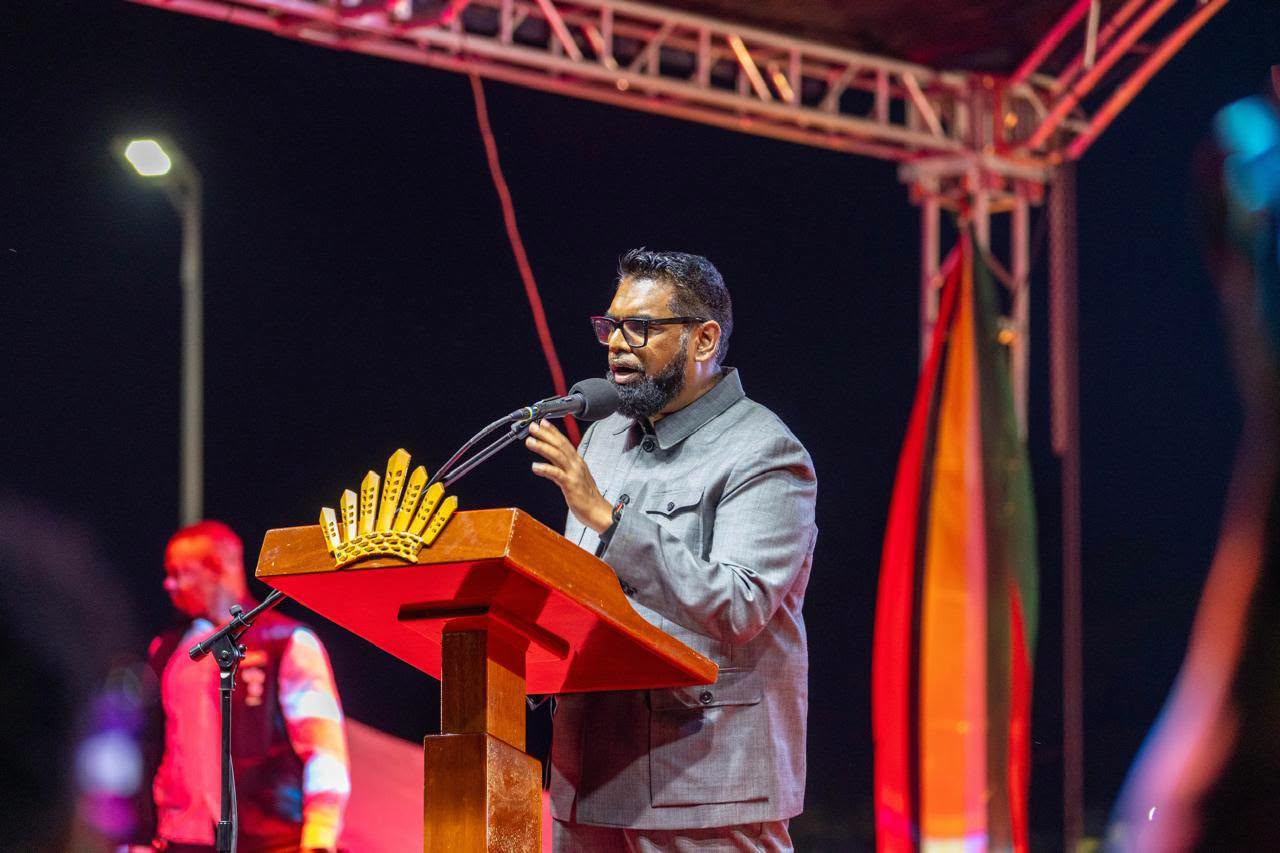
President Dr Irfaan Ali officially commissioned the new Mackenzie-Wismar Bridge on Sunday, bringing to a close a chapter that many residents had grown tired of — one marked by slow-moving traffic, long waits and a crossing that simply could not keep up with the demands of a growing town.
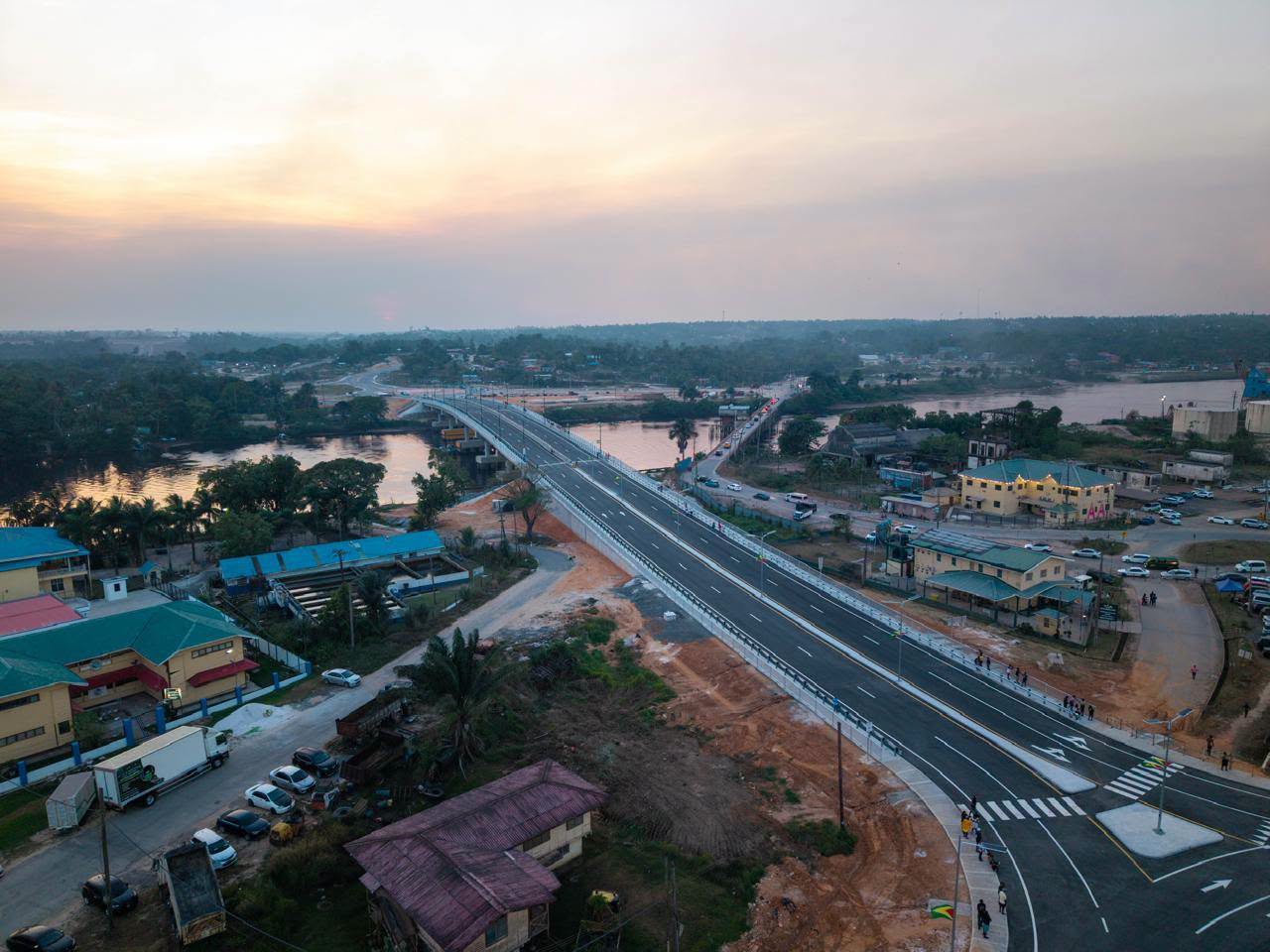
The US$35 million, four-lane structure now spans the Demerara River and will carry traffic in both directions simultaneously, something the old bridge was never designed to do. calories bhi dikhta For the people of Linden, it is not just a road upgrade — it is a long-overdue acknowledgement that the region’s infrastructure needed to catch up with its ambitions.
The bridge has been officially named the Samuel Hinds River Bridge, in honour of the former Prime Minister and briefly Acting President who spent much of his career connected to Linden and the bauxite industry.
Ali was clearly fond of the man he was honouring. He spoke at length about Hinds’ background as a chemical engineer, his two decades as Prime Minister between 1992 and 2015, and the brief period in early 1997 when he assumed the presidency following the death of Dr Cheddi Jagan. What came through most strongly, though, was his characterisation of Hinds as someone who had consistently placed public duty ahead of personal interest — a quality, Ali suggested, that deserved to be remembered in steel and concrete.
“From now and henceforth, this bridge will be known as the Samuel Hinds River Bridge Wismar McKenzie,” the President announced.
The dedications did not stop there. The eastern approach on the Mackenzie side has been named after the late Robert Corbin — former PNC Leader and Deputy Prime Minister — while the western Wismar approach carries the name of current Prime Minister Brigadier (Retired) Mark Phillips. Ali took a moment to explain the Phillips connection, noting that it was Hinds himself who, years ago, had written a recommendation that helped the young Linden resident gain entry into the Guyana Defence Force. Phillips went on to become Chief of Staff before eventually rising to the position of Prime Minister.
Two new roundabouts built as part of the project have been collectively designated the “Roundabouts of Heroes,” recognising individuals from Linden who have made contributions to the development of Region 10. A towering Harpy Eagle monument, with names inscribed on its wings, will form part of a broader recognition of the region’s history and its people.
The numbers tell one part of the story. The structure is 224 metres long, built from prestressed, post-tensioned concrete in a box girder design. It has four vehicle lanes, pedestrian walkways on both sides separated by barriers, a horizontal navigational clearance of 36 metres and a vertical clearance of 10 metres — enough for river vessels to continue operating below. Street lighting runs the full length of the bridge, and it will be toll-free.
The contractor, China Railway Construction (Caribbean) Co. Ltd., formally handed the structure over to the Ministry of Public Works at the ceremony.
But the more important story is what the bridge changes for ordinary people in Linden. The old crossing was built at a time when the town’s economy revolved around moving bauxite ore from one bank to the other. That was a different era, and the bridge reflected it — single lane, slow, and increasingly inadequate as the town grew.
“For too long, motorists and commuters had to come to a bridge that permitted only one lane of traffic at a time,” Ali said.
Businesses have already been factoring the new crossing into their plans. Transport operators expect quicker turnaround times. Families who live on one side of the river and work or study on the other will simply have fewer reasons to leave early or arrive late.
Ali was keen to place the bridge within a wider context — Guyana’s ongoing effort to stitch together its coast, its hinterland and its borders with neighbouring countries through improved road and bridge infrastructure.
Region 10 sits at a geographical crossroads, sharing borders with six other administrative regions. The new bridge strengthens the Georgetown-Soesdyke-Linden corridor and feeds into the road that stretches south towards Lethem and eventually the Brazilian border.
“This bridge is helping to connect the coastline to the hinterland, our northern communities to our southern frontier, and Guyana to the wider South American market,” Ali said.
He also outlined a broader development agenda for the region — upgrades to the Linden-Lethem road, work on the Soesdyke-Linden Highway, improved access to Kwakwani, and investments in housing, drainage, water supply, healthcare and education. The message was that the bridge is not a standalone gesture but part of a longer commitment to Region 10.
He closed by asking residents to take care of what has been built — a reminder that infrastructure, however well-designed, only holds its value when the community around it treats it accordingly.