






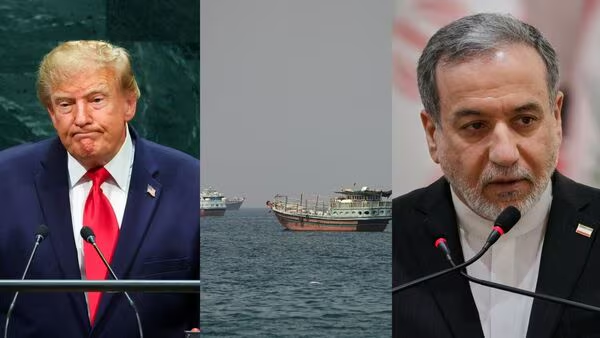
Iran has proposed a diplomatic arrangement that could lead to the reopening of the strategically vital Strait of Hormuz within seven days, while the administration of US President Donald Trump has reportedly rejected the offer.
Iranian Foreign Minister Abbas Araghchi said at the United Nations General Assembly in New York that Tehran had conveyed its proposal to Washington through mediators, including Qatar. Under the plan, the seven-day countdown to reopening the waterway would begin once the United States accepted the proposal.
According to reports, Iran’s proposal includes several conditions. Tehran wants the US naval blockade on Iranian ports lifted, restrictions on Iranian oil exports eased and a ceasefire covering the wider regional conflict, including Lebanon. Iran would then reopen the Strait of Hormuz after seven days and resume discussions on its nuclear programme.
The proposal is based partly on an earlier understanding reached between Iran and the United States in June. That arrangement had provided for a longer period of reduced hostilities and negotiations, but it subsequently broke down amid renewed fighting and tensions over shipping through the strait.
The Strait of Hormuz is one of the world’s most important energy routes, connecting the Persian Gulf with the Gulf of Oman. Disruptions to shipping through the waterway have contributed to pressure on global oil markets and fuel prices. Before the conflict, roughly one-fifth of the world’s traded oil and gas passed through the strait.
However, the Wall Street Journal reported that Trump had rejected Iran’s seven-day proposal, citing US officials familiar with the matter. Reuters also reported that Iran was awaiting an official US response after the report of Trump’s rejection.
The reported rejection leaves the diplomatic effort uncertain as tensions between Washington and Tehran continue. Iranian officials have maintained that the reopening of the waterway is linked to concrete US steps, while Washington has sought negotiations covering Iran’s nuclear programme and broader security issues.
With the Strait of Hormuz remaining a major point of contention, the fate of the Iranian proposal could have consequences not only for the US-Iran conflict but also for regional security, international shipping and global energy markets.