




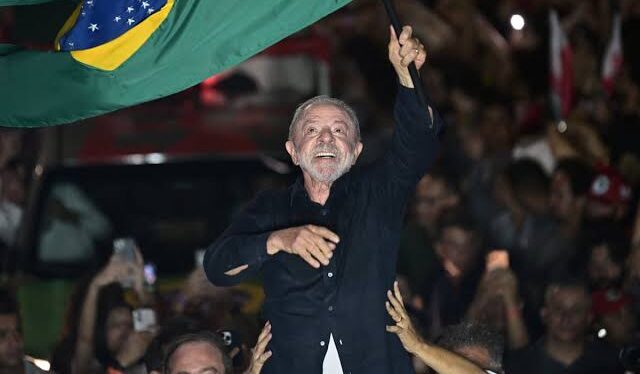
Brazilian President Luiz Inácio Lula da Silva has secured an unprecedented fourth presidential term, defeating far-right challenger Flávio Bolsonaro in a closely contested runoff election on October 25, 2026. The victory marks a dramatic political comeback for the 80-year-old leftist leader and delivers a significant setback to Brazil’s far-right movement and US President Donald Trump’s ambitions in Latin America.
According to Brazil’s electoral authorities, Lula won approximately 51.75% of the valid votes, compared with 48.25% for Bolsonaro, with more than 98% of ballots counted when the result was confirmed. The outcome was particularly striking because Lula had finished behind Bolsonaro in the first round on October 4, forcing him to overcome an early electoral setback to retain the presidency.
The result also makes Lula the first Brazilian president in the country’s modern democratic era to win four presidential elections. He previously served two consecutive terms from 2003 to 2010 before returning to power in 2023 following his victory over Bolsonaro’s father, former president Jair Bolsonaro.
A Historic Comeback Against the Far Right
Lula’s victory followed weeks of intense campaigning, public rallies and voter mobilisation across Brazil. His campaign focused on tackling poverty, reducing inequality, protecting workers’ rights and strengthening social welfare programmes.
The president also sought to appeal to voters concerned about the cost of living and household debt. His supporters viewed the election as a crucial contest over Brazil’s democratic institutions and the country’s political direction.
Flávio Bolsonaro, a senator and the son of former president Jair Bolsonaro, campaigned on a conservative platform and sought to revive the political movement built by his father. His first-round victory had raised expectations that Brazil could become the latest Latin American country to shift towards the political right.
However, Lula’s stronger performance in the runoff overturned those expectations and secured another term for the Workers’ Party leader.
A Setback for Donald Trump’s Latin American Strategy
The election result represents a setback for US President Donald Trump, whose political allies have sought to strengthen conservative influence across Latin America. The Bolsonaro family has maintained close ties with Trump and his political movement, making the Brazilian election an important contest for the region’s ideological balance.
Lula has repeatedly emphasised Brazil’s sovereignty and opposed what he considers foreign interference in the country’s domestic affairs. Tensions between his government and the Trump administration have also involved trade tariffs and disagreements over political and judicial matters.
Lula’s re-election is likely to preserve these differences, although the extent of future tensions will depend on diplomatic negotiations and economic relations between the two countries.
Social Media and Meta Become Part of the Election Debate
Digital campaigning played an important role in the closely fought election. Lula’s campaign used social media platforms and messaging networks to mobilise supporters, distribute campaign messages and encourage voter participation.
The contest also revived debate about the influence of technology companies, particularly Meta, the parent company of Facebook, Instagram and WhatsApp, on political communication and electoral campaigns.
Lula’s supporters raised concerns about social media algorithms and the spread of political misinformation. Meta has denied favouring either candidate. The broader debate has highlighted the growing importance of digital platforms in shaping political discussions and reaching voters during election campaigns.
Challenges Ahead for Lula’s Fourth Term
Despite the historic victory, Lula faces significant challenges as he prepares for another term. Brazil remains politically divided, and conservative parties have secured substantial representation in Congress, potentially limiting the government’s ability to pass legislation.
Economic pressures, including high interest rates, public debt and household borrowing, will also test the administration. Lula has promised to continue social programmes and pursue policies aimed at improving living standards, but delivering those commitments will require political negotiations and careful economic management.
Meanwhile, Flávio Bolsonaro has refused to concede and indicated that he intends to challenge the election result, citing concerns over the decision to extend voting hours in some areas. However, available reporting suggests that overturning the result is considered unlikely.
Lula’s victory is a landmark moment in Brazilian politics, demonstrating his continued electoral strength despite a polarised political environment. His fourth term will test whether he can translate that mandate into economic progress, social stability and effective governance while navigating opposition at home and tensions abroad.