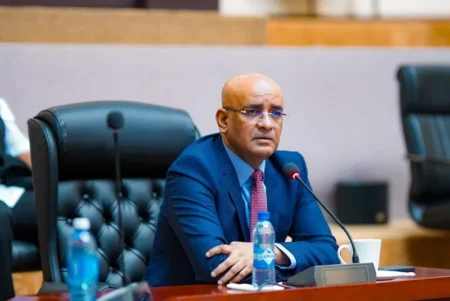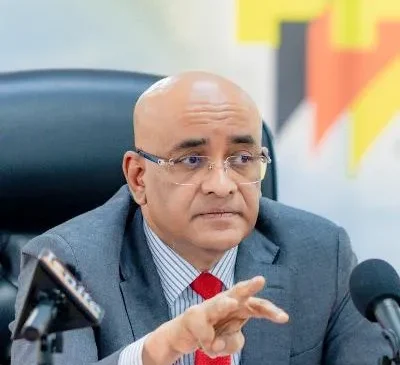








The wait for Guyana’s most consequential energy project is almost over — but residents will need to hold on a little longer than originally hoped. Vice President Dr Bharrat Jagdeo said on Thursday evening that the 300-megawatt Gas-to-Energy power plant at Wales will reach full capacity by June 2027, with an earlier partial start expected by the end of March next year.
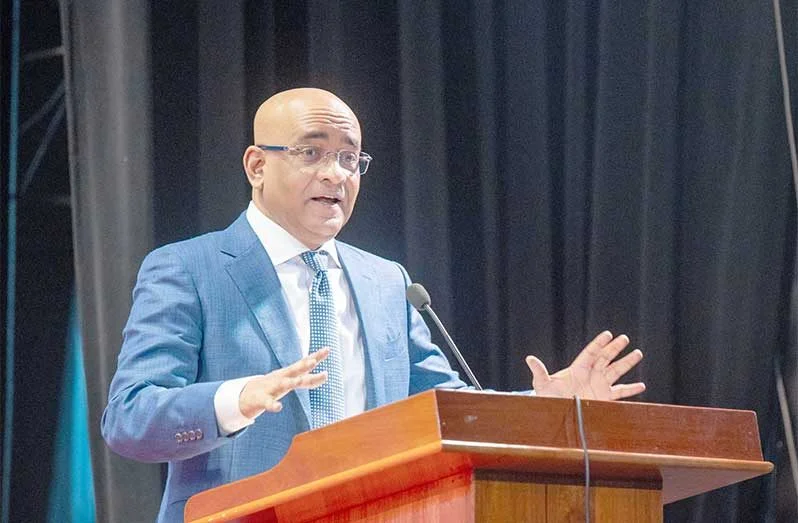
Speaking to private sector stakeholders at the Marriott Hotel in Georgetown, Jagdeo broke down the timeline in practical terms. The plant will first come online in its single-cycle stage, delivering approximately 220 megawatts — a significant addition to the national grid on its own. The combined-cycle phase, which captures heat from the gas turbines to squeeze out additional generating capacity, will follow a few months later. “That’s about 220 megawatts coming in. And then the combined cycle will come in a little later, June or so, for it to be completed,” he said.
The Vice President did not sugarcoat the project’s history. Delays have happened, costs have climbed, and there have been disputes along the way. He addressed each of these directly.
The most contentious issue involved a disagreement with the project’s main contractor, Lindsayca. The company argued that the access road to the Wales site was not ready and was of poor quality when it arrived, and that the site itself required more preparation work than the contract anticipated. On that basis, Lindsayca sought an additional US$50 million from the government to cover what it characterised as cost overruns.
The government pushed back. Jagdeo explained that ExxonMobil had carried out the early site preparation and access road works on the government’s behalf, and that the administration disputed the contractor’s characterisation of the conditions it encountered. The matter was eventually referred to the Dispute Avoidance and Adjudication Board, which issued a ruling in January 2025.
After that ruling, the government initially considered taking the dispute to full arbitration. It changed course. Jagdeo said the decision came down to time — arbitration proceedings would have dragged on for years, pushing the project even further behind schedule at a moment when the country urgently needs new generating capacity. Negotiating a settlement, even if imperfect, was judged to be the faster and more practical path forward.
In the meantime, Guyanese consumers will continue to be shielded from the full cost of power generation. Jagdeo reaffirmed that the government will keep subsidising Guyana Power and Light for as long as necessary to ensure that electricity bills do not spike in response to volatile fuel prices on the world market. That subsidy commitment carries a heavy price tag — as he outlined earlier this week, the government is spending roughly G$95 billion this year alone to keep the gap between what consumers pay and what power actually costs from landing on household bills.
Once the Gas-to-Energy plant is running at full capacity, that calculation changes dramatically. With natural gas from the Stabroek Block replacing the imported fuel that currently drives generation costs, the government expects to save around US$300 million a year. The subsidies, in their current form, would no longer be necessary.
For now, though, the country waits — and June 2027, by Jagdeo’s account, is when the waiting ends.