





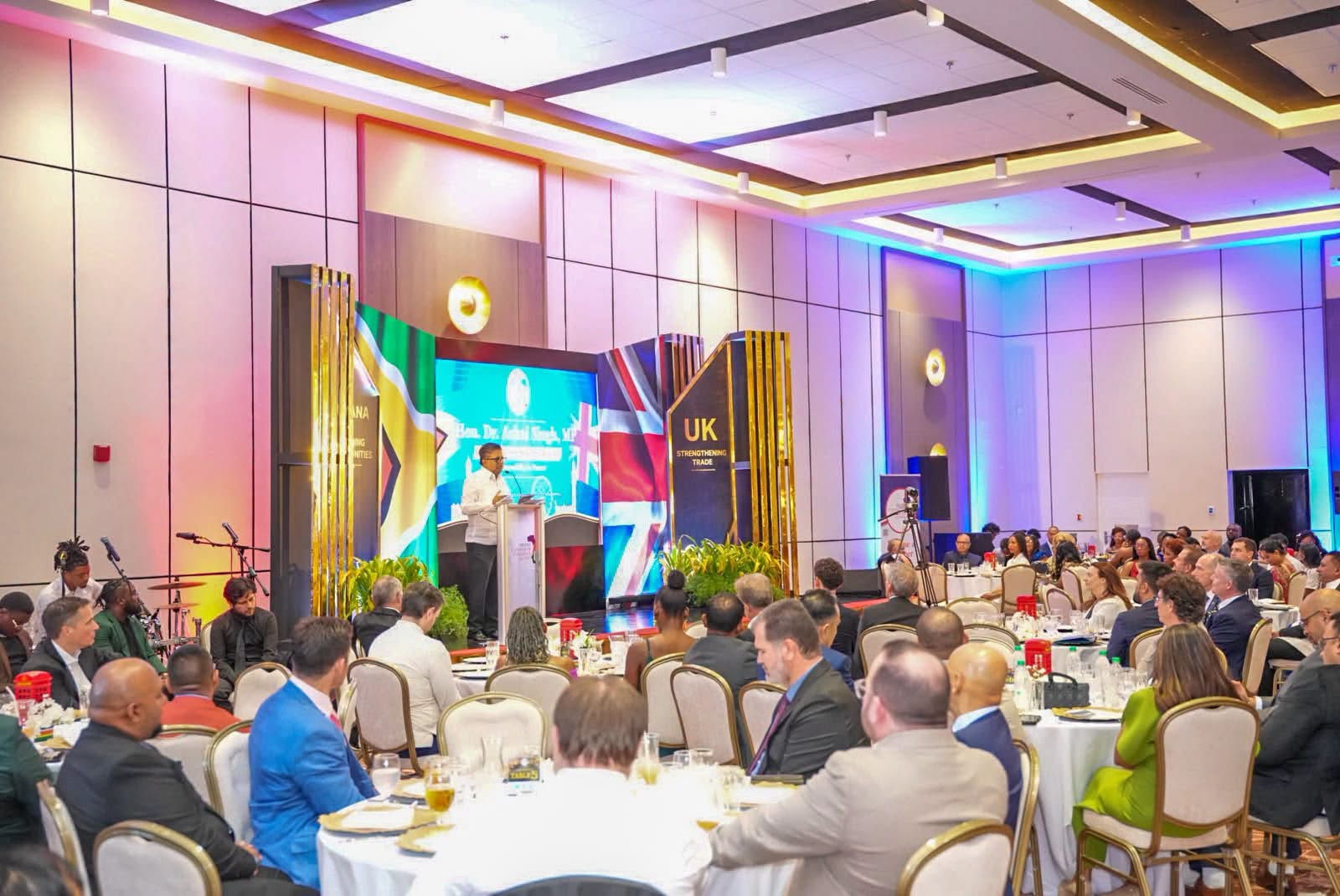
If there was a single message Finance Minister Dr Ashni Singh wanted the visiting British trade delegation to leave with on Thursday evening, it was this: the window is open, the opportunities are real, and the time to move is now.
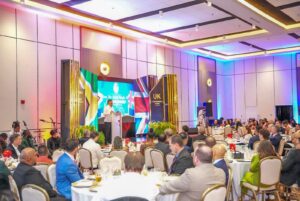
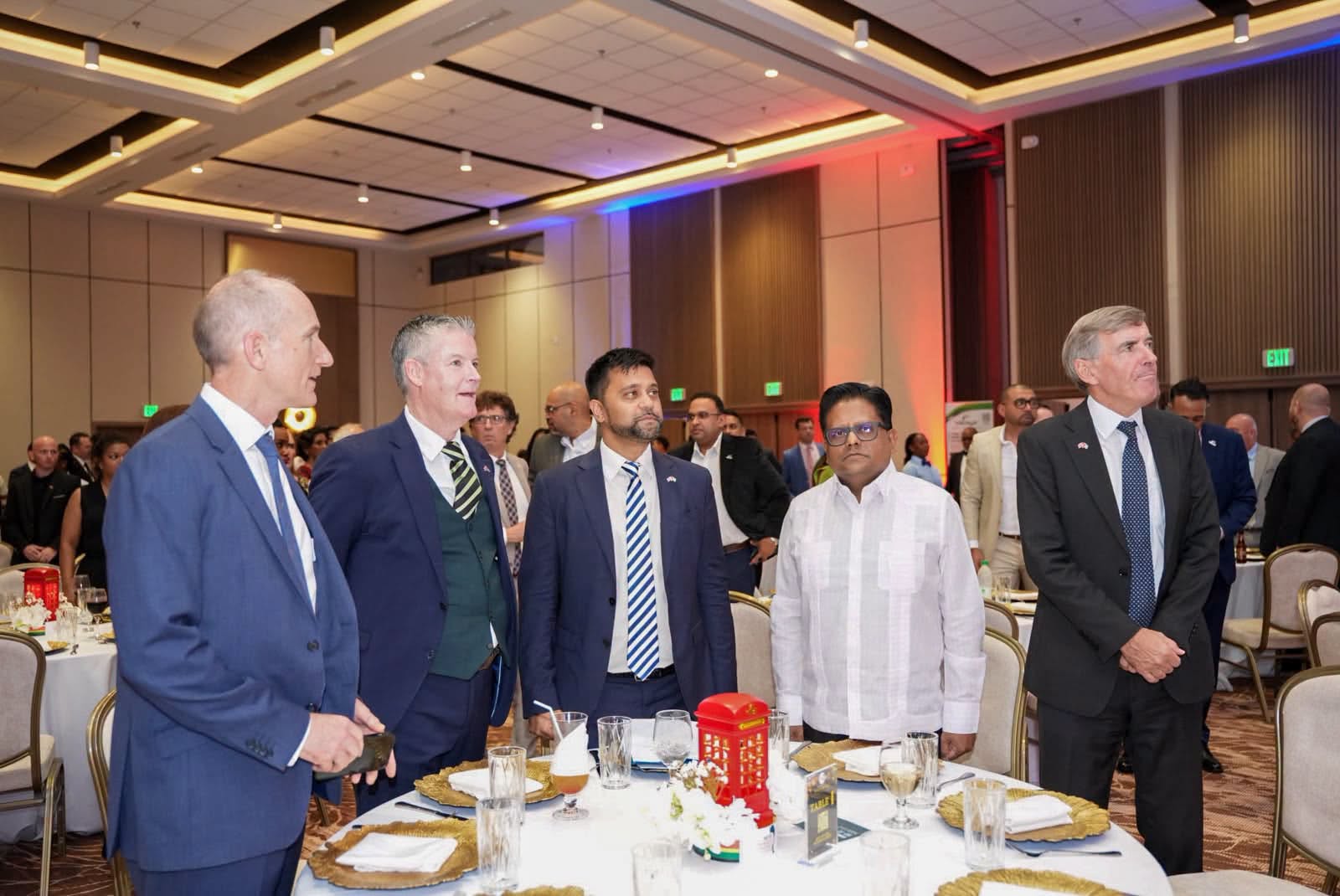
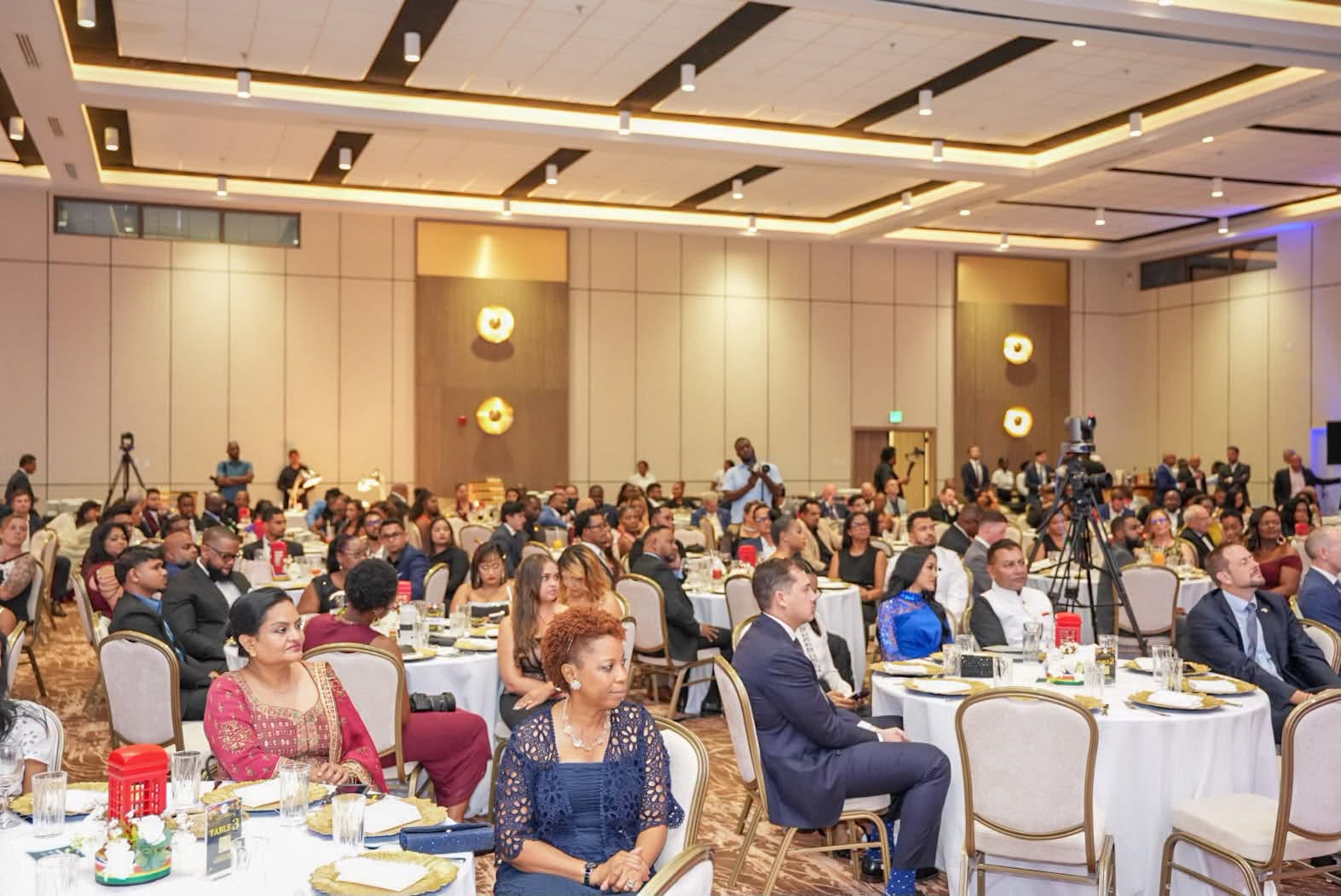
Speaking on behalf of President Dr Mohamed Irfaan Ali at the British Chamber of Commerce Guyana Gala Dinner, Dr Singh addressed a room full of UK business representatives who had travelled as part of the Caribbean Council’s sixth consecutive annual trade mission to the country. His pitch was direct and unapologetic — Guyana is experiencing a transformation unlike anything in its history, and there is room for those willing to show up and commit.
The numbers he presented made the scale of that transformation hard to argue with. When oil production began in December 2019, Guyana was pumping around 120,000 barrels per day. By the end of 2026, that figure is expected to hit approximately 1.1 million barrels per day. By the end of the decade, the projection climbs to 1.5 million. In a few years, Guyana has gone from an oil frontier to one of the fastest-growing producers on the planet.
But Dr Singh was careful to frame Guyana’s story as something bigger than oil. Revenues from the offshore Stabroek Block are being channelled into roads, bridges, hospitals, and schools across the country, while also funding a push to diversify the economy well beyond petroleum. Among the major projects he highlighted: a gold mine that ranks as South America’s second-largest, expanded bauxite extraction, two gas pipelines, and the ambitious Berbice corridor — a development that would bring together a deep-water port, a highway connection to northern Brazil, and a large industrial complex.
Private investment is following public spending. Hotels, factories, and warehouses are going up across the country, and the minister made it clear that the government sees British firms as natural partners in that build-out.
His advice to the delegation was pointed. A one-off sale is not what Guyana needs from international partners, nor will it serve British companies well. Instead, he urged a lasting footprint — distributorships, assembly or manufacturing operations, and regional headquarters. Companies that plant a flag in Guyana now, he suggested, will be far better positioned than those who wait and watch from the sidelines.
For those concerned about how foreign firms fit into a country with a Local Content Act, Dr Singh was reassuring but firm. The legislation, passed in 2020, sets minimum thresholds for Guyanese participation and inputs in the petroleum sector, and he said the government fully stands behind it. “I want to be very clear and unequivocal that we are very transparent and unapologetic in our desire to promote opportunities for Guyanese companies and Guyanese nationals,” he said. But he also pointed out that the Act is not a barrier to foreign investment — it is an invitation to partnership. Pairing international capital, technology, and expertise with local knowledge has already produced successful joint ventures, and he encouraged more of the same.
He also took a moment to commend the Caribbean Council for sustaining its trade mission programme, noting that more than half of the companies that have participated in past delegations have gone on to conclude actual transactions in Guyana. That is not a ceremonial exercise — it is a track record.
He closed with a nod to history, referencing the long British fascination with Guyana’s extraordinary natural wealth — from Sir Walter Raleigh’s search for El Dorado to Sir David Attenborough’s documentaries on the country’s remarkable biodiversity. The difference today, he told the room with a touch of wit, is that the opportunities on offer will bear fruit considerably faster than those earlier expeditions managed.
“Your opportunities are almost boundless,” he said. “You’re in the right place at the right time.”