







Every time a Guyanese household pays its electricity bill at 23 cents per kilowatt-hour, the government quietly picks up the rest of the tab. The actual cost of generating that power is 34.56 cents per kilowatt-hour — meaning the difference, when multiplied across the country, amounts to roughly G$95 billion this year alone.
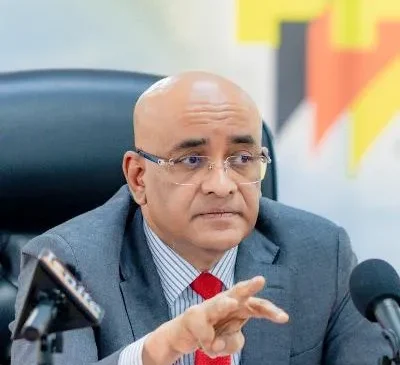
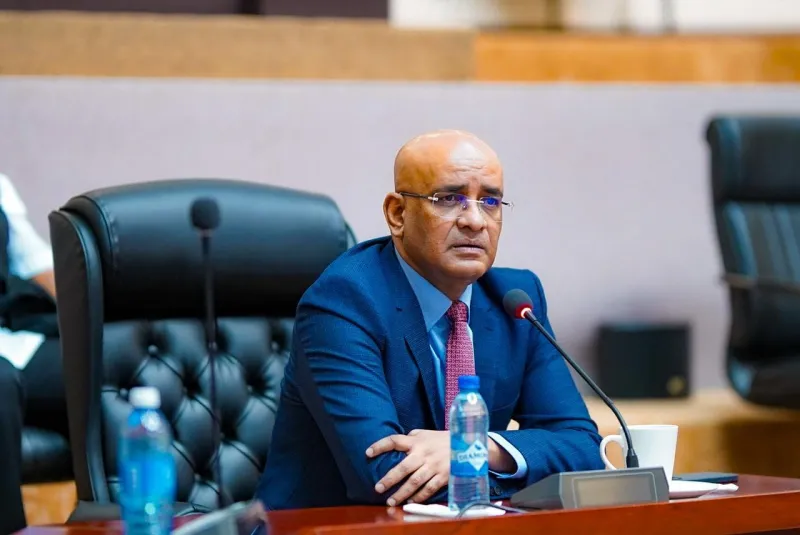
Vice-President Dr Bharrat Jagdeo laid out those figures Thursday evening at the Guyana Manufacturing and Services Association’s annual awards dinner at the Kingston Marriott, in what amounted to a frank accounting of how much it costs to keep Guyana’s lights on while the country builds toward a more sustainable energy future.
Of that G95billion,G33 billion is going directly toward electricity subsidies — essentially the gap between what consumers pay and what power actually costs to produce. The remaining G$62 billion is flowing into capital subsidies for power infrastructure: the hardware, the upgrades, the construction that the grid desperately needs.
“So just think about the scale of the financing and what we have to do,” Dr Jagdeo told the audience, acknowledging that the numbers are staggering. “But we have no other choice but to do it, and we’re working on all these pieces right now.”
The high generation cost comes down to fuel. Guyana currently imports significant volumes of fuel to run its power plants, and global fuel prices make that expensive. The government’s long-term answer is the Gas-to-Energy project in Wales, which will pipe natural gas from the offshore Stabroek Block to a combined-cycle power plant capable of generating 300 megawatts in its first phase, with a second phase doubling that to 600 megawatts.
The numbers Jagdeo presented on the GTE project make its importance hard to overstate. Once the plant is operational, the government estimates it could save Guyana approximately US$300 million annually in fuel imports alone. Power from the facility is expected to be sold to Guyana Power and Light at around five US cents per kilowatt-hour — compared to the current generation cost of roughly 30 cents. That is not a marginal improvement. It is a fundamental transformation of the country’s energy economics.
Dr Jagdeo also addressed the controversy over the project’s rising costs and delays, defending the government’s decision to negotiate a settlement with the contractor rather than pursue arbitration. He said the dispute centred on the condition of a road in the pre-project area and delays in site preparation. The government believed the contractor’s claims were contestable but concluded that arbitration would have dragged the project out for years — an outcome far more costly than settling. “Our best bet would be to negotiate because arbitration would lead to further delays,” he said.
He did not pretend the project has been without problems. Delays have occurred, costs have risen, and he acknowledged both. But he asked his audience to weigh those setbacks against the scale of what is being built and what it stands to deliver.
The government is also working through the operational and maintenance arrangements for both the power plant itself and the associated natural gas liquids facility that will accompany it.
Beyond generation, however, Dr Jagdeo turned to a challenge that gets less attention but is just as urgent: the state of the grid that electricity actually travels through before it reaches a home or business.
He put the cost of the transmission and distribution overhaul Guyana needs at nearly US$5 billion — a figure that reflects the depth of the problem. The planned upgrades include new transmission backbones, stronger lines, additional substations, and a modernised smart grid capable of meeting the demands of a rapidly growing economy. Since 2019, peak electricity demand has more than doubled, and the number of customers connected to the grid has grown in tandem.
The current network, Jagdeo said, was simply not built for this. It lacks the redundancy a modern grid requires, so damage to something as minor as a single utility pole can knock out power to entire neighbourhoods. Overloaded distribution lines and transformers are making the system increasingly unstable, and that instability will only worsen as demand continues to climb.
The picture Jagdeo painted on Thursday was of a government caught between the grid it inherited, the economy it is managing, and the energy system it is trying to build. The subsidies are expensive and unsustainable in the long run. The Gas-to-Energy project is the answer, even if it hasn’t been clean or cheap to deliver. And the grid overhaul is the work that comes after — longer, costlier, and arguably even more important than the generation capacity it will carry.