







Guyana’s leadership in low-carbon development and in biodiversity preservation is not merely for recognition in the world. It is designed for Guyana and Guyanese to play our part in ensuring a safer world by helping to reduce carbon emissions, ensuring we contribute to stopping global warming and easing climate change. The problem is that while small countries, like Guyana, which in no way are responsible for the global climate mess we presently face, are not the countries that are most responsible for carbon emissions, global warming, and climate change are procrastinating, not adequately accepting their responsibilities to help curb the problem.
Today’s Rumination is a desperate call to action – the world must defend, at all costs, the 1.5°C climate goal. To protect life as we know it, the 1.5°C limit must be our North Star. There must be no ifs, ands, or buts. Failure to defend the 1.5°C limit exposes this and all generations to come to a future with existential threats. Overshooting the 1.5°C limit invites a catastrophic future for mankind, no matter where people live. We are all in the same boat. There is no more urgent business for this generation – we must defend at all costs the 1.5°C limit. In this regard, the recently concluded COP31 was a colossal disaster. No hyperbole is intended.
COP31, held in Antalya, Türkiye, ended in overtime on Sunday last, in disarray, disappointingly, without an agreement. The climate COPs are where global leaders gather each year to make commitments in the fight against climate change. Of the 31 COPs so far, this was the longest and, perhaps, also, one of the most disappointing of all. The final outcome of COP31 can best be described as a catastrophic backpedalling from the 1.5°C limit in global temperature increase over the pre-industrial global temperature. We must find a way that this backpedalling is temporary. Time is not on our side, and, thus, COP32 in Ethiopia must correct the disastrous trajectory that COP31 has hurled us toward.
COP31 was the first COP since the UN warned that global temperatures are expected to exceed 1.5°C above pre-industrial levels by 2030. It has already reached 1.4, and the estimate is that it will reach at least 1.8 by 2050. We had all agreed when we signed the Paris Climate Agreement in 2015 that the global temperature increase must not be allowed to overshoot more than 1.5°C. Defending the 1.5°C limit—even as UN assessments warn of a likely temporary overshoot around 2030—must now become a critical priority global ambition because every 0.1°C of warming avoided reduces extreme weather, irreversible ecosystem damage, and climate tipping points.
With the present existential trajectory, global temperature increase is expected to top 1.8°C by 2050 and surpass 2°C by the end of the 21st century. COP31 took place with the uncomfortable truth that we have failed to defend the 1.5°C goal, one of the most critical goals we set ourselves in the 2015 Paris Climate Agreement. One, therefore, would have thought that there would have been an existential sense of urgency at COP31. Instead, we went into overtime and still failed to get an agreement.
Almost exactly a decade ago a group of the world’s climate scientists – the official UN body, the IPCC – warned about the disasters that loom if we fail to defend the 1.5°C goal. They warned us that should we fail to defend against global temperature increase from overshooting the 1.5°C limit, for every 0.1°C increase above 1.5°C, the world will experience a sea level rise of 10cm, exposing another 10 million people to devastating floods; an increase in ocean acidity, risking irreversible damage to marine life; and extreme heat, both days and nights, that risks human diseases and increased deaths.
One of the imperatives of this generation, therefore, is to reduce carbon emissions, not as an option, but to protect our world. One way to reduce CO₂ emissions is to reduce and eliminate fossil fuel-based energy by 2050. We made that pledge at COP28 in Dubai. Even with the dire predictions that the 1.5°C limit will be breached by 2030, we back-pedalled at COP31. Some oil-exporting nations opposed including fossil fuel phase-out language. The EU, the UK, small island states, and developing allies rejected the COP31 draft text because it completely omitted any mention of transitioning away from coal, oil, and gas, seriously backpedalling away from the COP28 pledge.
One positive out of Antalya is the voluntary agreement named “35X35”. This voluntary agreement seeks to increase the electricity portion of the total global consumed energy from 23 per cent today to 35 per cent by 2035. This means more electric vehicles, for instance, in an effort to move towards cleaner energy. The catch is that the increased portion of electricity must be driven by clean energy. Presently, the global pace for increased clean electricity in the overall global energy consumption is only at 28 per cent by 2035. At this pace, global temperature increase is projected to reach 2.5°C, far above the 1.5°C limit. This is catastrophic for life on earth.
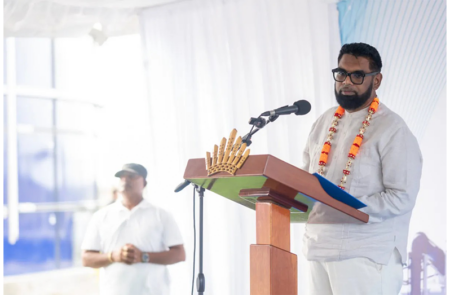
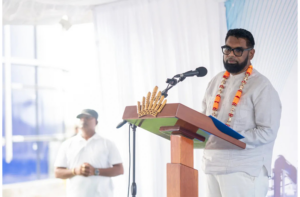
We have to do better. Guyana and many small developing countries are doing their part. Leaders in many developing countries, like President Irfaan Ali and VP Bharat Jagdeo, are steadfast in ensuring their countries are making the investments in climate mitigation and adaptation to save the world. But the world needs every country to do their part. COP31 demonstrates that not every global leader, not every country, is doing enough to change the dangerous climate trajectory that is hurling the world to a future of natural disasters that we might not survive.