






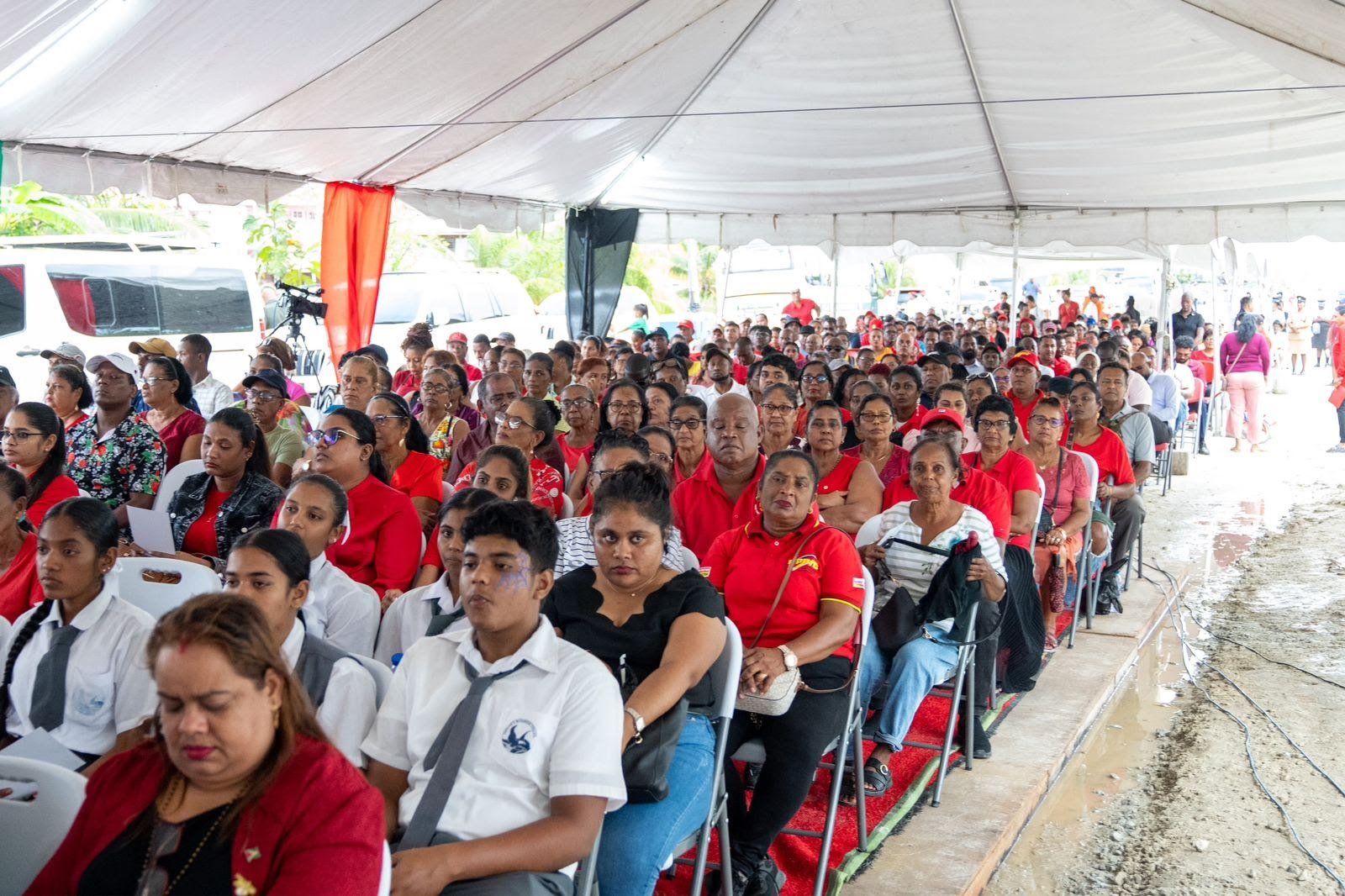
Beneath the Enmore Martyrs monument on Tuesday, flowers rested quietly while generations of Guyanese gathered to remember five sugar workers- Lallabagie, Harry, Pooran, Rambarran, and Surajballi- whose deaths 78 years ago became a defining moment in the country’s fight for justice and dignity.
Delivering feature remarks at the ceremony commemorating Enmore Martyrs Day, President Dr Mohamed Irfaan Ali reflected not only on the events of June 16, 1948, but on what those men left behind for generations they would never meet.

Standing before the monument erected in their honour, the president shared a story.
A young girl, he recounted, once asked her grandmother why there was a monument in Enmore for men she had never known.
The grandmother took her hand and replied: “Because child, if those men had not stood up when they did, life for many of us would have remained bent under the weight of heartless injustice, extreme hardship and cruel oppression.”
The child looked around at the roads, schools, businesses and homes around her and asked what those men had to do with all of it.

President Ali laying the wreath at the base of the Enmore Martyrs’ monument
The answer, President Ali said, was simple.
“Everything, because every generation enjoys things that another generation had to fight for.”
That message formed the centre of the president’s address as he paid tribute to the Enmore Martyrs, sugar workers who lost their lives while standing against unfair labour conditions and demanding recognition and dignity.
The president said their sacrifice created a foundation upon which future generations continued to build.
“Seventy-eight years ago, the struggle was for dignity and freedom and recognition,” he stated.
Drawing parallels between past and present, President Ali said each generation faces its own defining moment.

He spoke of political and economic struggles in more recent decades and argued that preserving democracy, protecting jobs and safeguarding opportunities are also forms of service to future generations.
He said development today must honour that history not merely through remembrance but by expanding opportunity.
Pointing to transformation underway in Enmore and surrounding communities, President Ali referenced investments in healthcare, roads, education, housing and economic opportunities as part of continuing that legacy.

He highlighted the regional hospital now serving thousands of East Coast residents, the expanding road network and plans for an industrial development zone aimed at creating opportunities for small and medium-sized enterprises and agro-processing.
“Our level for workers is not one level forever. Our level is to move them from one status to the next status so that their children can enjoy a different starting point,” the president said.
He noted that the standard by which workers measure progress today is different because of generations who fought before them.
For many Guyanese, Enmore Martyrs Day remains more than remembrance. It is a reminder that the freedoms, rights and opportunities enjoyed today were paid for by those who refused to accept injustice.