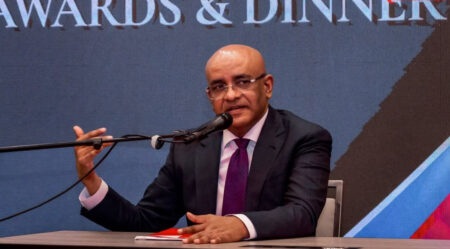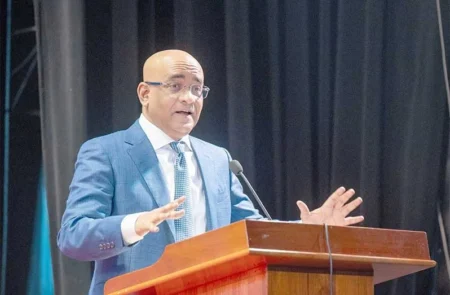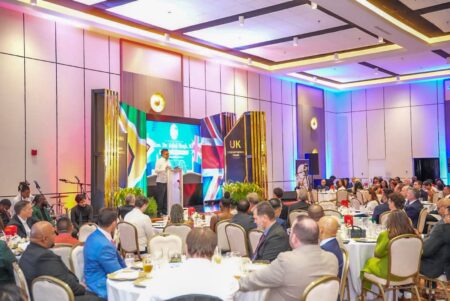







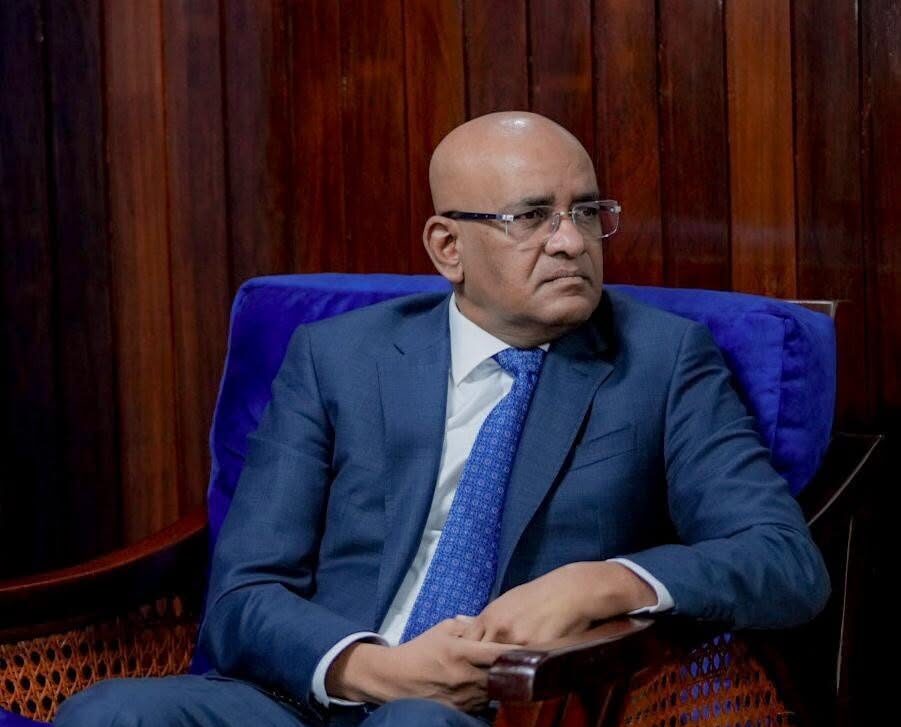
Guyana is pumping more oil than ever before, but the government is not waiting for the wells to run dry before figuring out what comes next. Vice President Dr Bharrat Jagdeo used Thursday evening’s Guyana Manufacturing and Services Association awards ceremony at the Marriott Hotel to lay out how the country intends to build an economy that can stand on its own long after the petroleum era ends.
The Vice President was candid about the structural limits of an oil-driven model. Revenues have been real, and business opportunities significant — but he acknowledged that oil and gas wealth does not naturally spread across the economy. “Although this model has brought quite a bit in terms of revenue and business opportunities, it’s enclavic,” he said. “It’s also not closely linked to the wider economy, except through the Local Content Act. It doesn’t directly generate many investments.”
That observation — that petroleum wealth tends to pool rather than permeate — is driving the government’s push to build out alternative industries now, while Guyana still has the revenue to invest in them. “There’s still major global demand for oil and gas resources,” Jagdeo said, “but we need to start now, discussing and building out the post-oil and gas economy.”
To illustrate why that urgency matters, he pointed to Trinidad and Tobago. After years of conversations with former prime ministers Patrick Manning, Basdeo Panday, and Kamla Persad-Bissessar, Jagdeo said he left each one with the same impression: a country that had been in the oil and gas business for more than a century and had, in many respects, still not adequately prepared for what comes after. The lessons from that experience — in employment, business development, and long-term growth — are ones Guyana is actively trying to absorb before it faces the same crossroads.
The government has identified a cluster of industries that, while smaller than the petroleum sector, have real export potential and deep linkages with the broader economy. Dr Jagdeo said these sectors could each generate US$20 to US$50 million in revenue, create thousands of jobs, and serve the dual purpose of boosting exports and reducing the country’s import dependence. He did not name every sector but framed them as industries where Guyana has a competitive advantage and where targeted support can yield meaningful results.
Building the institutional infrastructure to support that diversification is also part of the plan. Dr Jagdeo acknowledged that good industries need more than government willingness — they need functional regulatory frameworks, skilled workforces, and the kind of business environment that makes investors comfortable committing capital for the long term.
Geography matters too. A persistent risk of a resource boom is that wealth concentrates in the capital, leaving the rest of the country behind. Dr Jagdeo said the government is deliberately targeting regions beyond Georgetown with infrastructure investments and incentive packages to attract business activity where it is most needed. Region Three, home to the Gas-to-Energy project at Wales, was singled out as an area where the government is prepared to co-invest directly in projects to spur economic activity.
Dr Jagdeo’s broader argument is one that oil-rich nations rarely make convincingly while the money is still flowing: that the purpose of a resource windfall is not the windfall itself, but what you build with it while you have the chance. He suggested that Guyana intends to be the exception — a country that looked at what happened elsewhere, took the warning seriously, and began laying the foundation for what comes next before the question became urgent.