




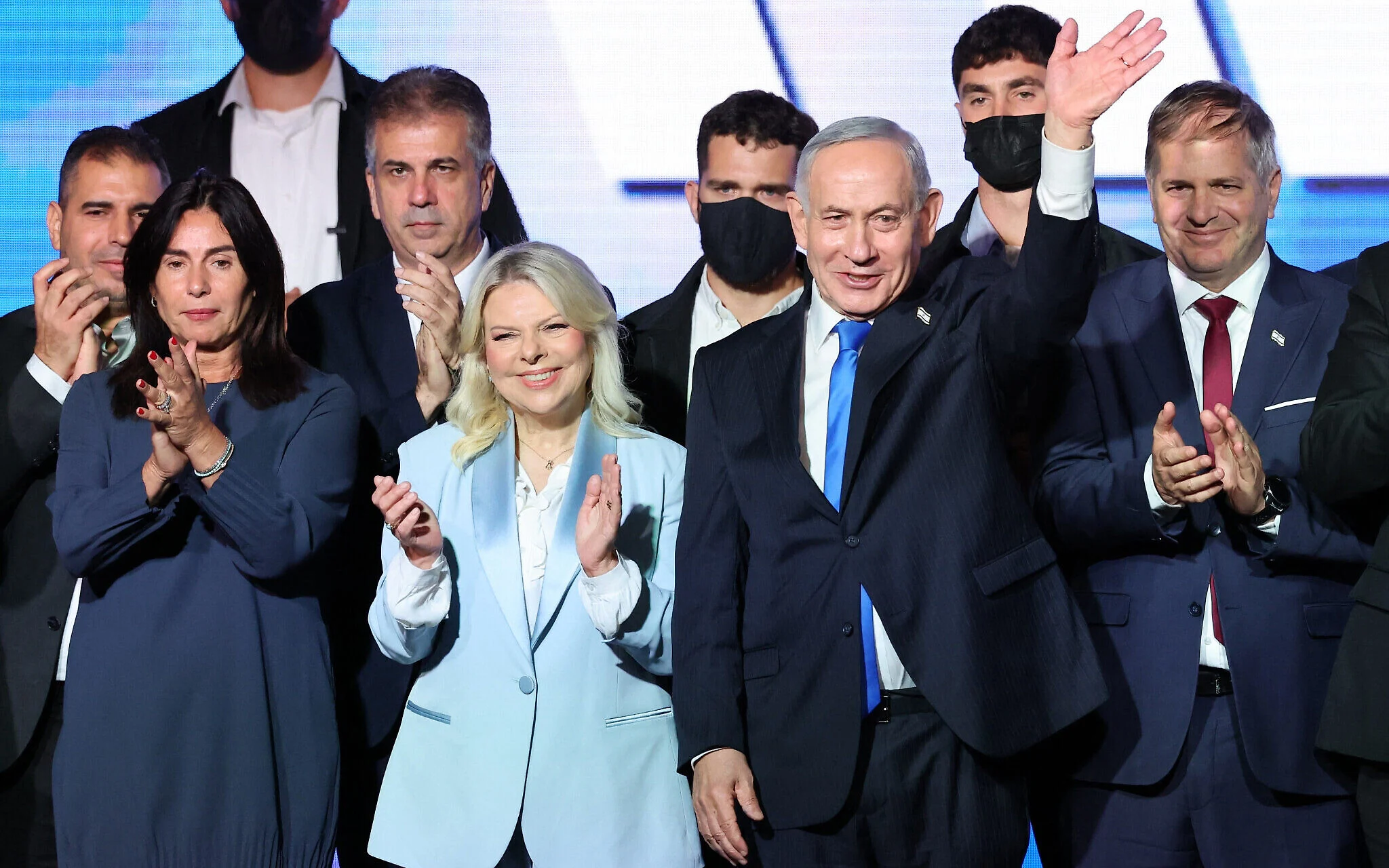
Israel’s latest general election has produced a closely contested political landscape, with Prime Minister Benjamin Netanyahu’s right-wing bloc emerging ahead of its rivals but falling short of the parliamentary majority required to form a government independently. The result has opened the door to complex coalition negotiations, with opposition leader Gadi Eisenkot also seeking to build an alternative governing alliance.
With nearly 90 per cent of ballots counted, preliminary projections indicate that Netanyahu’s bloc could secure approximately 53 seats in Israel’s 120-member parliament, known as the Knesset. The opposition bloc led by Eisenkot is projected to win around 48 seats, while parties representing Arab citizens of Israel could collectively secure approximately 19 seats. Neither major bloc has reached the 61 seats needed for a parliamentary majority, making negotiations with smaller parties crucial to determining the country’s next government.
Despite falling short of a majority, Netanyahu remains a significant force in Israeli politics. His Likud party and its right-wing allies continue to command substantial support among voters, particularly those who prioritise national security and a firm military response to regional threats. Netanyahu has emphasised Israel’s security challenges, including its confrontation with Iran, as central issues for the country’s future. However, his leadership continues to face criticism over the security failures surrounding the Hamas-led attacks of October 7, 2023, the subsequent wars, and other domestic political controversies.
Opposition leader Gadi Eisenkot has presented the election as an opportunity for political change and greater accountability. A former chief of staff of the Israel Defense Forces, Eisenkot has sought to unite parties opposed to Netanyahu under a common political platform. Although his bloc trails Netanyahu’s alliance in preliminary projections, the opposition could potentially form a government if it secures sufficient support from smaller parties. Achieving that goal, however, will require overcoming ideological differences and disagreements over cooperation with Arab-led political groups.
One of the most significant developments in the election is the projected performance of parties representing Arab citizens of Israel. Their combined representation could give them considerable influence over coalition negotiations. Their support may prove essential if the opposition hopes to assemble a parliamentary majority, but political disagreements and resistance among some Jewish-led parties to formal cooperation with Arab parties could complicate those efforts. As a result, the decisions made by smaller parties may ultimately determine whether Netanyahu remains in power or an alternative government emerges.
Under Israel’s parliamentary system, a party does not automatically form a government simply by winning the largest number of seats. Instead, the prime minister must secure the support of a parliamentary majority, generally through a coalition of parties. President Isaac Herzog is expected to consult political party leaders after the official results are announced and determine who is best positioned to form the next government. If coalition negotiations fail, the country could face prolonged political uncertainty and potentially another election. Until a new government is formed, Netanyahu is expected to remain in office as caretaker prime minister.
The election comes at a critical time for Israel, with national security, relations with neighbouring countries, the conflict involving Iran, and the future of the Palestinian territories continuing to dominate public debate. Netanyahu has emphasised military strength and cooperation with the United States, while opposition figures have called for changes in leadership and greater accountability. The composition of the next government will therefore have implications not only for Israel’s domestic policies but also for its diplomatic relationships, military strategy, and role in the wider Middle East.
International observers will closely monitor the coalition negotiations, particularly given the potential impact of Israel’s political direction on regional stability. A government led by Netanyahu could continue to prioritise his existing security policies, while an opposition-led administration might seek a different approach to governance and certain diplomatic challenges. However, the precise direction of any future government will depend on the parties involved and the compromises reached during negotiations.
Israel’s election has therefore delivered an inconclusive result rather than a decisive political victory. Netanyahu’s bloc has emerged ahead in preliminary projections, but its failure to secure a parliamentary majority has left the path to government formation uncertain. For Eisenkot and his allies, the challenge is to turn opposition support into a workable coalition, while Netanyahu must persuade enough parties to support his continued leadership. As negotiations unfold, the final outcome will depend on the official seat count and the willingness of rival political groups to compromise. The result could shape Israel’s political future, national security priorities, and regional relationships for years to come.