






This week, COP17 is being held in Yerevan, Armenia. COP17 is the 17th Conference of Parties (COP) on Biological Diversity. It is not surprising that delegations from around the world seek out Guyana. After all, Guyana has gained a giant reputation as a country fighting against global warming, climate change, and biodiversity. At the same time, Guyana has turned our forest preservation into an economic pillar, generating an income stream through carbon credits.
Twenty years ago, President Bharrat Jagdeo had announced that Guyana would base its development strategy on a low-carbon development (LCD) model. The nay-sayers, of course, tried to belittle and ridicule him and his Government. They claimed then that fighting against global warming and climate change, fighting to preserve our forest, and fighting to preserve our biodiversity as part of our development trajectory could not and would not generate revenues for Guyana. They have been proven wrong. And Bharrat Jagdeo became the UN’s “Champion of the Earth”.
More than 20 years ago, while the usual nay-sayers in Guyana were ridiculing President Bharrat Jagdeo for “a hare-brained notion”, the majority of Guyanese shared his vision, and internationally, organisations and leaders cheered him on. Among those who cheered for Bharrat Jagdeo more than 20 years ago was King Charles III. Then Prince Charles was an early supporter of Bharrat Jagdeo’s vision. He has remained an ardent supporter of Guyana’s exemplary biodiversity track record in the last 20 years. Tomorrow, October 29, King Charles III will arrive in Guyana to attend a biodiversity conference being hosted by Guyana. Our country’s sterling fight to ensure the preservation of our biodiversity, including our forests, continues to inspire people, no matter what their statuses might be, around the world.
Later this week, Guyana hosts the second Global Biodiversity Alliance Meeting on Biodiversity Financing. Since its launch in Georgetown in July 2025, in less than two years, the Global Biodiversity Alliance now has 140 members. President Irfaan Ali has grabbed the mantle from Bharrat Jagdeo and is ensuring that Guyana builds on its massive reputation as a champion for the environment, for biodiversity preservation, including for the preservation of the forests. This column has previously predicted, and we reiterate it today once again, that President Irfaan Ali will be Guyana’s second Champion of the Earth. Given that King Charles III and Prince William, who is in line to become King in England, are inspired by Guyana’s leading efforts in biodiversity preservation, we can predict that Guyana will be a regular destination for English royalty.
Last week as part of COP17, a new global map illustrating the status of global forestry was published. Guyana stands out as a country which has successfully maintained our forest. This new map is considered the most updated and most accurate forestry cover map. This new map demonstrates that the Amazonian Shield is the most densely forested area in the world and, further, that Guyana stands out as one of the most densely forested countries in the world. Yerevan confirms that Guyana’s forest preservation strategy stands head-and-shoulders above others as a global biodiversity success story.
Globally, in 2025, natural forests extended over 27 per cent of the landmass. But in Guyana, the forest extends over almost 90 per cent of Guyana’s land mass, with one of the lowest deforestation rates in the world, sequestering over 153 million tonnes of carbon annually. In the last three years, the world has lost more than 87 million hectares of forest, a loss of about 16 per cent, a rate that must frighten us. In comparison, Guyana has kept the promise we made more than 20 years ago that we will keep deforestation low, below one per cent. This tells the story of a country that is serious about preserving our forests as an asset for our people and for people around the world.
Next week, when the second Biodiversity Alliance Finance Conference is convened, the world will join Guyana to celebrate our leadership in biodiversity preservation and in fighting climate change. While celebrating Guyana’s leadership, it will also be a good time to celebrate the work of two global champions in the fight to save standing rain forests, preserve biodiversity and fight climate change.
Although several countries are now integrating low-carbon strategies in their overall development plans, Guyana, under the leadership of Bharrat Jagdeo, was the first country that based its development trajectory entirely on an LCD model. Launched in 2009 during his presidency, the framework monetised Guyana’s pristine rainforest cover to prove that keeping forests intact yields greater economic value than clearing them. Under his leadership, Guyana secured a landmark US$250 million forest-protection agreement with Norway, establishing one of the world’s first performance-based forest carbon models. In 2010, the United Nations Environment Programme honoured him with the UNEP Champions of the Earth Award in the special category for biodiversity and ecosystem management. As Vice President, he continues to advocate for global climate and biodiversity financing as Guyana expands its carbon-market participation and balances conservation with its oil-and-gas sector.
President Dr Mohamed Irfaan Ali has ably taken up the baton and continues to expand Guyana’s role in the global fight to preserve forests and biodiversity, anchoring the expansion in Guyana’s low-carbon development strategy. President Ali launched the Global Biodiversity Alliance in July 2025 to build a scalable model for protecting the world’s nature-rich areas, which formally adopted the Georgetown Declaration and has grown to over 140 members. Earlier this year, President Ali announced a plan to designate approximately 1.5 million hectares (3.7 million acres) of pristine forest in the Rupununi/Acarai-Corentyne corridor as a permanent conservation area. President Ali champions moving beyond pure philanthropy by creating economic models – such as carbon credits, biodiversity bonds, and biodiversity shares – to monetise and reward conservation.
Subscribe to Updates
Get the latest news from DemocracyGuyana.com
Biodiversity success story – Guyana’s forest coverage among highest in the world
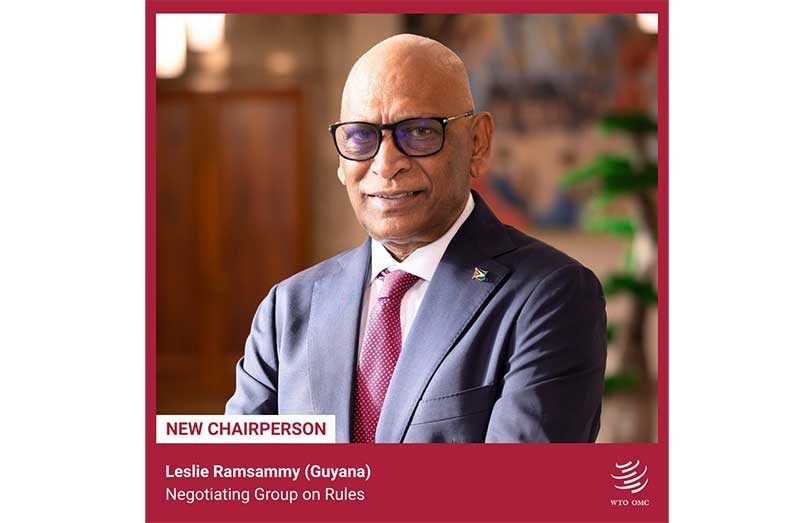
New chairperson, Dr. Leslie Ramsammy