






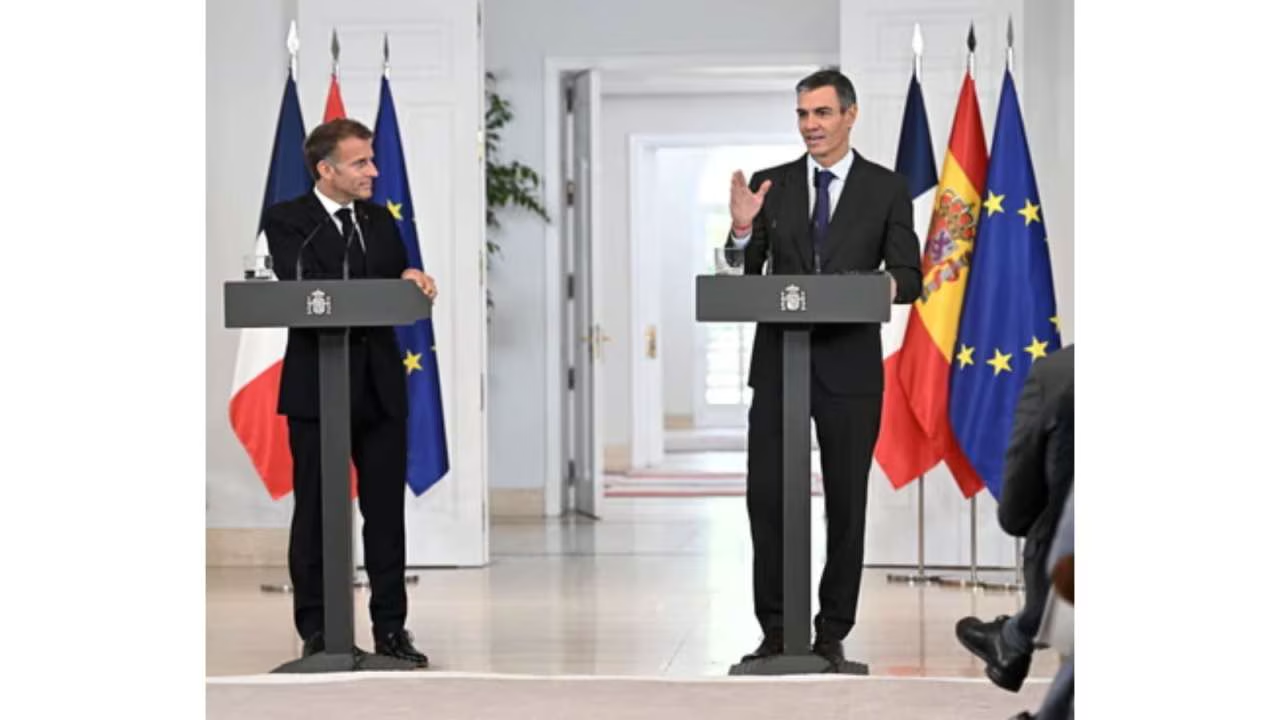
French President Emmanuel Macron has welcomed the possibility of the United Kingdom eventually rejoining the European Union, after British Prime Minister Andy Burnham said Britain should consider a range of options for its future relationship with the bloc.
Speaking alongside Spanish Prime Minister Pedro Sánchez in Madrid on September 30, Macron responded to Burnham’s remarks by saying, “Welcome back.” He added that if Britain wanted to return and the prime minister was moving in that direction, it would be good news for both the UK and Europe.
Burnham had raised the issue during the Labour Party conference, arguing that Britain needed to examine its long-term relationship with Europe. In an interview with the BBC, he said the UK could maintain its current post-Brexit arrangements, consider closer ties such as rejoining the EU customs union or single market, or potentially “go all the way” and seek full EU membership.
Burnham also said Britain needed to examine the practical options and assess their respective advantages and disadvantages. He has linked the discussion to Britain’s relationship with the EU, which remains one of the UK’s most important trading relationships.
Macron, while welcoming the possibility of closer UK-EU ties, stressed that Britain could not simply select individual benefits of EU membership while rejecting the corresponding obligations. He said the freedoms of the European Union could not be treated as an à la carte arrangement.
Spanish Prime Minister Pedro Sánchez also expressed support for the possibility of Britain’s return. He said Spain would welcome the UK back and described Brexit as a loss for both Britain and the wider European project.
However, there is currently no formal UK application to rejoin the European Union. A European Commission spokesperson said the UK remains a close and valued partner and that it is for the British government to decide how it wants to develop its relationship with the bloc.
The issue is politically significant in Britain because the country voted to leave the EU in the 2016 referendum, with 52% voting to leave and 48% voting to remain. The UK formally left the EU in 2020 after years of negotiations.
For now, Burnham’s comments indicate that his government is considering different levels of cooperation rather than announcing an immediate application for EU membership. A planned UK-EU summit later this year could provide an opportunity for further discussions about trade, industry and the broader relationship between Britain and the European bloc.