






Georgetown, Guyana – President Dr Mohamed Irfaan Ali has emphasised that public trust in the judiciary is fundamental to safeguarding judicial independence, maintaining the rule of law and strengthening democratic institutions.
The President underscored the importance of confidence in the justice system, noting that judicial independence is not sustained solely through constitutional provisions and institutional protections, but also through public confidence in the fairness, integrity and impartiality of the courts.
Public Trust and Judicial Independence
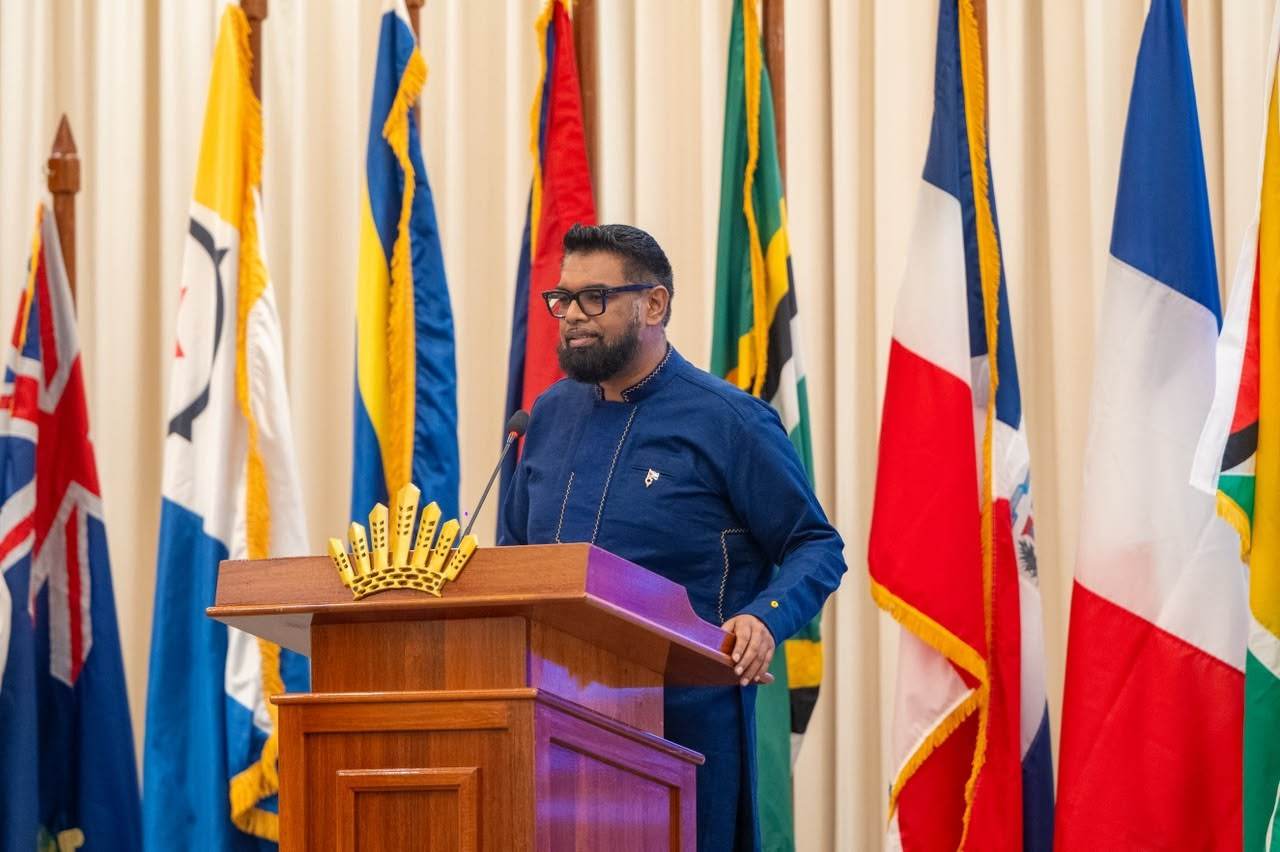
Addressing the opening ceremony of the 9th Biennial Conference of the Caribbean Association of Judicial Officers (CAJO), President Ali welcomed 194 delegates from across the Caribbean and beyond, who gathered at the Marriott Hotel in Kingston, Georgetown.
The conference, themed “Changing Fundamentals of Judging,” brings together chief justices, judges, magistrates, registrars, court administrators and other stakeholders to discuss emerging challenges facing the judiciary and opportunities to strengthen justice systems across the region.
President Ali highlighted the importance of public trust, pointing to the need for courts to adapt to technological and social changes while ensuring that justice remains timely and accessible.
Technology and Access to Justice
The President noted that technological advancement is increasingly important to the modern administration of justice, but acknowledged that not every Caribbean country has the financial resources to implement the systems required.
He encouraged the conference to develop recommendations and a paper that could help broaden discussions among policymakers on the future of technology in judicial systems across the Caribbean.
He stressed that the modernisation of the judiciary must be accompanied by efforts to ensure that citizens can access justice efficiently and fairly.
National Security Information and Judicial Independence
President Ali also proposed a mechanism through which judges could receive briefings on regional security threats, including intelligence relating to criminal networks and terrorism.
He argued that the separation of powers between the branches of government should not necessarily prevent the sharing of relevant information that could help institutions understand emerging security challenges.
The proposal, he said, should be considered within the context of maintaining judicial independence while strengthening awareness of threats affecting the region.
Social Media Scrutiny Must Not Become Intimidation
Addressing the growing influence of social media, the President said public scrutiny of the judiciary is legitimate in a democratic society, but warned that criticism must not cross the line into intimidation.
He emphasised that judicial decisions must be guided by the law and evidence rather than public pressure, online campaigns or popular opinion.
President Ali noted that courts cannot determine cases by counting likes, shares or comments, reinforcing the importance of protecting judges from undue influence.
President Ali Urges Caribbean Countries to Embrace the CCJ
The Guyanese leader also renewed his call for more Caribbean countries to adopt the Caribbean Court of Justice (CCJ) as their final appellate court.
He described the CCJ as an institution that reflects the region’s capabilities and achievements, questioning why Caribbean countries continue to debate greater independence from colonial structures while not fully embracing the regional court as their final judicial authority.
President Ali said greater regional acceptance of the CCJ would represent an important step in strengthening Caribbean institutions and advancing the region’s judicial sovereignty.
Judiciary Acknowledges Government’s Support
Acting Chancellor of the Judiciary, Justice Roxane George, thanked President Ali and the Government of Guyana for their support in organising and hosting the conference.
She also acknowledged the contributions of the Ministries of Tourism, Industry and Commerce; Culture, Youth and Sport; Foreign Affairs; and Public Works, as well as the Guyana Police Force, for providing advice and logistical assistance.
The three-day conference is expected to provide opportunities for judicial officers and other stakeholders to exchange experiences, examine emerging issues and explore ways to strengthen the administration of justice throughout the Caribbean.