






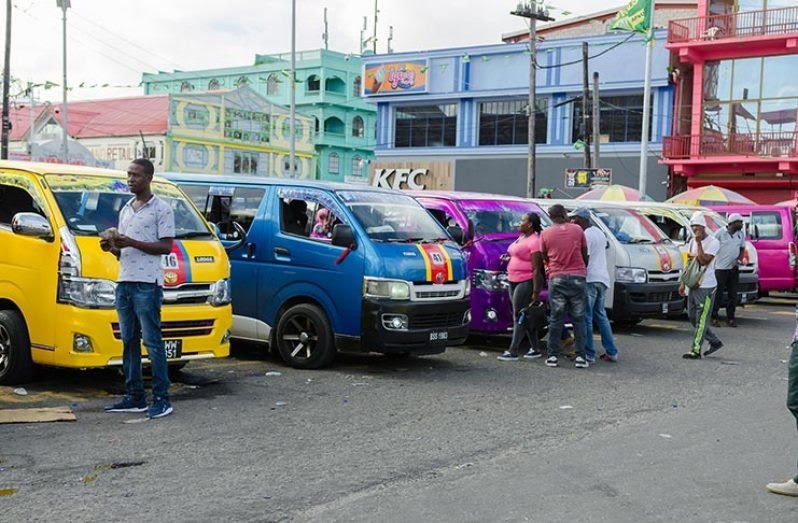
The government is moving to conduct a comprehensive review of Guyana’s public transportation system to address rising transportation costs, service gaps, and the country’s fare structure.

President Dr Mohamed Irfaan Ali said transportation has emerged as a recurring concern during the government’s ongoing public consultations, particularly among residents travelling to and from communities and housing schemes.
He said the concerns raised during the consultations require policymakers to examine the transportation system as a whole and develop measures that could address the challenges comprehensively.
“These things, having the consultations and having them raise the consultation, require policymakers to look at the entire ecosystem, and to see how we can come up with a formula that would address this issue holistically,” the president said.
President Ali also pointed to concerns about varying transportation fares at different times of the day, noting that residents in areas such as Diamond and other large housing schemes can sometimes face higher fares despite there being no corresponding increase in operators’ costs.

He said the government has already implemented several measures to reduce transportation-related expenses for citizens.
These include the removal of excise on gasoline and diesel in 2022, maintaining stable fuel prices, and removing tolls on the Demerara Harbour Bridge, the Berbice River Bridge, and Wismar Bridge.
The president noted that the removal of bridge tolls provides direct relief to more than 50,000 commuters daily while investments in hinterland and community roads have also helped to improve access and reduce transportation challenges.
The government has also maintained the removal of VAT on Hinterland travel to the airport and introduced an annual $20,000 transportation allowance for pensioners. It also gave a $20,000 transportation grant for students.

However, President Ali acknowledged calls for a more structured transportation system, including proposals for a public-private model or a dedicated public transportation service to better cater to vulnerable groups, particularly the elderly and children.
He said transportation providers will be engaged during the review, with the government seeking to develop a multi-stakeholder approach that takes into consideration the interests of commuters, operators, and other stakeholders.
The president said the objective is to develop a more holistic intervention that would improve the public transportation system while ensuring that citizens have access to affordable, reliable transportation.