






Guyana’s identity has always been rooted in its rich diversity. As a nation shaped by Indians, Africans, Indigenous peoples, and other cultural influences, it stands as a unique example of coexistence among various races and religions. However, this diversity also demands a high level of responsibility from leaders, particularly when their personal choices influence public perception and national values.
Guyana has long been an exemplar of religious harmony, where leaders across political lines consistently uphold unity among the country’s diverse faiths. While all Presidents and Opposition Leaders have contributed to nurturing this spirit, Presidents Bharrat Jagdeo and Irfaan Ali have stood out as passionate supporters of religious inclusion. Their leadership has gone beyond mere words, integrating religion as a vital pillar in Guyana’s social and economic development. Through both policies and actions, they have strengthened the role of faith communities in guiding national progress.
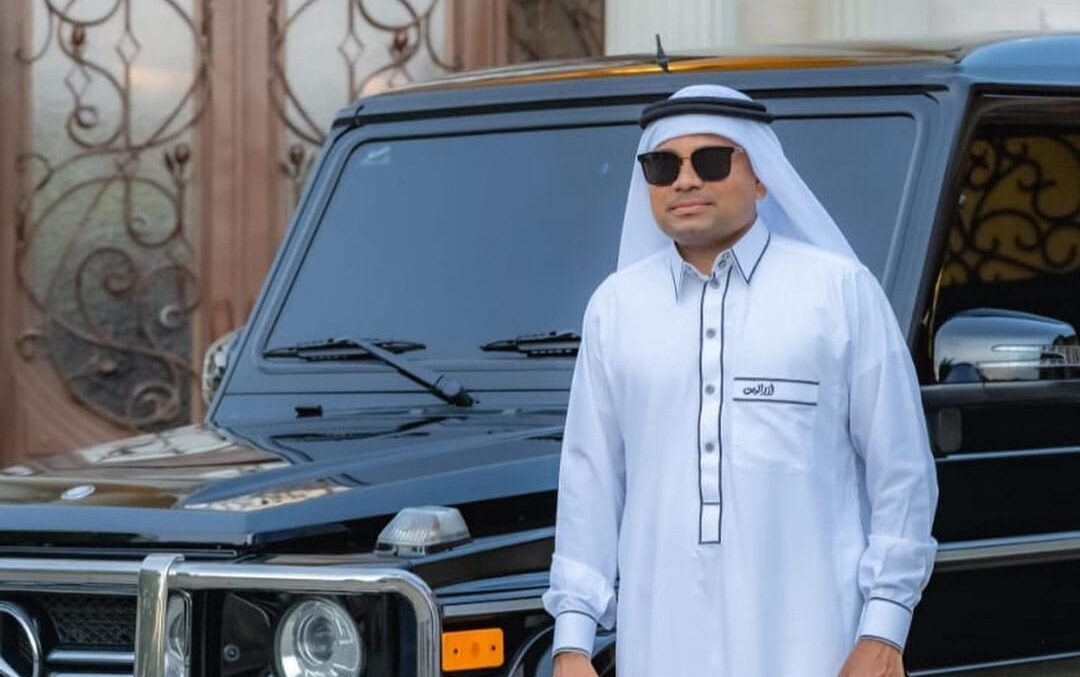
In stark contrast, Azruddin Mohamed, the current Leader of the Opposition, has taken a troubling and unprecedented route. While he is reportedly trying to avoid extradition to the United States over serious criminal allegations, he has become the first prominent political figure in Guyana to openly promote division along religious lines. This stance has been broadly rejected by the Guyanese people, who have consistently maintained the nation’s tradition of unity and mutual respect.
Recent events involving a TikTok influencer and a government minister have sparked widespread debate and concern across different parts of society. Reports that the Minister of Public Utilities, Aviation, Deodat Indar, allegedly converted from Christianity to Islam have ignited discussions on social media platforms. The person who made this claim appears to lack understanding and did not conduct proper research. Deodat Indar is a devout Christian, not a Muslim. He has every right to follow any religious faith he chooses. If he decides to become a Muslim tomorrow, no one can prevent him. It is disrespectful to Islam for the TikTok influencer to lecture the new Muslim convert on why they are not suitable to be Muslim unless they follow Muslim personal hygiene before entering mosques.
Disturbingly, some of Azruddin Mohamed’s supporters have echoed these sentiments, using social media to criticise the participation of non-Muslims in mosque activities. Attention has been drawn to non-Muslim government ministers, further fuelling unnecessary division. These actions have been widely condemned as unrepresentative of Guyana’s values and traditions.
Azruddin Mohamed must recognise that Muslims make up only 6.3% of the population, and he failed badly to persuade and win over Hindu and Indo-Christian voters. Nonetheless, he managed to persuade some Muslim PPP supporters to vote for his party. Everyone knows that Azruddin used his money to buy nearly all PNC Afro-Guyanese voters, but he completely failed to secure Hindu votes. Why? Because Hindu voters were not for sale. They told him to get lost.
Furthermore, the Indo-Christian and Afro-Christian communities are utterly exhausted by Azruddin Mohamed’s attempts to divide them.
It is crucial to recognise a key principle: Guyana’s Constitution guarantees freedom of religion. Every citizen, including public officials, has the right to choose and practise their faith without fear or coercion. This forms an essential part of democracy and must always be maintained. However, when someone holds a high public office, their personal choices often carry symbolic significance that goes beyond the private sphere.
Guyana’s religious composition helps explain why these issues resonate so deeply. The population includes a significant Hindu community, constituting about 90% of the Indo-Guyanese, who make up 42.3% of the total population, along with Muslims at roughly 6.3%. Indo-Christians account for less than 2.5% of the Indo-Guyanese group. These figures illustrate a delicate balance of beliefs, traditions, and cultural identities that coexist within the country.
In a country where a substantial part of the population has Indian roots, religion is often closely connected to cultural identity. The Indo-Guyanese community, which includes Hindus, Muslims, and Christians, has historically contributed to the nation’s social, economic, and political growth. For many, religion is more than just a personal belief; it reflects heritage, family traditions, and community continuity.
The reaction to the minister’s alleged conversion exposes a deeper issue: the importance of leaders understanding how their actions are perceived within a sensitive, diverse environment. While no one should be deprived of their personal freedoms, public officials are expected to show a level of awareness that promotes unity rather than unintentionally causing division or discomfort.
This situation also emerges at a time when public discourse in Guyana has become increasingly heated. Political disputes, social media exchanges, and public commentary have sometimes crossed the line from constructive debate into unnecessary provocation. In such an environment, even alleged personal decisions can become politicised, leading to interpretations that may not have been intended but still carry consequences.
Furthermore, Guyana’s relationship with India adds another layer to the discussion. India, led by Narendra Modi, is not only one of the world’s fourth largest economies and the most populous nation on Earth with 1.450 billion people, but also an essential partner for many developing countries, including those in the Caribbean. Cultural links between Guyana and India run deep, dating back to the arrival of indentured workers whose descendants now form a vital part of the population.
These two Afro-Guyanese politicians, Aubrey Norton and Odessa Primus, are using the Sanskrit name Bharat for India to make a political point. They are unaware of India’s, “Bharat’s”, role on the world stage.
Because of this connection, any discourse that appears dismissive or insensitive towards India or its people can greatly affect Guyana’s Indo-descendant communities. Respect for international partners, particularly those with shared historical and cultural ties, is crucial for maintaining both diplomatic relations and internal stability.
The main lesson from this situation is not about questioning an individual’s right to choose their faith, but about recognising the responsibilities that come with public leadership. Leaders are not just policymakers; they are symbols of national unity. Their actions, whether in public or private, are often viewed through a wider lens and can significantly influence public sentiment.
Amid Guyana’s rapid economic growth and growing international interest, the significance of social cohesion remains crucial. The country’s development relies not only on economic indicators but also on its capacity to uphold peace, respect, and understanding among its diverse population.
Guyana’s strength lies in its diversity. Protecting that strength requires a shared commitment to respect, responsibility, and unity. In times of controversy, the nation must choose a path that fosters cohesion rather than deepening divisions.
Guyana’s story is a narrative of cooperation, respect, and shared celebration. Efforts to undermine this foundation are not only inconsistent with the nation’s history but also doomed to fail. The Guyanese people have made it clear that intolerance has no place in their society. This is not their identity. This is not Guyana.