






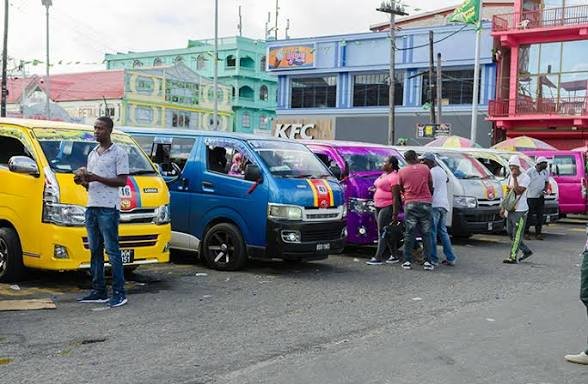
More than 210,000 passengers depend on privately owned minibuses every day for transportation across Guyana, highlighting the critical role the sector plays in the country’s public transit system. Statistics provided by the United Minibus Union (UMU) indicate that approximately 210,650 commuters use minibuses daily to travel to work, school, businesses, and other destinations.
The route-based minibus network operates extensively throughout coastal Guyana, connecting communities across several regions.
Among the busiest corridors are the East Coast Demerara routes, which account for the country’s highest daily passenger volume.
Guyanese citizens need proper buses and coaches that arrive on time.
Public frustration with Guyana’s transport system continues to mount as commuters complain about rising fares, overcrowded minibuses, and unsafe driving, prompting renewed calls for a more organised and regulated public transport network.
Passengers across several parts of the country say travelling has become increasingly stressful and unpredictable, particularly during the afternoon peak, when minibuses are often scarce, and operators raise fares without notice.
Many commuters have expressed concern that transport costs are increasingly difficult to manage, particularly for working-class citizens and students who rely heavily on public minibuses for daily travel. Others say overcrowding and reckless driving have become routine, leaving passengers fearful for their safety.
President of the United Minibus Union (UMU), Eon Andrews, acknowledged the growing challenges facing the sector during a recent appearance on the television programme Traffic and You.
According to Andrews, although fares have increased over time, operators are also grappling with rising operational costs, including fuel, vehicle maintenance, and spare parts. However, he noted that transport providers must also consider the financial realities faced by commuters.
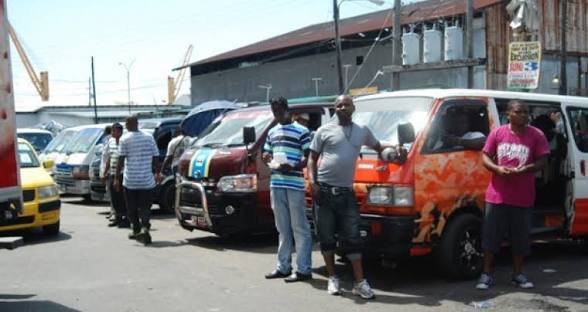
He explained that the union had previously advocated Government assistance or subsidies to help stabilise fares and reduce pressure on both operators and passengers.
Commuters have also complained that some drivers deliberately choose passengers travelling longer distances or on more profitable routes, leaving others stranded for extended periods. During busy periods, many minibuses reportedly exceed passenger limits while charging inflated fares.
Andrews noted that efforts had previously been made to bring greater structure and professionalism to the industry through a Code of Conduct initiative, supported by the Ministry of Tourism, Industry and Commerce and in collaboration with traffic enforcement authorities.
Assistant Superintendent of Police Ron Clarke has also been involved in training programmes to improve road safety, customer service, and legal compliance among drivers and conductors.
Despite these efforts, enforcement remains a major obstacle. Andrews noted that the UMU does not directly control minibus operators, adding that only a small percentage of drivers are officially registered union members.
He further revealed that earlier initiatives requiring drivers to complete training programmes before obtaining licences were disrupted during the COVID-19 pandemic and were never fully reinstated.
Traffic officials have also raised concerns that many minibuses fail to display approved fare charts, despite it being a legal requirement. Authorities say passengers often publicly complain about overcharging and dangerous behaviour, but rarely submit formal reports that would enable enforcement action.
ASP Clarke urged commuters to document incidents of overcrowding, fare exploitation, reckless driving, and other violations on their mobile phones and submit evidence to the authorities.
He stressed that formal complaints are necessary for the police to investigate and prosecute offenders operating outside the law properly.
The transport issues are reportedly widespread across several heavily used routes, including Routes 42, 44, 31, and 32, where passengers regularly encounter overcrowded buses and aggressive driving.
As concerns continue to grow, calls are intensifying for the Government to implement a more structured and modern public transport system that includes stricter regulation, improved enforcement, driver accountability, and possible financial support mechanisms for operators.
Many commuters believe that a properly managed transport system would not only improve safety and reliability but also reduce the daily uncertainty faced by thousands of Guyanese who rely on minibuses as their primary mode of transport.