






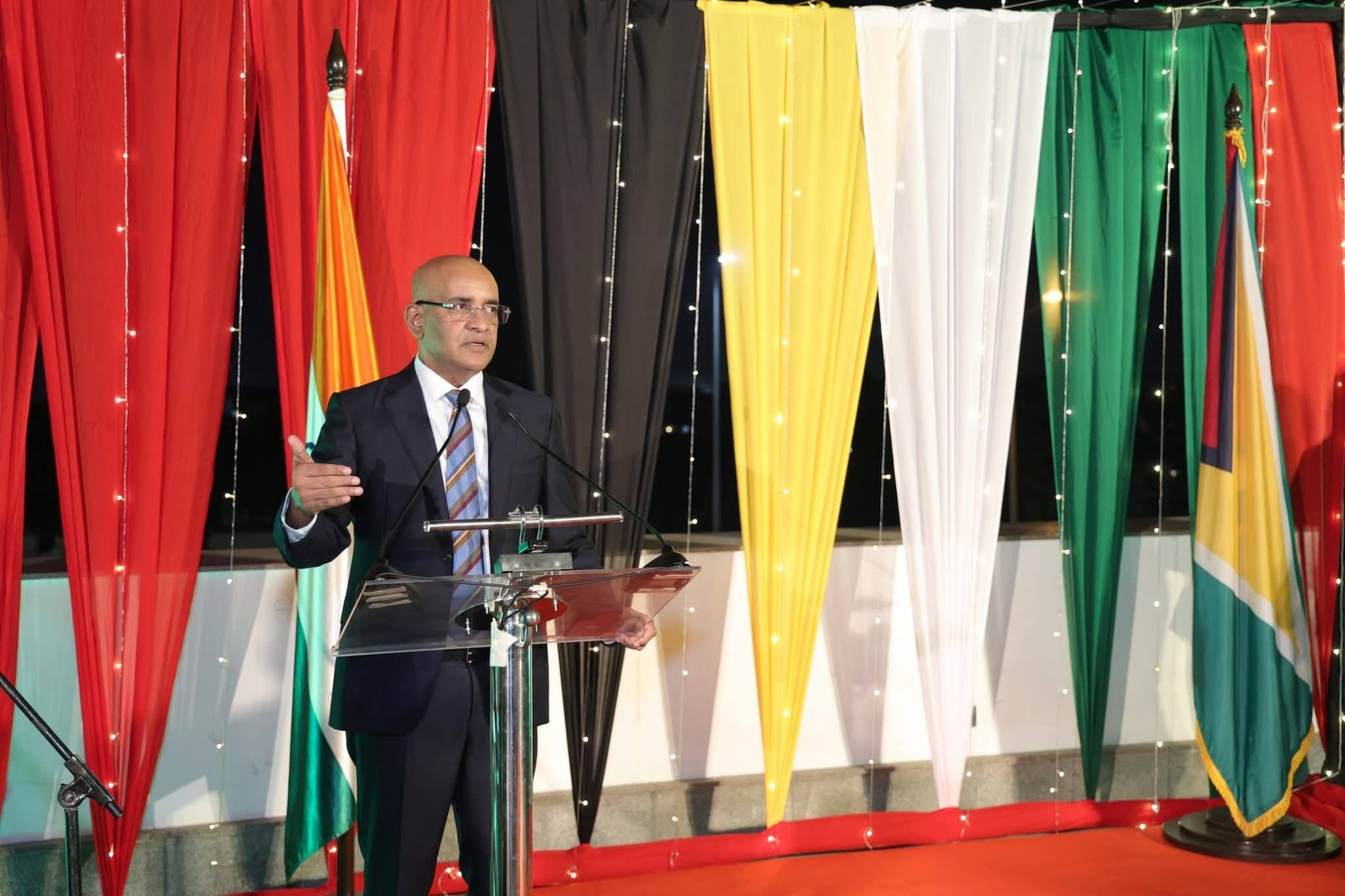
When global leaders gathered in New Delhi for the 25th annual World Sustainable Development Summit 2026, one of the most compelling voices on climate leadership was from Dr Bharrat Jagdeo, the Vice President of Guyana. Delivering the keynote address at the summit on 25 February, Jagdeo reminded the world why he is widely recognised as one of the most influential advocates for sustainable development among leaders of the Global South.
The summit, organised annually by The Energy and Resources Institute (TERI), is regarded as one of the most significant international forums for discussing climate action, sustainability, and environmental policy. The 2026 edition, which celebrated the summit’s Silver Jubilee, brought together policymakers, academics, industry leaders, and civil society organisations from across the globe. Held at the prestigious Taj Palace, New Delhi, the gathering centred on the theme “Transformations: Vision, Voices and Values for Sustainable Development.”
Dr Jagdeo’s presence and message stood out among the many global voices at the summit. For many observers, his address was not merely a speech but a reminder of his long-standing commitment to environmental protection and sustainable economic growth.
A Leader Who Has Championed Sustainability for Decades
Those who have followed Dr Jagdeo’s political journey recognise that his commitment to sustainability has only recently come to light. Since serving as President of Guyana from 1999 to 2011, he has consistently promoted policies that protect forests, foster environmental responsibility, and ensure that development benefits both people and the planet.
In fact, it was during his presidency that Guyana introduced its pioneering Low Carbon Development Strategy. At that time, the concept was visionary: a development model that would allow the country to grow economically while conserving its extensive rainforests.
Today, that strategy is widely recognised as one of the most innovative climate policies implemented by any developing country. Guyana’s forests, covering more than 85 per cent of its landmass, act as a major global carbon sink, absorbing large amounts of greenhouse gases from the atmosphere.
By selling forest carbon credits on international markets, Guyana has generated revenue while conserving its forests. This shows that environmental preservation and economic growth can exist together. They can support each other when guided by strong leadership and innovative policies.
Recognition on the global stage
Dr Jagdeo’s contributions to global climate policy have earned him significant international recognition over the years. His advocacy for forest conservation and climate funding has shaped discussions at major global forums and emphasised the importance of tropical forests in addressing climate change.
Among the many honours he has received is the esteemed Champion of the Earth Award from the United Nations, one of the world’s premier environmental accolades.
This honour recognises not only his policies but also his perseverance in advocating for environmental issues during a time when global climate discussions were still emerging.
From Climate Leadership to the Future of Technology
Interestingly, Dr Jagdeo’s visit to India was not limited to just climate discussions. A few days prior to speaking at the sustainability summit, he was invited as a special guest at the global Artificial Intelligence Summit, where leaders discussed the swiftly growing role of artificial intelligence in shaping the future of economies and societies.
His participation in the AI forum exemplifies another aspect of his leadership. Dr Jagdeo recognises that sustainability in the modern world cannot be separated from technological progress. Artificial intelligence, data analysis, and digital innovation can play crucial roles in improving environmental monitoring, resource management, and the implementation of climate policies.
For Dr. Jagdeo, the connection between sustainability and artificial intelligence signifies what many analysts call the next phase of global transformation—sometimes referred to as the “fifth technological revolution.” By participating in these discussions, he shows that Guyana is not only tackling current environmental challenges but also embracing technological tools that will influence future solutions.
A Message That Resonated
At the summit, Dr Jagdeo emphasised that although global awareness of climate change has grown considerably over the past 25 years, the real challenge now lies in implementation. The world no longer lacks discussions on sustainability; what it needs is decisive action and increased cooperation among nations.
He warned that progress becomes more difficult when major economies withdraw from climate commitments or fail to coordinate policies such as carbon pricing and international regulations. Sectors like aviation and maritime shipping, which depend heavily on international cooperation, encounter challenges in reducing emissions.
Yet Dr Jagdeo remained hopeful. Drawing from Guyana’s own experience, he argued that committed national leadership can still attain significant progress.
Guyana as a Model for the Future
Today, Guyana remains one of the few nations striving to balance rapid economic growth with environmental protection. The country has recently become a notable oil producer, yet it continues to uphold strong commitments to sustainability and forest conservation.
This balance is intentional. It reflects years of careful policymaking and guidance from figures like Dr Jagdeo, who emphasise that economic growth should not sacrifice environmental responsibility.
For many participants at the summit, Dr Jagdeo’s message was both inspiring and practical. It demonstrated that even a relatively small country can influence global climate discussions and serve as a model for sustainable development.
A Vision That Continues to Inspire
What sets Dr Jagdeo apart is his steadfast commitment to sustainability across many years of public service. Whether advocating for forest conservation, supporting climate finance, or exploring how artificial intelligence can enhance environmental governance, he has consistently engaged with the global sustainability agenda.
His leadership shows that sustainability is more than just a policy framework—it is a long-term vision that demands persistence, innovation, and international collaboration.
As the world faces increasingly urgent climate challenges, leaders like Dr Bharrat Jagdeo remind us that effective solutions are within our reach. Through determination, creativity, and collaboration, nations can strengthen their economies while safeguarding the planet for future generations.
In many respects, Dr Jagdeo’s journey mirrors the ongoing story of sustainable development—a commitment that started with awareness but now demands action, innovation, and courageous leadership.