






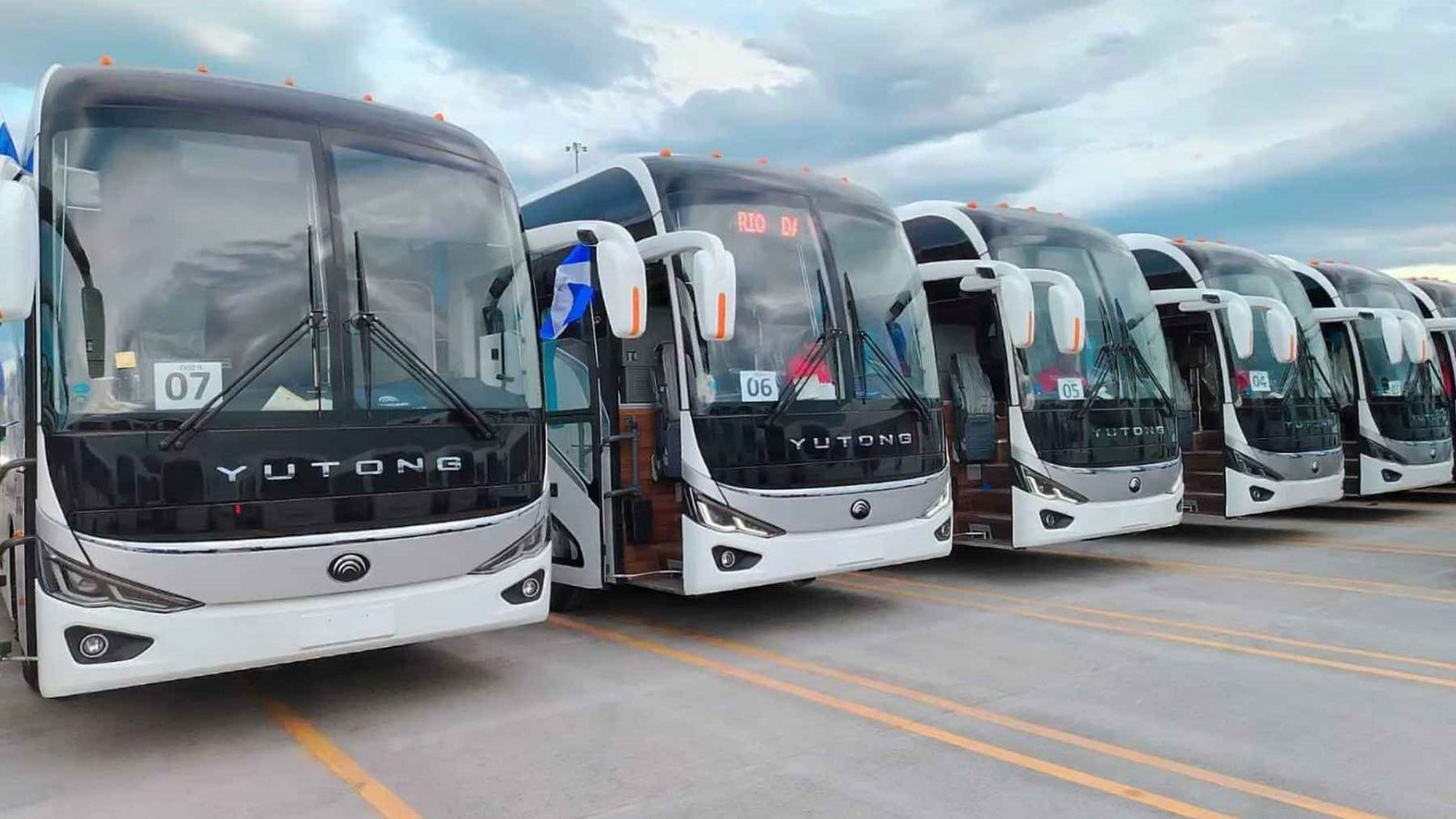
Nicaragua has begun a major transformation of its public transport system with the arrival of the first 180 advanced buses from China, part of a larger initiative that will eventually see 600 modern buses operating across the country.
The project is regarded as one of the most ambitious public transport modernisation programmes in Latin America in recent years. Officials believe the initiative will improve daily commuting, reduce pollution and position Nicaragua as a regional model for efficient and sustainable urban transport.
The newly delivered buses feature modern technology, improved passenger comfort, and cleaner engines, offering a sharp contrast to many of the ageing, heavily polluting vehicles still operating throughout the region.
The initiative also reflects China’s growing investment in and influence over Latin America through infrastructure partnerships and development projects.
Over the past several years, China has expanded investments across transportation, energy and telecommunications sectors throughout the region. For Nicaragua, the partnership provides access to modern transportation technology and large-scale infrastructure support to improve public services and national connectivity.
Officials believe the programme could strengthen economic ties between the two countries while supporting Nicaragua’s long-term development goals.
The buses are equipped with air-conditioning systems, spacious seating, improved accessibility and digital route displays, all designed to enhance the commuting experience for passengers.
Authorities expect the upgraded fleet to encourage greater use of public transport by offering commuters a safer, cleaner and more reliable alternative to outdated buses and private vehicles.
The buses will operate on key urban and regional routes, helping to improve mobility for workers, students and families who rely heavily on public transport every day.
Environmental sustainability is a central goal of the initiative.
The buses are fitted with cleaner engine technology that significantly reduces harmful emissions compared with older diesel-powered vehicles currently operating in the country. Officials hope the programme will improve air quality and help reduce congestion in major urban centres.
Transportation experts across Latin America are closely watching the project as a potential model for combining efficiency, affordability and environmental responsibility.
Government officials say the long-term objective is not simply to replace old buses but to modernise the country’s entire approach to public transportation.
Beyond transport improvements, the initiative is also expected to support economic growth by improving access to jobs, education and healthcare services, while creating new employment opportunities in transport operations and maintenance.
As more buses arrive over the coming months, Nicaragua is positioning itself as a leading example of public transport modernisation in Latin America.
If successful, the project could become a regional benchmark for sustainable urban mobility and infrastructure development.