






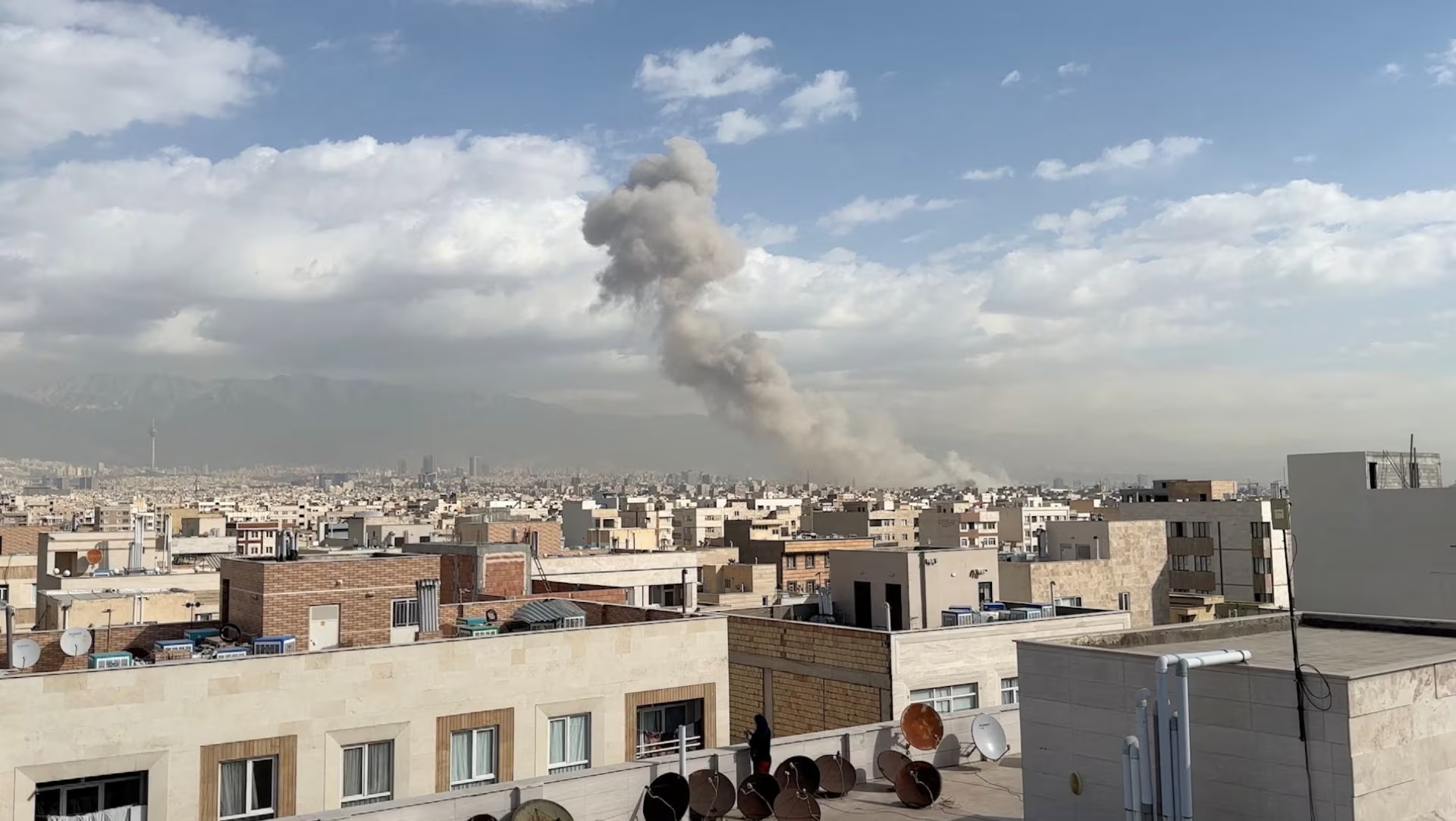
The tensions between the United States and Iran have erupted into one of the most serious military confrontations in the Middle East in decades, with major combat operations, regional reprisals, and profound geopolitical shockwaves.
Over the weekend, the U.S. and Israel launched a coordinated military offensive against Iran, in a campaign that Western leaders describe as aimed at dismantling Tehran’s military infrastructure and thwarting its nuclear and missile capabilities. The joint air campaign — backed by allied strikes — has struck hundreds of targets deep inside Iran’s territory, including air defence sites, missile launch facilities, and elite security installations.
Iran’s Supreme Leader Ayatollah Ali Khamenei — the nation’s most powerful figure — was confirmed killed during the initial strikes, prompting an unprecedented nationwide mourning period and vows of retaliation by Tehran’s senior leadership.
Combat and Casualties
The conflict has already exacted a heavy toll on both sides:
-
The U.S. military has confirmed its first combat casualties in the operation, with multiple service members killed and several wounded in clashes with Iranian forces and their proxies.
-
President Donald Trump warned that further U.S. losses are possible as operations continue.
-
Iranian missile and drone assaults have spread across the region, targeting U.S. bases, Israeli cities, and Gulf host nations, resulting in further deaths and injuries among civilians and military personnel.
Despite the intensity of the combat, the Pentagon insists that this campaign will not turn into a “never-ending war,” framing it instead as a focused military effort to degrade Iran’s offensive capabilities.
Regional Escalation
The conflict has rapidly expanded beyond Iranian borders:
-
Hezbollah, a powerful Iran-aligned militia in Lebanon, has fired missiles at Israeli territory in response to Tehran’s losses.
-
Missile barrages and drone strikes have hit Israel, Bahrain, the United Arab Emirates, Kuwait, and other Gulf states hosting Western forces.
-
Airspace closures and security fears have disrupted commercial flights, with major airlines pausing services across the region.
-
The Strait of Hormuz, through which nearly one-fifth of global oil flows, has seen significant disruptions as shipping companies avoid the high-risk corridor.
Global Economic Ripples
The conflict’s economic impact is immediate and broad:
-
Oil prices surged, with Brent crude climbing sharply — reaching multiyear highs as markets price in prolonged supply risk from the Gulf region.
-
OPEC+ producers have agreed in principle to increase output to partially offset lost supply, but analysts warn that limited spare capacity and ongoing disruptions could keep prices elevated.
-
Global stock markets have reacted nervously, with futures and shares opening lower amid rising geopolitical risk.
Political Dimensions and International Responses
World leaders and institutions have been forced into urgent diplomacy:
-
The United Nations Security Council has convened emergency meetings to address the crisis.
-
Various countries have expressed deep concern, urging restraint and negotiation to prevent broader regional war.
-
Domestically in the U.S., lawmakers are debating authorisation of military force and war powers as casualty figures rise and public opinion remains divided.