






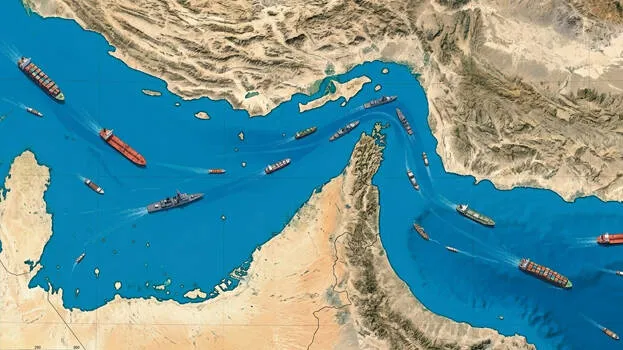
A major maritime security incident has unfolded after forces from the Islamic Revolutionary Guard Corps seized two commercial vessels, including one headed toward India, in the strategic Strait of Hormuz. The event has triggered global concern, as the Strait of Hormuz is one of the most important shipping routes in the world, carrying a significant share of global oil and cargo shipments. The incident has also intensified already rising tensions in the Middle East region.
Reports indicate that the vessels were intercepted while passing through international waters near Iran. Iranian naval forces reportedly fired warning shots before boarding and taking control of the ships, escorting them toward Iranian territory. Maritime tracking data showed that one of the seized vessels was on its way to an Indian port, which immediately drew attention from Indian authorities and international shipping agencies monitoring the situation.
Iranian officials stated that the ships were detained due to alleged violations of maritime safety regulations and navigation rules. Authorities claimed that the vessels had switched off or manipulated their tracking systems, which they argued posed a threat to maritime security in the region. However, shipping companies and international observers are closely examining the circumstances surrounding the seizure to determine whether the action complied with international maritime law.
The incident comes at a time of heightened geopolitical tension involving Iran, the United States, and their allies. The Strait of Hormuz has historically been a flashpoint during regional conflicts, and any disruption in this narrow waterway can have serious consequences for global energy markets and international trade. Experts warn that continued confrontations could lead to shipping delays, increased insurance costs, and fluctuations in oil prices worldwide.
Officials in India are closely monitoring the safety of the crew and cargo on the seized vessel, as the country relies heavily on maritime routes for trade and energy imports. Diplomatic channels are expected to be used to ensure the safe resolution of the situation and the release of the ships if necessary. The Indian government has emphasized the importance of maintaining freedom of navigation and stability in international waters.
Overall, the seizure of an India-bound ship by Iran’s Revolutionary Guards highlights the fragile security environment in the Middle East and the strategic importance of the Strait of Hormuz. The situation remains under close observation by governments, shipping companies, and global markets, as further developments could have significant economic and political implications.