





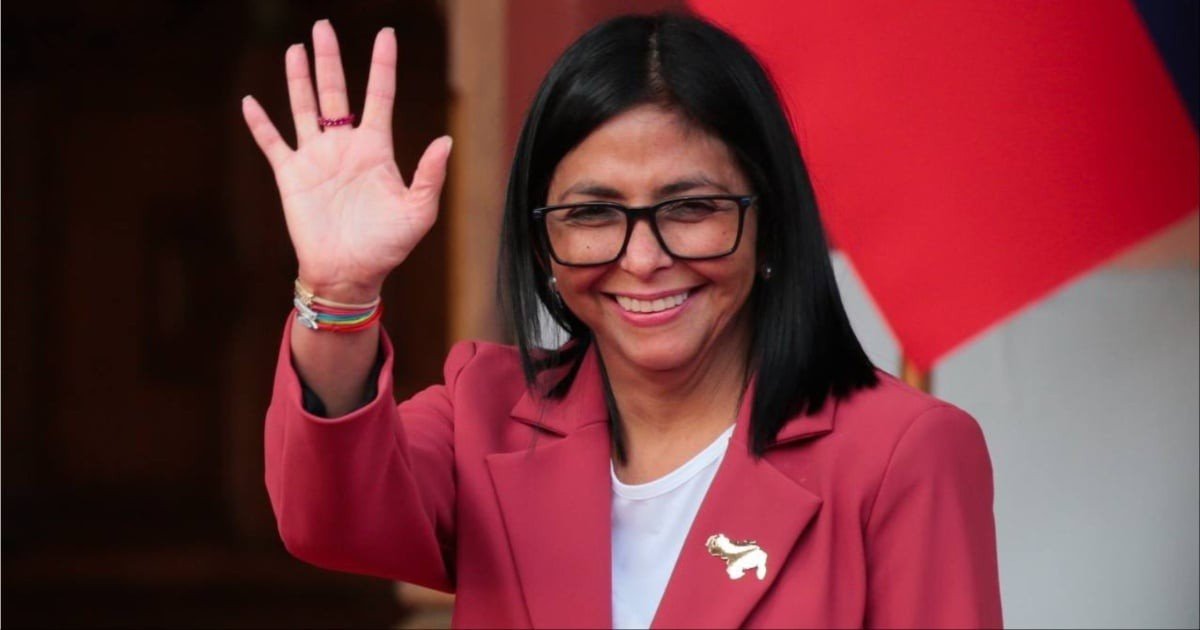
This self-appointed communist Dictator of Venezuela, Delcy Rodriguez, believes that her presence in the Hague will influence the ICJ judges in favour of Venezuela. This Communist woman believes the world does not understand what happened in Paris, France, in 1899. She therefore thinks that her presence will be important to the verdict.
Communist leaders everywhere like to annex other countries’ land. China and Russia are two classic examples. China took Tibet in the 1950s and is trying to claim more land from India. However, the Chinese know that the Indian Army is no pushover, and Chinese generals know it. Hence, a single move by China against the Indian Army in Ladakh will be a military disaster for all of China.
Similarly, the Russians have been finding it difficult for nearly four years to annex all the lands they claim in Ukraine. The USA has used all its military might, including aircraft carriers and fighter planes, and still cannot do a thing against the Iranians. Iran is still dictating terms to the USA.
The world now knows that both Russia and the USA have only their nuclear weapons to win wars these days. Both so-called superpowers, the USA and Russia, have shown that their military might cannot do a thing to Ukraine and Iran, which are middle-range powers. The world is aware that both Russia and the USA have learned that their modern weapons are useless in their war against Ukraine and Iran.
Similarly, Venezuela’s acting communist president, Delcy Rodríguez, has travelled to The Hague to participate in proceedings before the International Court of Justice (ICJ) as the long-running border dispute with Guyana enters another critical phase. She must also bear in mind that she and Maduro rigged the democratic election in Venezuela. Her status as a democratic leader is questionable. She is nobody in the world of politics. She still believes the world would be a better place with Karl Marx’s boring and insignificant ideology. The world can look at Cuba, which has been punishing its people for years because of Karl Marx’s ideology.
Guyana will win its legal battle with Venezuela because the law is on our side. The presence of a dictatorial woman leader who should be feeding and sheltering her people instead of following her mentor, Putin.
Without nuclear weapons, Putin would no longer be regarded as an important world leader. Trump and the USA believe they won the war in Iran. Billions of people strongly believe Iran won the war. Similarly, Putin believes the same about Ukraine, but the world thinks otherwise.
The visit marks communist Rodriguez’s first major international trip outside the Caribbean since assuming leadership earlier this year, following the political turmoil in Venezuela after President Nicolás Maduro’s removal. Venezuelan authorities described the journey as part of a renewed diplomatic and legal effort to defend what Caracas calls its “historic rights” to the Essequibo region. This vast, resource-rich territory accounts for more than two-thirds of Guyana’s landmass.
Communist Rodriguez is building castles in the air. This woman should attend a school to study international politics. Her legal case against Guyana is already as dead as a dodo.
At the heart of the dispute is the 1899 Arbitral Award, which legally established the border between Venezuela and what was then British Guiana. Guyana maintains that the ruling is final and binding under international law, whereas Venezuela argues that the award was unfairly decided during the colonial era and should be declared invalid.
The hearings at the ICJ take place at a time of heightened regional attention, particularly because of the massive offshore oil discoveries near the disputed territory. Guyana has repeatedly argued that Venezuela’s claims threaten regional stability, investor confidence, and Guyana’s sovereignty.
During the proceedings, Venezuelan representatives again rejected the ICJ’s authority to resolve the matter, insisting that the dispute be settled through direct negotiations under the 1966 Geneva Agreement. Caracas has long maintained that the court lacks jurisdiction over the issue.
Guyana, however, has urged the international tribunal to issue a definitive ruling on the legality of the 1899 boundary settlement. Georgetown contends that a clear judgment is necessary to preserve territorial integrity and prevent further escalation.
The case has become one of the most closely watched territorial disputes in the Western Hemisphere, particularly as geopolitical interest in Guyana’s rapidly expanding energy sector continues to grow. Legal experts believe the World Court’s final ruling could have significant implications for regional diplomacy, international law, and future energy investments across the Caribbean and South America.
The ICJ is expected to deliver its judgment in the coming months.