






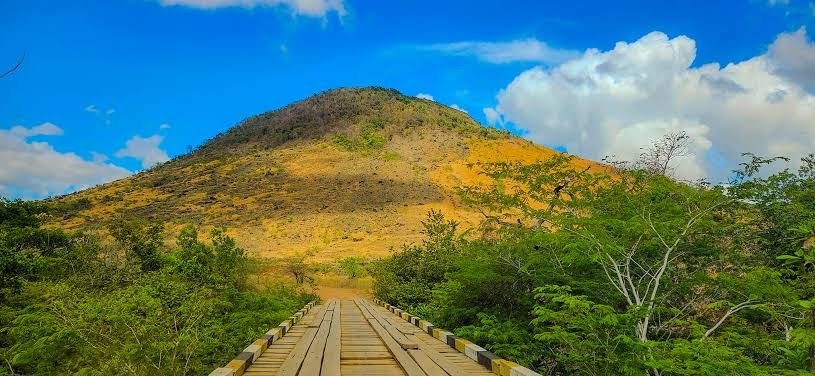
Karasabai Village in the South Pakaraimas of Region Nine (Upper Takutu-Upper Essequibo), now offers accommodation to visitors after investing $7 million of its 2023 carbon credit funds in two cabins.

Toshao David Albert said the cabins are already in demand, hosting guests from within the region, from across Guyana and from overseas. The project has also put residents to work.
“They have benefited us in terms of providing jobs. We have two persons working here in this compound as sweeper-cleaner and caretaker,” the toshao said in a video posted to the Ministry of Amerindian Affairs’ social media page on Tuesday.
The two workers maintain not only the cabins but also the village office and the other government buildings in the compound.
Karasabai is one of hundreds of Indigenous villages funded under the Low Carbon Development Strategy (LCDS) 2030.

The strategy guarantees that 15 per cent of all carbon credit revenue earned under the national programme is allocated directly to Indigenous and hinterland communities, to be managed according to their own priorities.
In 2023, Guyana received its first carbon payment of US$150 million, of which US$22.5 million (G$4.7 billion) went to 242 villages nationwide. To date, a total of $16.9 billion GYD has been disbursed, funding close to 3,000 projects.
During the 2026 budget debate, Minister of Amerindian Affairs Sarah Browne-Shadeek pointed to the direct transfer of carbon credit revenues to villages as evidence of a people-first approach.
She noted that villages have also used the funds for agriculture, infrastructure, transportation, women and youth development, livelihoods, social welfare and cultural preservation.
Persons wishing to stay at the cabins can make reservations through the caretaker or by contacting the toshao directly.