






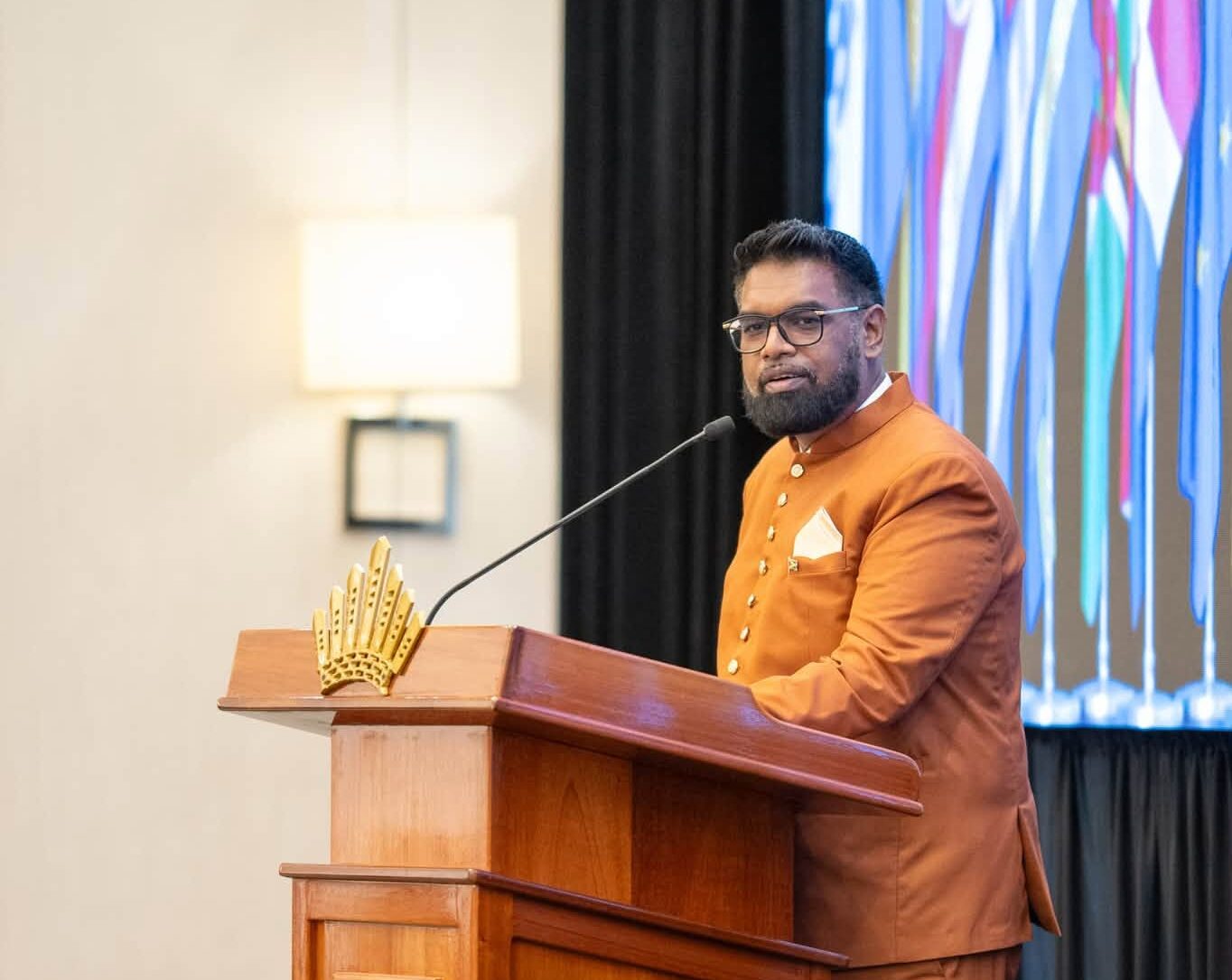
Guyana’s expanding economy is creating new opportunities for the maritime industry, with President Dr Irfaan Ali emphasising the need for greater investment in port facilities to support trade, strengthen regional connections, and sustain long-term economic growth across the Caribbean.
Addressing the opening ceremony of the Caribbean Shipping Association’s 56th Annual General Meeting, Conference and Exhibition at the Guyana Marriott Hotel on Monday, the President called for stronger collaboration between governments and private investors to modernise the region’s maritime infrastructure.
He cited outdated port facilities, insufficient cargo-handling capacity and limited navigational depth as significant obstacles to shipping efficiency and competitiveness. According to the Head of State, addressing these weaknesses will require coordinated regional planning and investment rather than isolated national initiatives.
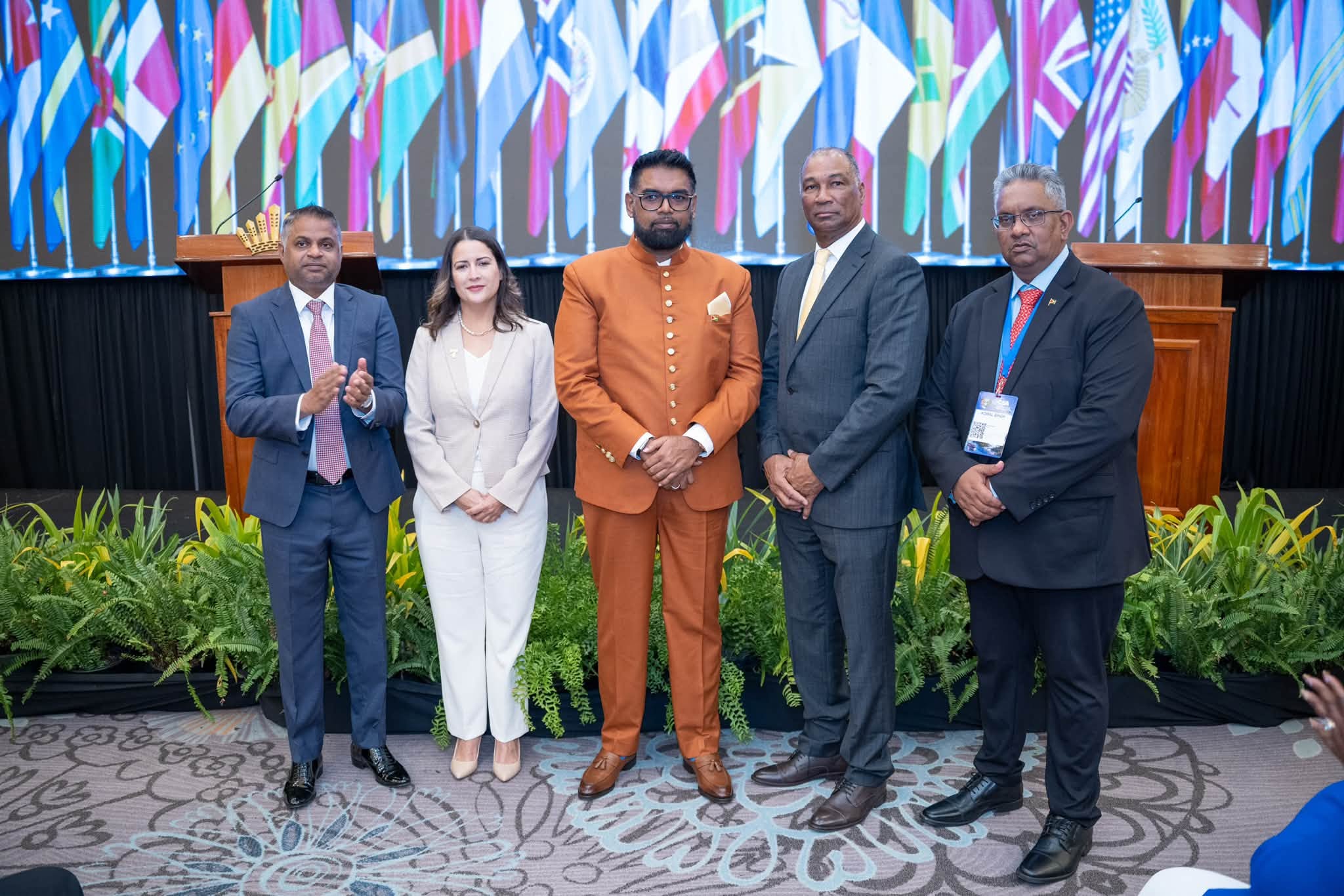
President Ali identified high freight charges, limited trade between Caribbean countries, climate-related disasters and geopolitical uncertainty as additional pressures on the shipping industry. He stressed that improving maritime infrastructure would be essential to reducing trade barriers, improving the movement of goods, and supporting the region’s economic development.
Guyana’s plans to establish a deepwater port, with connections to Brazil and other regional markets, are part of the Government’s broader strategy to strengthen trade links and diversify the economy. The President explained that differences in port facilities and operating capabilities across Caribbean countries continue to undermine the efficiency of the regional shipping network.
Referring to a 2018 Inter-American Development Bank study on short-sea shipping in the Caribbean, President Ali highlighted the age of much of the region’s port infrastructure. He noted that many facilities were built decades ago to serve commercial conditions that differ considerably from today’s shipping requirements.
He argued that ports must be developed to accommodate shifting trade volumes, larger vessels and modern cargo-handling requirements. Without appropriate planning and investment, existing infrastructure could increasingly constrain regional commerce and economic expansion.
The President also cited Guyana’s experience as an example of the scale of investment required. As economic activity and international trade grow, the country must continue upgrading its maritime facilities to keep pace with demand. He said Guyana has already invested close to US$1 billion in maritime infrastructure along the Demerara River, but further dredging and additional investment remain necessary.
Speaking to reporters on the sidelines of the conference, President Ali reiterated that a deep-water harbour is central to Guyana’s plans for economic diversification and improved international competitiveness.
He explained that the facility would support the development of new industries, strengthen the country’s capacity to handle rising trade volumes, and provide critical infrastructure for the next phase of national development.
The President also addressed questions regarding Chevron’s decision to withdraw from further studies into the proposed Berbice deepwater port. He maintained that the project remains a priority for the Government and that the necessary studies would proceed, supported by other potential partners.
President Ali said the feasibility work was essential for determining the project’s requirements and advancing it towards implementation. He confirmed that several organisations had expressed interest in supporting the process, including the United States Export-Import Bank (US EXIM).
The Government is also engaging potential investors and development finance institutions to establish partnerships to move the project forward. President Ali identified US EXIM, UK Export Finance, and the Qatar Investment Authority as institutions with which discussions have taken place.
He said the next phase would bring interested investors together as the initial studies progress. The findings would help determine the most suitable location and technical requirements, inform the detailed design, and establish a clearer basis for securing investment.
The President said the Government was continuing its assessment of potential sites and advancing preliminary feasibility studies to prepare the project for investors.
He described the proposed deepwater port as a potentially transformative development for Guyana, particularly as the country seeks to diversify beyond its existing economic activities and strengthen connections with international markets.
President Ali’s remarks underscored the need to treat maritime infrastructure as a regional development priority. He maintained that modern ports, supported by coordinated policies and public-private partnerships, would help the Caribbean improve shipping efficiency, reduce logistical constraints and strengthen its position in international trade.