





Georgetown, Guyana — More than half of the Guyana Defence Force’s (GDF) aviation fleet was deployed during search-and-rescue operations following the MV Barima tragedy, the Presidential Commission of Inquiry (COI) heard on Friday.
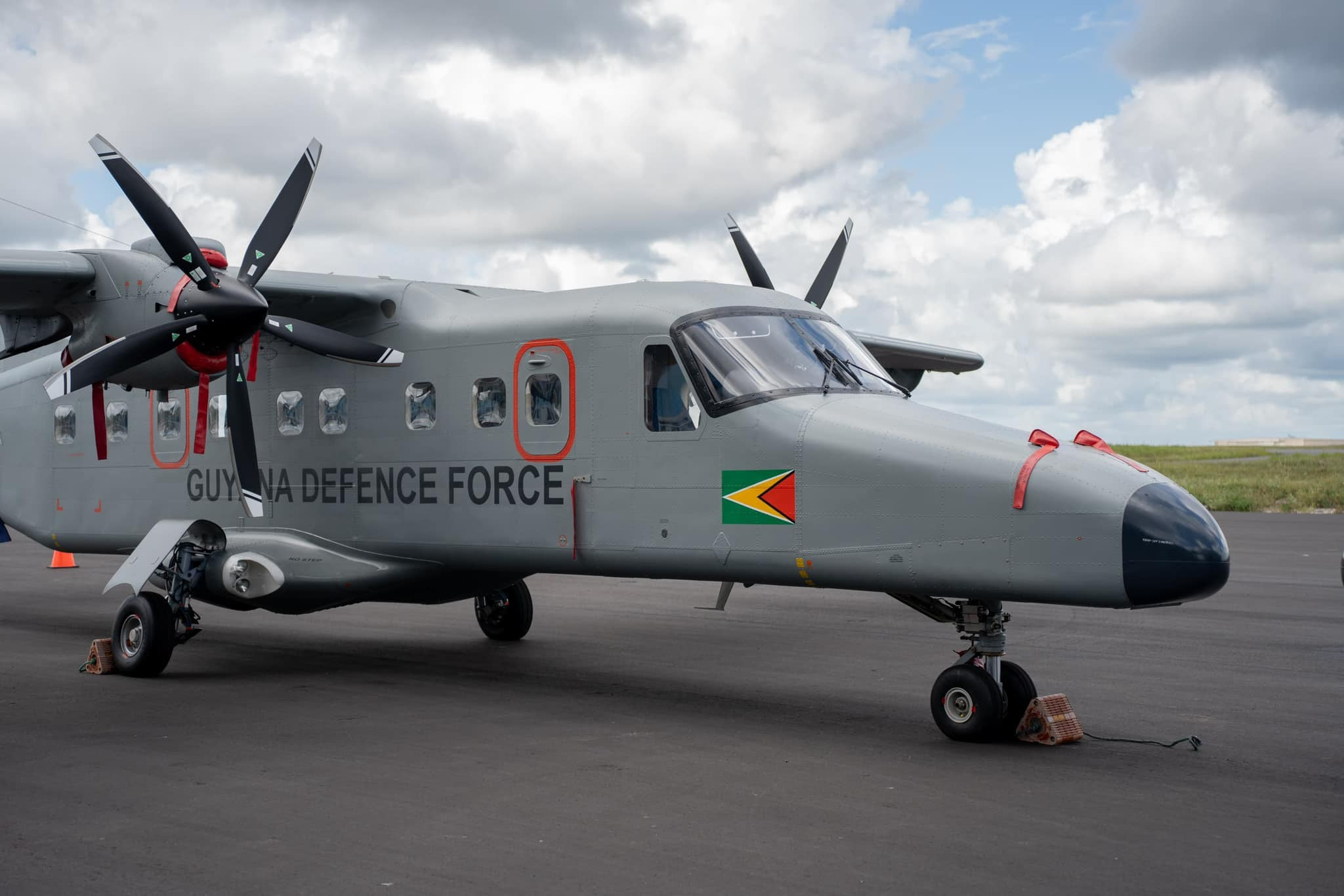
Captain Simon Gordon, a flight operations officer with the GDF Air Corps, testified that six of the force’s nine aircraft were used during operations conducted between July 19 and July 31, 2026.
His testimony outlined the scale of the military’s aviation response, the coordination required to mobilise aircraft and the operational limitations faced by crews searching for survivors and recovering bodies.
Six Aircraft Deployed During Search Operations
Captain Gordon told the commission that the GDF Air Corps operates a fleet of nine aircraft, including transport planes, light utility aircraft and helicopters.
The fleet includes two SC7 Skyvan transport aircraft, two Hindustan 228 aircraft, one Technam light utility aircraft, one BN Islander, one Beechcraft King Air 350, one Cessna 208 Grand Caravan and three helicopters: the Bell 412, Bell 407 and Bell 429.
Of these nine aircraft, six were deployed as part of the response to the maritime emergency.
Gordon explained that the selection of aircraft depended on the reported location of the distress signal, the time of the operation and the resources required for the mission.
Aviation Response Began Shortly After Distress Alert
Gordon outlined the sequence of events surrounding the initial aviation response on July 19.
A WhatsApp briefing was held at approximately 12:40 a.m., after which the crew reported to Eugene F. Correia International Airport at Ogle at about 1:00 a.m.
The Bell 407 helicopter was fuelled and ready by approximately 1:30 a.m. A drone team was then sent to Hampton Court, while the Intelligence Corps supplied specialised equipment.
Aircraft departed for Hampton Court between approximately 2:00 a.m. and 3:00 a.m. The BN Islander subsequently departed at 2:59 a.m. for a reconnaissance mission.
Gordon said the Air Corps had to coordinate flight schedules, passengers and cargo to ensure the required personnel and equipment could reach the designated locations.
Bell 407 Conducted Coastal Reconnaissance
Lieutenant Colonel Kevin Langevine also testified about three coastal reconnaissance missions he conducted aboard a Bell 407 helicopter on July 22, 24 and 25.
The flights were intended to search for survivors and bodies along the coastline. According to his testimony, the helicopter flew approximately 20 to 40 feet above the shoreline.
However, no survivors or bodies were observed during those particular missions.
Langevine also explained that he initially recorded flight timings in a personal notebook before transferring the information to official records.
French Military Personnel Assisted With the Response
Captain Gordon confirmed that the GDF Air Corps transported French military personnel and specialised equipment during the response to the MV Barima incident.
The Bell 429 helicopter joined the operation on July 27, expanding the aviation resources available for the continuing response.
During the hearing, questions were also raised about a discrepancy between two recorded landing times. Gordon undertook to verify the information.
The commission is examining operational records and witness testimony to establish the sequence of events and assess how aviation resources were deployed throughout the search.
Commission Continues Examination of MV Barima Tragedy
The evidence forms part of the Presidential Commission of Inquiry into the MV Barima tragedy, which is investigating the circumstances surrounding the incident and the response by the agencies involved.
The inquiry is examining distress communications, military and civilian deployments, search-and-rescue operations and the coordination of personnel and equipment.
The commission’s final report is expected to be released within six months.