




Georgetown, Guyana — The swift response of the Guyana Defence Force (GDF) Coast Guard played a critical role in rescuing survivors of the MV Barima tragedy, the Presidential Commission of Inquiry (COI) heard on Friday.
Testimony from Coast Guard personnel revealed how officers mobilised vessels, responded to distress signals and searched the dark, turbulent waters for people who had survived the sinking.
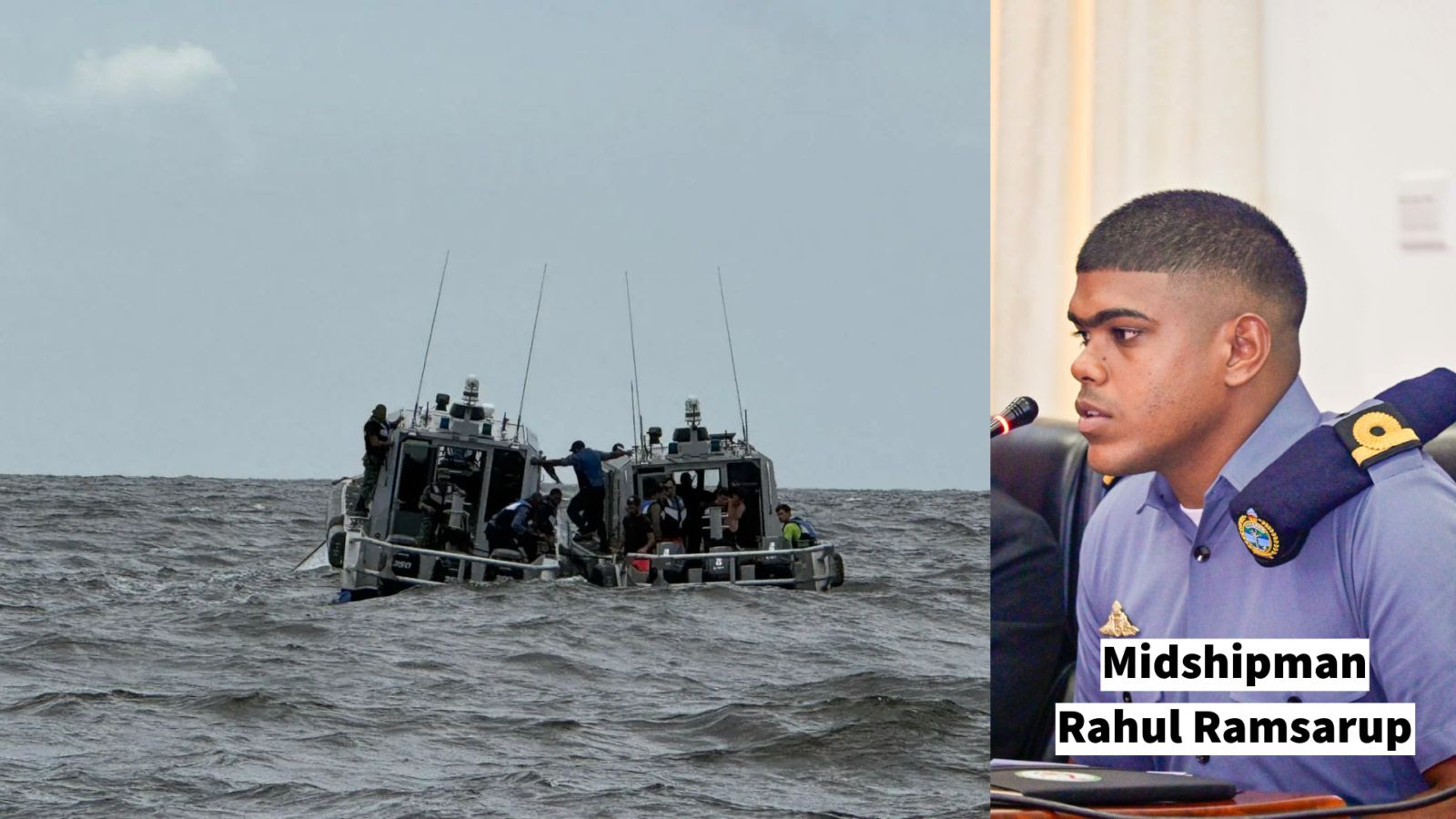
Between approximately 2:00 a.m. and 3:00 a.m. on July 19, Coast Guard personnel rescued 50 survivors. The operation was described as emotionally challenging, with rescuers following cries for help and searching among floating debris.
Six additional Coast Guard personnel testified during the inquiry at the Arthur Chung Conference Centre, providing further details about the initial response and the wider search-and-rescue operation.
Coast Guard Mobilised Following Distress Signals
Midshipman Rahul Ramsarup, who was commanding the District Two Coast Guard floating base at Pomeroon at the time, told the commission that he received a WhatsApp message at 10:59 p.m. on July 18 instructing his team to prepare for a search-and-rescue operation.
At 11:07 p.m., he received the coordinates of the maritime distress signal, believed to be from a location offshore near Anna Regina on the Essequibo Coast.
Ramsarup said he briefed Petty Officer Keon Smith and the crew before they departed towards the reported location. The team left approximately 15 to 20 minutes after receiving the coordinates and instructions.
However, communication with the vessel was interrupted shortly after departure because its Starlink battery had died, leaving the crew without an internet connection. Ramsarup confirmed that the vessel did not have a backup communication system at the time.
He explained that a journey to the Anna Regina area could take approximately two hours during daylight but as long as four hours at night because of poor visibility and the need to maintain a safe speed.
Fifty Survivors Taken to Safety
At approximately 7:30 a.m. on July 19, a Maritime Administration Department (MARAD) pilot vessel arrived carrying 50 survivors and one deceased person.
Ramsarup told the commission that the survivors included both adults and children, as well as MV Barima captain Kevin Price.
The Coast Guard coordinated the transfer of the survivors and the deceased person to Charity, where the survivors were handed over to medical personnel and the police.
Records presented during the hearing indicated that Coast Guard teams rescued and accounted for 69 survivors and recovered 71 bodies between July 19 and July 22.
Search Teams Followed Debris to Locate the Vessel
Petty Officer Alwin Hibbert, who has 12 years of service in the Coast Guard, described how his team received information from a fisherman about objects floating in the sea during the search operation.
After contacting the fisherman and obtaining coordinates, the team diverted to the identified location.
Hibbert testified that he saw a gasoline tank, a propane tank, a rooftop, an icebox and pillows emerging from the water. These objects helped the team confirm that it had reached the area where the vessel was believed to have sunk.
Other Coast Guard personnel described searching designated areas, travelling along the coastline and examining waters near river mouths in an effort to locate survivors and recover bodies.
Coast Guard Personnel Faced Difficult Conditions
Petty Officer Wendell Walcott, a Coast Guard officer with 17 years of service, told the commission that his team began search-and-rescue operations on July 20, moving between designated coordinates to examine different sections of the sea.
Sub-Lieutenant Mahwana Abrams also testified about his deployment following the incident. Stationed at Morawhanna in Region One, Abrams received instructions on July 19 to assist with the search.
His team searched the coastline towards the Pomeroon River, covering areas from the Waini vicinity southwards. After reaching the floating base and refuelling, the crew resumed searches between the Moruca and Pomeroon river mouths.
The testimonies highlighted the extensive coordination required to cover the affected maritime area and the difficulties faced by officers working in challenging conditions.
Inquiry Examines Rescue Efforts and Operational Challenges
The Commission of Inquiry is examining the circumstances surrounding the sinking of the MV Barima and the emergency response that followed.
The evidence presented has covered the initial distress signals, the mobilisation of Coast Guard personnel, communication difficulties, the rescue of survivors and subsequent recovery operations.
The inquiry is also hearing accounts of the emotional toll on personnel involved in the operation, with several officers describing the unprecedented scale of the tragedy during their careers.
Further testimony is expected as the commission continues its examination of the incident and the actions taken by the agencies involved.