






Young people in Guyana’s hinterland communities are gaining greater access to education, employment opportunities and essential public services as the Government continues to expand digital infrastructure across Indigenous villages.
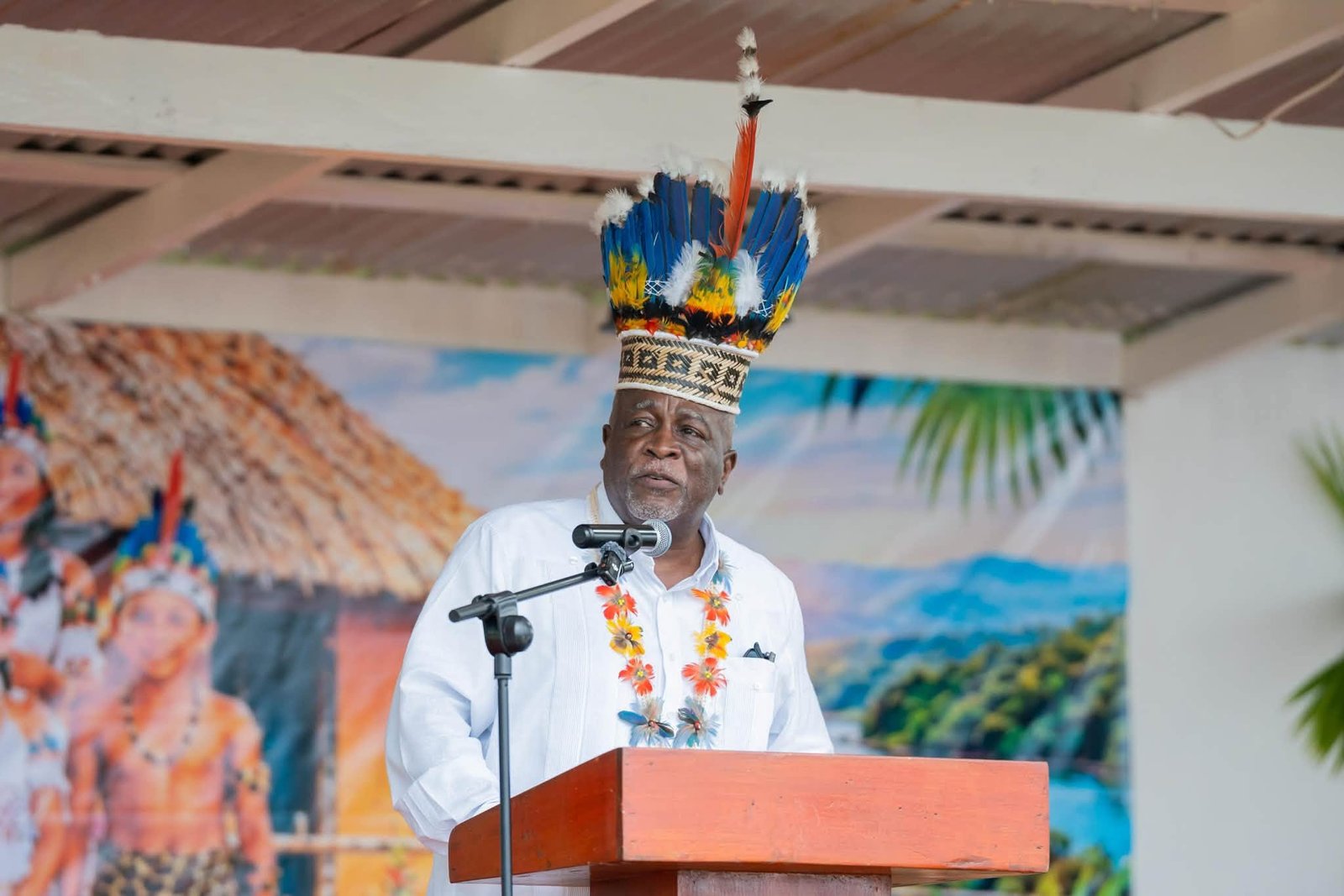
Prime Minister Brigadier (Ret’d) Mark Phillips highlighted the impact of this transformation while addressing the Amerindian Heritage Village 2026 celebrations in Bunburry, Mabaruma, noting that Information and Communications Technology (ICT) hubs are changing the way residents interact with government services and access opportunities.
Since 2021, approximately $1.6 billion has been invested in establishing ICT hubs throughout hinterland communities. According to the Prime Minister, 170 hubs are now fully operational, while additional facilities are currently being developed.
The initiative has also provided digital skills training to more than 3,000 residents from approximately 200 communities. Women account for about 75 percent of those who have benefited from the training, reflecting the growing role of digital access in expanding opportunities for women and young people in remote areas.
With more government services and applications now available online, residents can complete a range of processes without having to make lengthy journeys to regional centres. Prime Minister Phillips said this is particularly significant for young people, who previously faced considerable challenges when seeking educational, employment and other opportunities outside their communities.
The Government has also been advancing healthcare access in hinterland areas. According to Phillips, residents in several villages have received training to deliver basic primary healthcare within their communities, helping to reduce the need for residents to travel long distances for initial medical assistance.
Electricity access has likewise expanded across Indigenous communities. The Prime Minister reported that among 253 Indigenous villages, electricity-generating capacity has increased from 1.62 megawatts to 17.5 megawatts. The additional capacity is supporting households as well as schools, health facilities and businesses.
Phillips said the true measure of development should ultimately be reflected in improvements in the daily lives of families. At the same time, he acknowledged that further work remains necessary, particularly in areas such as roads, telecommunications, housing and assistance for local businesses.
The continued expansion of digital connectivity, electricity and essential services is therefore becoming an increasingly important part of efforts to improve living conditions and create new opportunities across Guyana’s hinterland communities.