






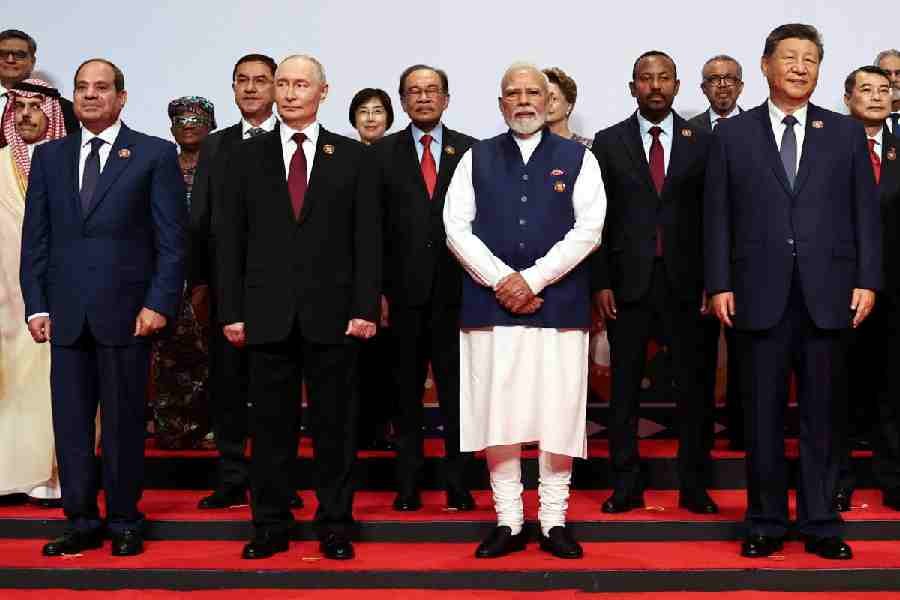
Prime Minister Narendra Modi has warned against the growing “weaponisation of technology and critical minerals”, saying such practices could hinder the collective progress and prosperity of BRICS nations. Modi made the remarks on Sunday at the concluding session of the two-day BRICS Summit hosted by India, in the presence of Chinese President Xi Jinping, Russian President Vladimir Putin and other leaders of the grouping.
The warning comes at a time when critical minerals have become increasingly important to the global economy and geopolitical competition. Minerals such as rare earth elements, lithium and other strategic resources are essential for industries ranging from electronics and electric vehicles to renewable energy, advanced manufacturing and modern defence technologies. Control over their extraction, processing and supply chains has therefore emerged as a major strategic concern for countries around the world.
Without directly naming any country, Modi cautioned that the use of technology and critical minerals as strategic tools could create obstacles to shared development. His remarks were particularly significant in the presence of Xi, as China plays a dominant role in several parts of the global critical-minerals and rare-earth supply chain.
Modi stressed that BRICS must strengthen cooperation and resilience while ensuring that technological progress benefits a wider section of the developing world. He said the grouping should work towards inclusive growth and ensure that solutions developed through BRICS cooperation are accessible beyond the bloc, particularly to countries of the Global South.
The Prime Minister also highlighted the importance of resilient supply chains in an increasingly uncertain geopolitical environment. Disruptions to the supply of critical minerals can affect manufacturing, energy security and technological development, making diversification and reliable access increasingly important for emerging economies.
India has been pushing for greater cooperation among BRICS countries on strategic supply chains and technology. Modi’s comments also fit into New Delhi’s broader effort to reduce vulnerabilities arising from excessive dependence on external sources for essential resources. Earlier this year, he had warned about the risks posed by the weaponisation of resources and strategic routes and called for greater domestic capacity in critical areas, including energy and minerals.
The issue has gained prominence globally following increasing restrictions and trade measures involving critical minerals and rare earths. China has tightened export controls on some strategic materials in recent years, raising concerns among major economies about the potential impact on high-tech manufacturing and other strategic industries.
Against this backdrop, Modi called for BRICS to approach the issue through cooperation rather than confrontation. He said the grouping’s strength should come from its ability to work together despite differences in political systems, economic structures and national priorities.
The Prime Minister described India’s BRICS chairship as being centred on four pillars: resilience, innovation, cooperation and sustainability. He said these priorities were intended to help the grouping respond to geopolitical and economic challenges while promoting inclusive global growth.
The summit also saw India put forward several initiatives aimed at strengthening economic and technological cooperation among BRICS members. These included proposals for a BRICS Startup Innovation Fund, a logistics supply-chain cooperation framework and greater collaboration in areas such as digital agriculture and disaster management.
Modi’s remarks on critical minerals are also significant in the context of India-China relations. Xi Jinping’s presence at the summit marked an important diplomatic moment, with the two countries continuing to manage differences while seeking greater stability in bilateral ties. The BRICS platform provides India with an opportunity to engage China on global economic issues even as New Delhi seeks to diversify its own supply chains.
For India, securing reliable access to critical minerals is increasingly linked to its ambitions in clean energy, electric mobility, advanced manufacturing and emerging technologies. Building diversified international partnerships, expanding domestic exploration and processing capabilities, and developing resilient supply chains are expected to remain important elements of the country’s economic strategy.
Modi’s message at the BRICS summit was therefore broader than a warning about mineral supplies. It was a call for countries to ensure that strategic resources and technologies are used to promote development rather than becoming instruments of geopolitical pressure. As global competition for critical minerals intensifies, the ability of BRICS nations to build secure, transparent and cooperative supply chains could become an important test of the bloc’s relevance in the emerging global economic order.