






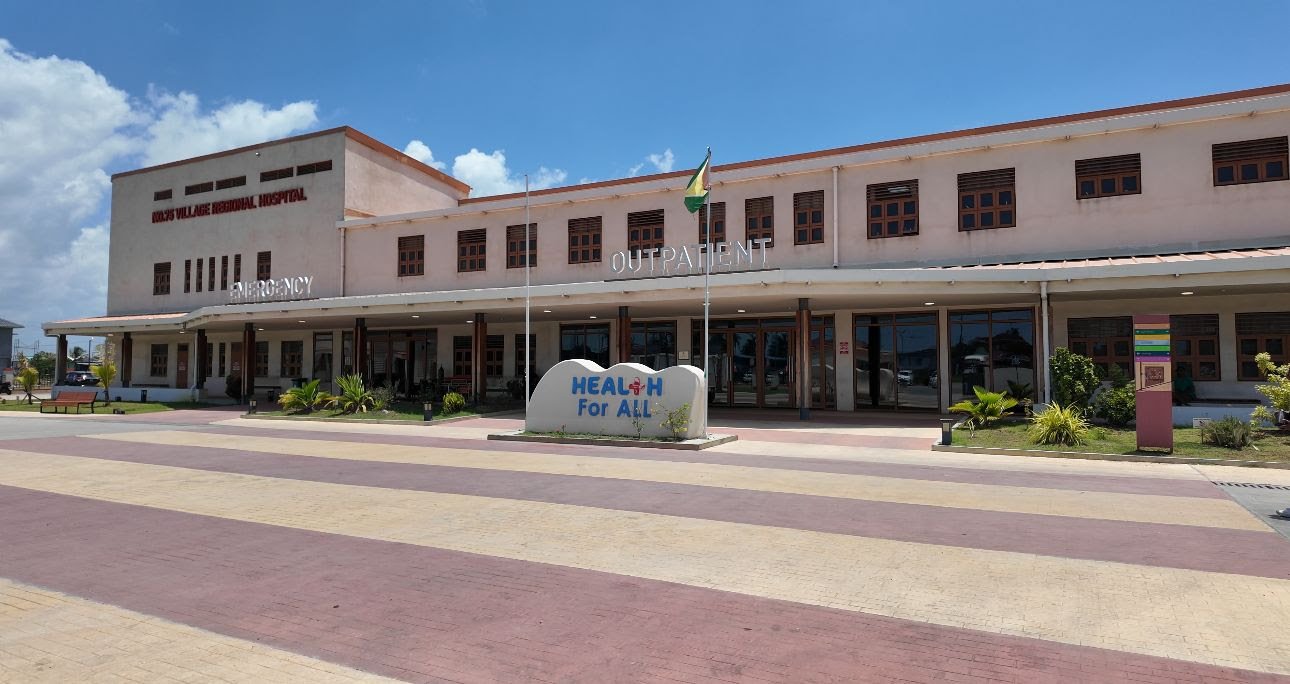
Residents across Region Six are gaining greater access to specialised medical care closer to home, as the Number 75 Regional Hospital marks its first year of operation with significant improvements in healthcare delivery.
The hospital has expanded the range of services available to residents, reducing the need for patients to travel to New Amsterdam or Georgetown for treatment that was previously unavailable in the region.
Medical Superintendent and Urologist Dr Devendra Radhay, speaking to the Department of Public Information (DPI), said the facility has made considerable progress since opening its doors, with services now including 24-hour Accident and Emergency care, laboratory and pharmacy facilities, CT scans, ultrasound and X-ray services.
The hospital has also developed a broad range of specialised departments, providing treatment in orthopaedics, general surgery, ENT, maxillofacial surgery, urology, internal medicine, nephrology and paediatric surgery.

Among the services recording particularly strong demand is orthopaedic care. Dr Radhay said the availability of specialists at Number 75 has helped reduce the number of patients requiring transfers to other hospitals.
“People had the mentality that you have to be transferred to New Amsterdam or Georgetown,” Dr Radhay explained, adding, “As time goes by, people start to trust in the hospital and trust in the specialties.”
That growing confidence is reflected in the changing patient profile at the facility. According to Dr Radhay, people from New Amsterdam and other parts of the country are now travelling to Number 75 to access specialist services.
The hospital has also demonstrated its capacity to respond to major emergencies. One of its notable experiences came last year when 18 students were involved in a major accident. Medical teams at the facility were able to respond quickly and provide treatment to those affected.
Neonatal care has also emerged as an important area of service. The hospital successfully treated a premature infant who remained under specialised care for approximately 90 days before eventually being discharged.
Beyond the hospital itself, healthcare teams are also working to take specialised services directly into communities.
Through its network of health centres, the hospital has introduced scheduled outreach clinics offering services such as orthopaedics, urology, general surgery, optometry, foot care and ultrasound.
The community-based approach is helping make healthcare more accessible, particularly for elderly residents and people living with chronic conditions. Patients can receive specialist attention and collect medication closer to their homes, reducing the burden and cost associated with travelling to the main hospital.
The hospital has also recently introduced psychiatric services, with plans to extend mental healthcare through community health centres as part of efforts to make such services more accessible.
Looking ahead, Dr Radhay said the priority is to strengthen the hospital’s existing capabilities and further reduce the need for patients to be referred elsewhere.
“We want to make sure that when patients come here, there would not be simple reasons to send them to any other institution to access any service,” he said. “They can have it right here.”
Commissioned on August 28 last year, the Number 75 Regional Hospital forms part of the Government’s wider investment in modernising Guyana’s healthcare system.
With expanded specialist services, improved diagnostic capabilities and greater community outreach, the hospital is becoming an increasingly important healthcare hub for Region Six, bringing advanced medical treatment closer to the people who need it.