





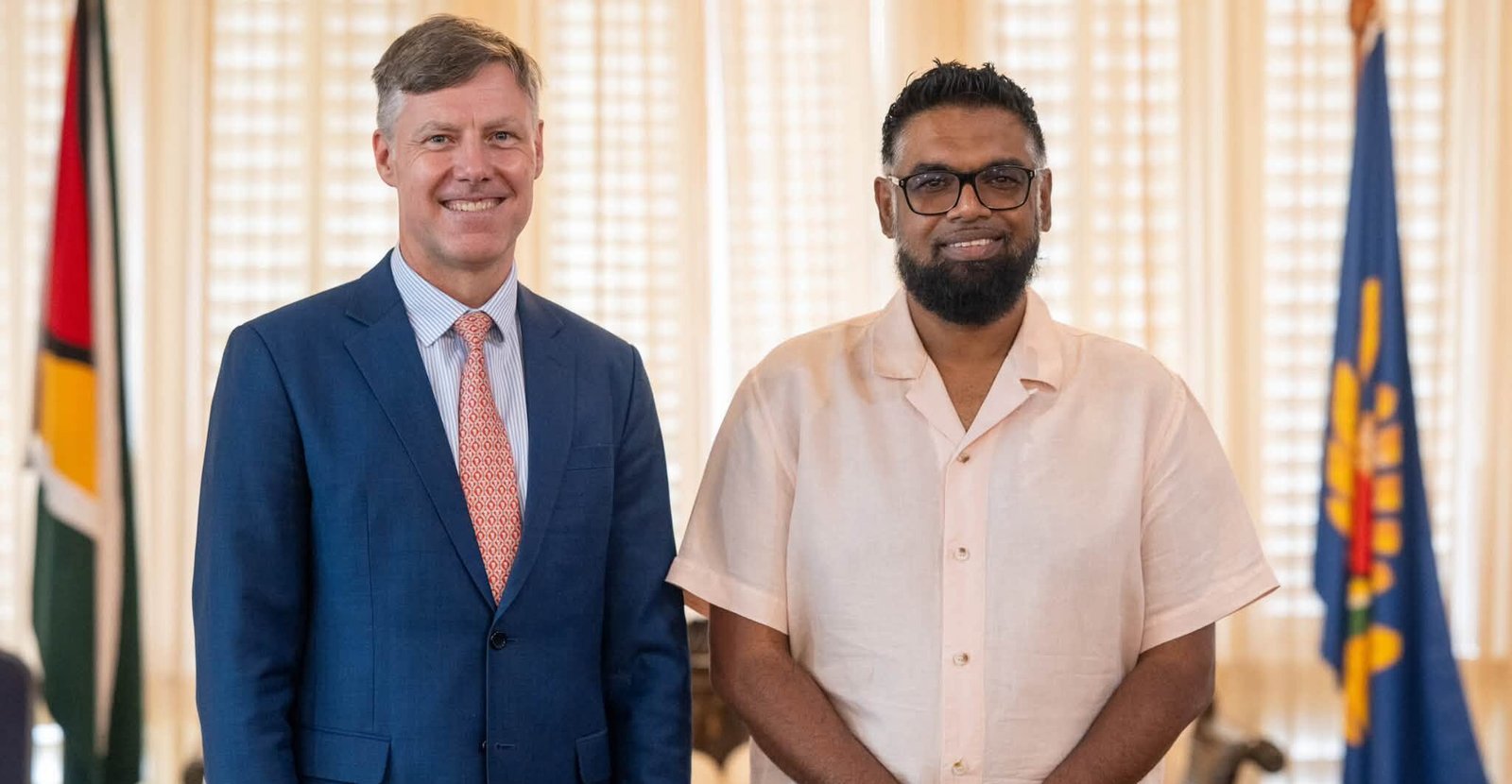
The World Bank aims to deepen its partnership with Guyana as the country continues to advance its development agenda, with health, education, housing, poverty reduction, flood mitigation, and food security identified as key areas for greater cooperation.
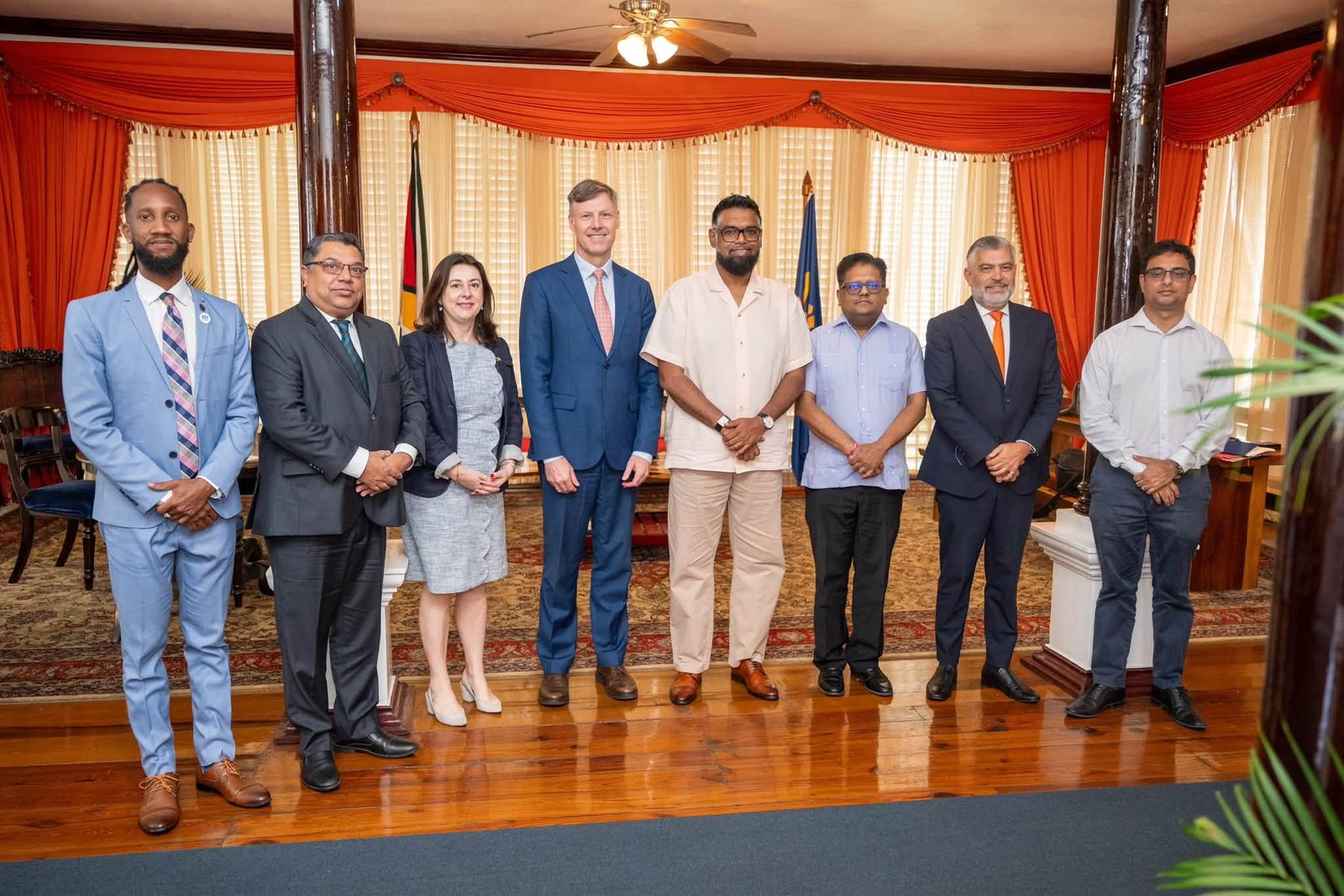
The commitment was highlighted by Achim Fock, the World Bank’s Division Director for the Caribbean, during a high-level meeting with President Dr Irfaan Ali and members of his Cabinet at State House in Georgetown on Wednesday. The discussions centred on strengthening collaboration between the international financial institution and the Government of Guyana on projects to support the country’s social and economic development.
According to the Office of the President, the World Bank delegation reaffirmed its commitment to working with the Ali administration on a range of development priorities and to exploring opportunities for further partnerships and investment. President Ali was joined at the meeting by the Senior Minister in the Office of the President responsible for Finance, Dr Ashni Singh, and the Minister of Public Service, Government Efficiency and Implementation, Zulfikar Ally.
Fock and his team are in Guyana as Diletta Doretti, the World Bank’s Guyana and Suriname Country Representative, prepares to conclude her assignment. Doretti’s tenure has included extensive engagement with the Government on initiatives to strengthen economic development, human capital and climate resilience.
The World Bank has already partnered with Guyana on several major initiatives, including the Guyana One Health project, the Caribbean Efficient and Green Buildings programme, and projects supporting human capital development and integrated transport. These initiatives have contributed to improvements across several sectors while supporting broader national development objectives.
Fock, an agriculture and agricultural economics specialist, recently assumed the role of World Bank Division Director for the Caribbean. He is responsible for guiding the institution’s strategic engagement and operational portfolio across Caribbean countries, including lending, analytical work, advisory services and trust-funded programmes to promote sustainable and resilient development.
During his visit to Guyana, Fock also held discussions with Prime Minister Brigadier (Ret’d) Mark Phillips, with energy and renewable energy as key focus areas. Prime Minister Phillips was joined by Guyana Energy Agency Chief Executive Officer Dr Mahender Sharma at the meeting.
Fock also met Finance Minister Dr Ashni Singh on Tuesday, with discussions centred on maintaining and expanding the partnership between Guyana and the World Bank. Singh expressed appreciation for the institution’s support over the years, noting the important role its programmes have played in Guyana’s transformation across several sectors.
During Doretti’s tenure, World Bank-supported programmes contributed to the expansion and modernisation of secondary-school infrastructure, teacher training, and the introduction of digital learning tools. In the area of climate resilience, financing and technical assistance supported coastal protection, drainage rehabilitation, and flood-risk management initiatives to reduce communities’ vulnerability to climate-related hazards.
The partnership has also extended to the health sector, where World Bank assistance supported improvements in public healthcare delivery during and after the COVID-19 pandemic and helped expand access to healthcare services in rural and hinterland communities.
The Government has recognised Doretti’s contribution to strengthening relations between Guyana and the World Bank during her four years in the country. Her tenure also saw efforts to improve access to World Bank Group support for Guyana’s public and private sectors and to advance programmes focused on sustainable economic growth, human capital and climate resilience.
Guyana’s relationship with the World Bank dates back several decades and includes a significant period of cooperation during the country’s economic difficulties in the late 1980s and early 1990s. The institution supported economic reforms and development programmes as Guyana faced serious fiscal and debt challenges.
Following the change of government in 1992, the PPP/C administration undertook extensive reforms and worked with international financial institutions to address the country’s debt burden, restore fiscal stability and improve its eligibility for debt relief. These efforts laid the foundations for the stronger economic position Guyana enjoys today.
Guyana has since undergone a major economic transformation, driven by rapid growth in the offshore oil sector and pursued diversification in areas such as agriculture, energy, infrastructure and manufacturing. The World Bank’s renewed commitment comes at a critical stage as the country seeks to translate this economic expansion into broader improvements in living standards, stronger public services and greater resilience across communities nationwide.