






President Dr Mohamed Irfaan Ali on Saturday said Port Mourant, Region Six, will be among the communities transformed under the government’s Model Village Initiative.
The programme designed to improve infrastructure, strengthen community services and create an environment where residents can live, work and raise their families safely.
The president, while addressing residents gathered at the University of Guyana, Tain Campus, noted that Port Mourant holds a special place in Guyana’s history as the home of the late President Dr Cheddi Jagan.
He said the community’s repeated selection for national development programmes is “not by accident,” pointing to its previous inclusion in the Secondary Towns Programme, market improvement initiatives and earlier road transformation projects.

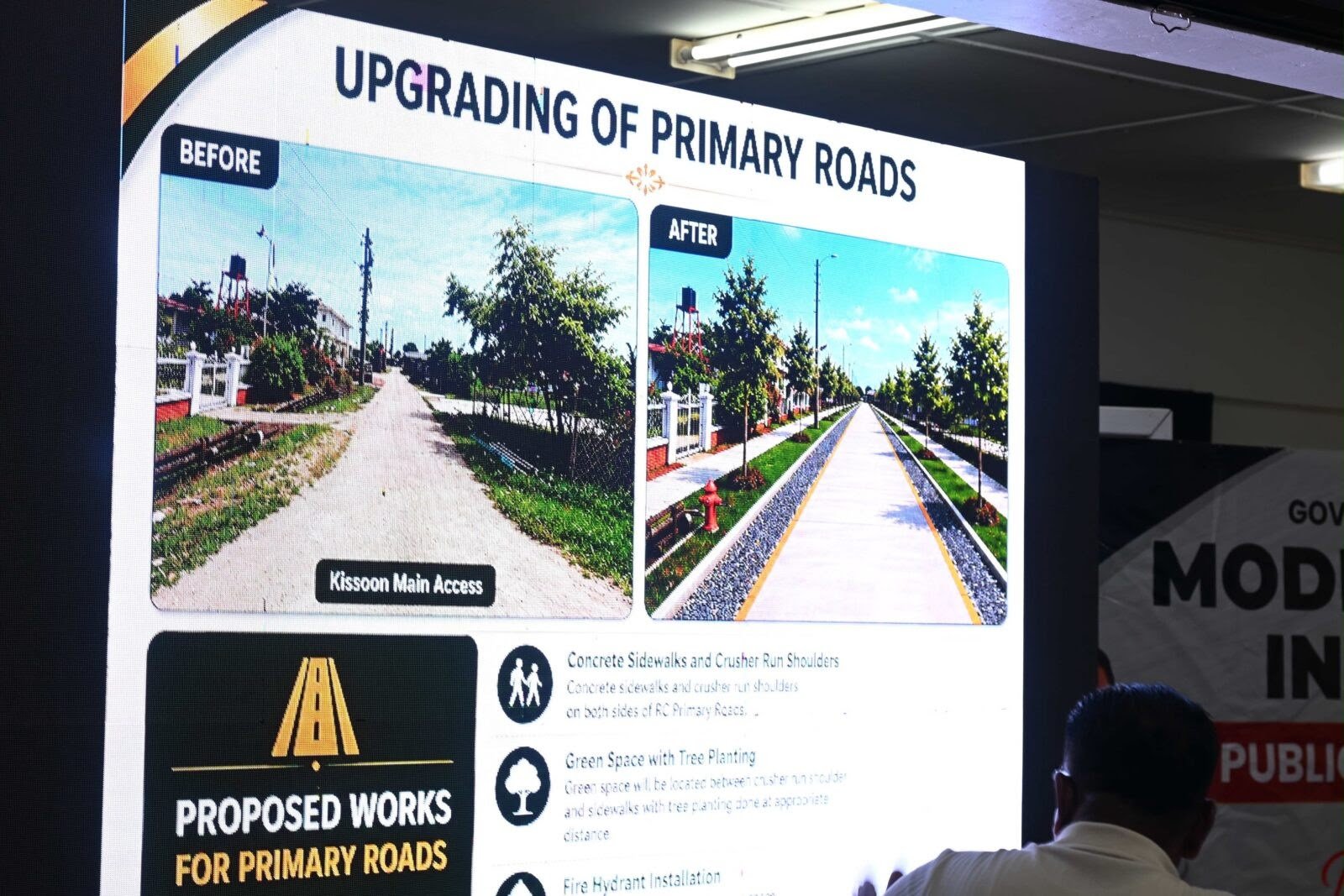
Under the proposed plan, approximately 609 acres will be modernised, with 102 roads and 21 kilometres of road upgrades, alongside improvements to road shoulders and alleyways throughout the community.
The development is expected to benefit 6,384 households. It will take into consideration Port Mourant’s existing schools, hospitals, religious institutions, businesses and recreational spaces.
“We’re talking about infrastructure beyond roads, infrastructure that support[s] quality of life,” the president said, emphasising that the initiative must also support the local economy.
He also stressed that sustainable community development requires the involvement of residents, religious organisations, non-governmental organisations and service providers, including the Guyana Water Incorporated and Guyana Power and Light.

The president said churches, mosques and temples should play a greater role in strengthening community values, supporting youth and fostering social cohesion.
President Ali said engineers, planners, technicians and ministers have already assessed Port Mourant’s challenges and opportunities, but residents’ input is critical to refining the proposals, particularly given the community’s agricultural character.
Port Mourant is one of twenty three villages targeted in the pilot phase of the Model Village Initiative.