






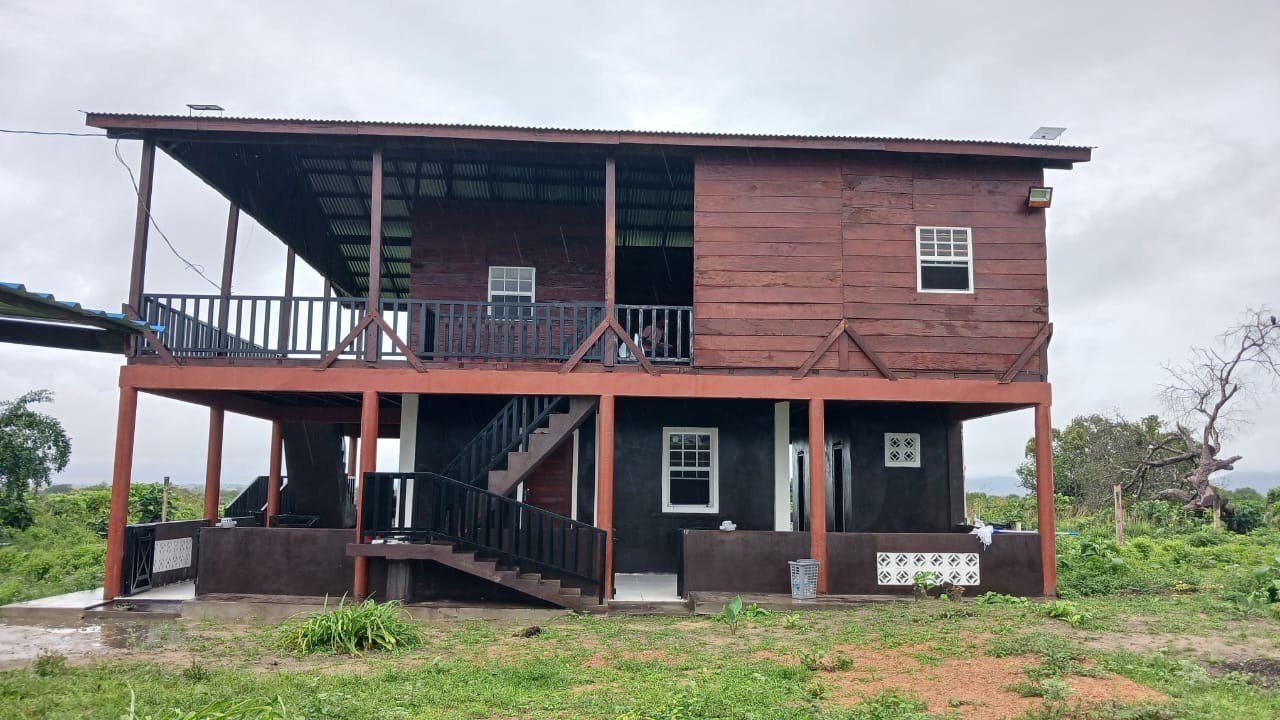

Residents of Sawariwau Village in the Central Rupununi are one step closer to unlocking new economic opportunities as work continues on a $15 million community guest house that is expected to strengthen tourism, improve hospitality services and create employment, particularly for women.
The guest house, which is approximately 85 per cent complete, was funded through a combination of a $5 million grant from the Ministry of Amerindian Affairs and $10 million from the village’s Low Carbon Development Strategy (LCDS) allocation.
Speaking with the Department of Public Information (DPI) last Wednesday, Toshao Bernardine Fernandes said the project was born out of a long-standing need to provide suitable accommodation for the increasing number of government officials, non-governmental organisations and other visitors travelling to the village.

“We are having so many government officials, NGOs, and other guests visiting our community, and one of the biggest challenges is that we do not have proper accommodation for them. That was the main reason we decided to construct the guest house,” Toshao Fernandes explained.
The facility features six guest rooms, a kitchen and four washrooms, providing comfortable accommodation that the village previously lacked.
Before construction began, many visitors were forced to seek accommodation outside the community, limiting opportunities for local economic activity.


The toshao noted that the investment represents another important step in the government’s continued support for Indigenous communities and community-led development.
“We feel good about this grant. We are happy and proud of it because we are working together to develop our village, and we believe the government will continue supporting us as we move forward,” the village leader said.
When completed, the guest house is expected to become a source of sustainable income for the village while creating employment opportunities for residents.
Toshao Fernandes revealed that a management committee has already been established to oversee the facility’s operation.
The committee has identified a cook, housekeeper, receptionist, and other staff members, with most positions filled by women from the community.
Training and capacity-building initiatives are also being planned to ensure staff are equipped with the skills needed to provide quality hospitality services.