





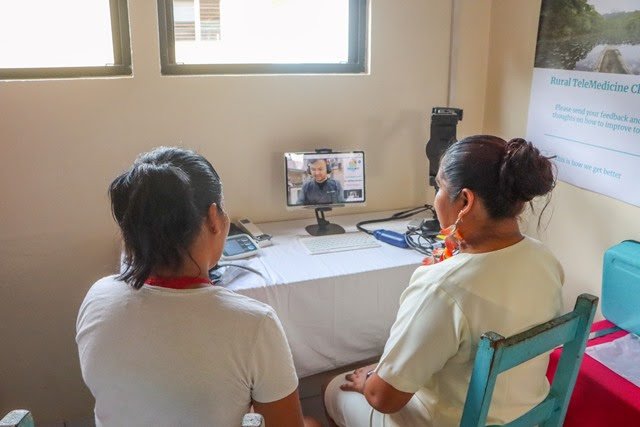
Approximately 150 telemedicine sites have been established to bring specialised healthcare closer to citizens living in remote communities, as Guyana positions itself as a regional leader in digital health services.
Telemedicine allows patients to access clinical services remotely through video calls, telephone consultations and messaging platforms, reducing the need for travel while improving access to acute, chronic and mental healthcare services.

For example, a specialised doctor working in Georgetown can connect directly with a patient and nurse in the hinterland and provide guidance using available technology.
“In some of the remote communities, we have a computer and internet-enabled devices. Some of those devices include things to measure your blood pressure, pulse, and we can do an ECG and ultrasound,” Minister of Health Dr Frank Anthony explained last Sunday while appearing on the Starting Point Podcast.
Dr Anthony said the initiative has transformed healthcare delivery in hinterland and riverine communities, stating that it has proven useful in emergencies, and as a result, lives are being saved.
The programme has already reduced the number of costly medical evacuations from remote communities.
“We have been able to do lots of diagnoses and in cases of emergency, detect very early and move those patients to care,” he said.

In addition, the ministry is exploring the use of drones to strengthen healthcare delivery in these hard-to-reach areas. The drones are currently being tested and can travel approximately 150 kilometres while carrying medical payloads.
As a result of these efforts, Minister Anthony believes Guyana is already emerging as one of the leading countries in the Caribbean in telemedicine.
“I think we are, because I don’t think many of the other countries are doing it.”
The minister noted that regional health officials attending the recent Caribbean Public Health Agency (CARPHA) conference were impressed by Guyana’s progress.
“Some of them have indicated to us that they would like to adopt our systems in their country, and they are asking us for some assistance on how this can be done,” he stated.