






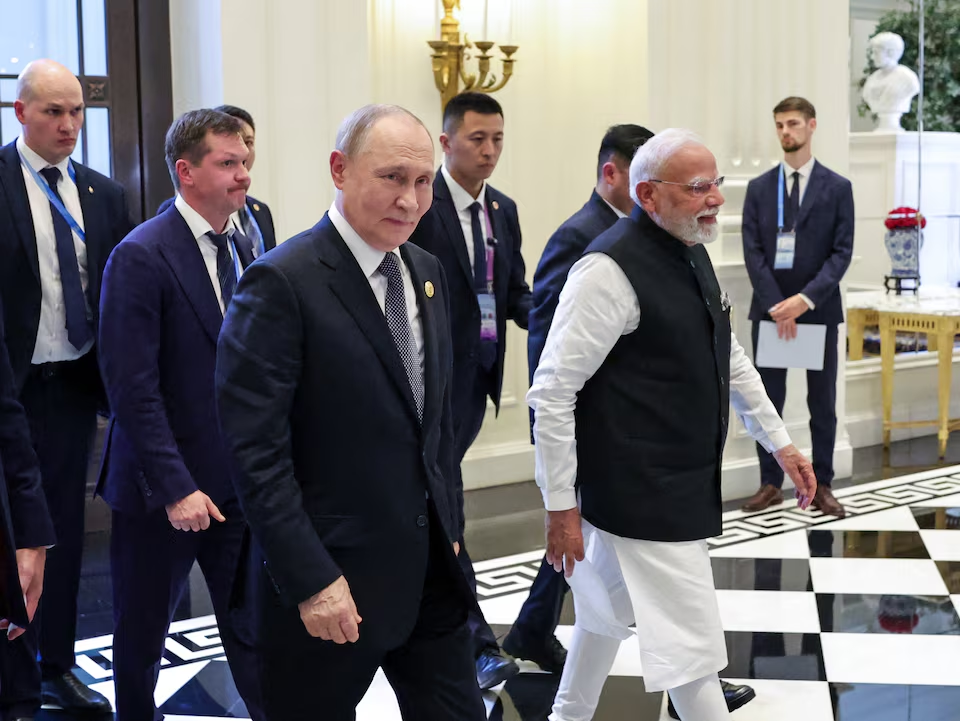
India and Russia reaffirmed the strength of their long-standing partnership as both nations finalised a series of key agreements during President Vladimir Putin’s high-profile visit to New Delhi. The deals, spread across defence, energy, fertilisers, trade and economic cooperation, form the backbone of a new Strategic Economic Roadmap for 2030, signalling a deeper and more future-oriented collaboration between the two countries.
The roadmap aims to expand bilateral trade, reduce supply-chain vulnerabilities, and create long-term joint projects in sectors that are vital to both economies. With India seeking stable partners for energy security and industrial expansion, and Russia looking for reliable markets amid shifting global alignments, the agreements reflect mutual strategic needs.
Major Agreements Finalised
A key highlight was the signing of cooperation agreements between Indian fertiliser companies — India Potash Ltd, Rashtriya Chemicals & Fertilisers Ltd and National Fertilisers Ltd — and Russia’s Uralchem Group. The collaboration includes setting up a gas-based urea plant in Russia, ensuring a steady supply of essential fertilisers to India and reducing dependence on volatile global markets.
In the defence sector, talks continued on critical platforms such as air defence systems and advanced fighters. While no new submarine deal was signed, both sides reaffirmed ongoing cooperation under existing defence agreements, including maintenance, spare parts, and joint manufacturing. Discussions on additional S-400 systems and opportunities in fighter jet technology are expected to continue in upcoming rounds.
Energy cooperation — long considered a cornerstone of India-Russia relations — saw renewed momentum. Both countries explored deeper engagements in crude oil supplies, LNG shipments, nuclear energy projects and collaboration on long-term investments in hydrocarbons. With India’s growing energy demand, these deals carry significant economic and strategic value.
Economic and Trade Boost
The roadmap emphasises increasing bilateral trade to USD 100 billion by 2030, strengthening banking channels, improving logistics, and reducing the trade imbalance between the two nations. Both leaders highlighted the need for stable, predictable economic engagement and more diversified trade baskets on both sides.
Cooperation in critical minerals, technology transfer, pharmaceuticals, heavy machinery, agriculture and railway modernisation is also included in the joint vision for 2030. These areas are positioned as engines for long-term growth and industrial transition.
Strategic Importance
The agreements signed during this summit underline the fact that India and Russia are committed to maintaining a robust and independent strategic partnership, even amid global geopolitical pressures and changing economic landscapes. For India, Russia remains a vital partner in defence, energy, fertilisers and emerging technologies. For Russia, India offers a stable, large and rapidly growing market outside Western blocs.
The new roadmap demonstrates a mutually beneficial vision where both nations seek stronger economic resilience, long-term security cooperation and deeper people-to-people ties. It sets the tone for a decade of strategic collaboration founded on trust, shared priorities and evolving global realities.