






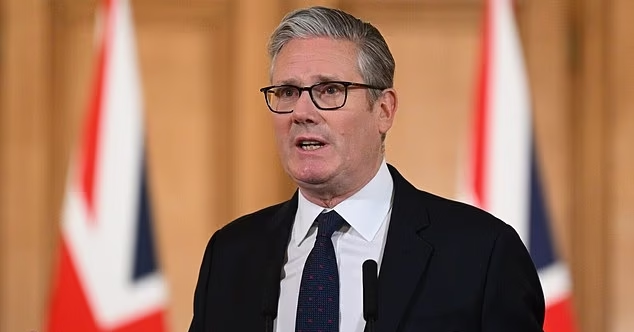
The United Kingdom has announced one of the world’s most far-reaching online safety measures, with Prime Minister Keir Starmer confirming plans to prohibit children under 16 from accessing major social media platforms. The policy, expected to be implemented by Spring 2027, is being described as a historic effort to address growing concerns about the impact of digital platforms on young people’s mental health, safety, and development.
The proposed restrictions will apply to several of the world’s most popular social media services, including TikTok, Instagram, Snapchat, Facebook, X, YouTube, Threads, Twitch, Reddit, and Kick. Technology companies will be required to implement robust age-verification systems to prevent underage users from creating or accessing accounts on these platforms. Messaging services such as WhatsApp and Signal are expected to remain exempt from the ban.
Speaking at the announcement, Starmer said the government had deliberately prioritised children’s welfare over the interests of major technology companies. He argued that unrestricted access to social media has fuelled rising anxiety, cyberbullying, exposure to harmful online content, and excessive screen time among young users. According to the Prime Minister, the new measures are intended to “give children back their childhood” by creating a safer digital environment.
The social media ban is just one element of a broader child-protection strategy. The government also plans to prohibit under-16s from livestreaming on certain platforms and to introduce stricter restrictions on communication between children and unknown adults online. In addition, officials are considering measures to limit the use of AI-powered chatbots designed to simulate romantic or intimate relationships with minors.
Public support for the initiative appears strong. Government consultations found that around 90 per cent of parents favoured setting 16 as the minimum age for social media access. Child safety advocates and campaign groups have welcomed the proposal, arguing that existing regulations have failed to adequately protect young people from online harms.
However, the announcement has also drawn criticism from technology companies and digital rights advocates. Several experts have questioned how the ban will be enforced and warned that some teenagers may attempt to circumvent the restrictions using virtual private networks (VPNs) or alternative platforms. Others have raised concerns about the privacy implications of age-verification systems and the collection of personal data required to verify users’ ages.
The United Kingdom’s move follows similar actions in countries such as Australia, which recently introduced strict age-based social media regulations. However, analysts note that the British proposal goes further by combining social media restrictions with broader controls over gaming platforms, AI technologies, and online interactions involving minors.
Legislation is expected to be introduced before the end of the year, with enforcement mechanisms to be finalised by regulators in the months ahead. If approved by Parliament, the policy could become a global benchmark for governments seeking to strengthen online protections for children in an increasingly digital world.