






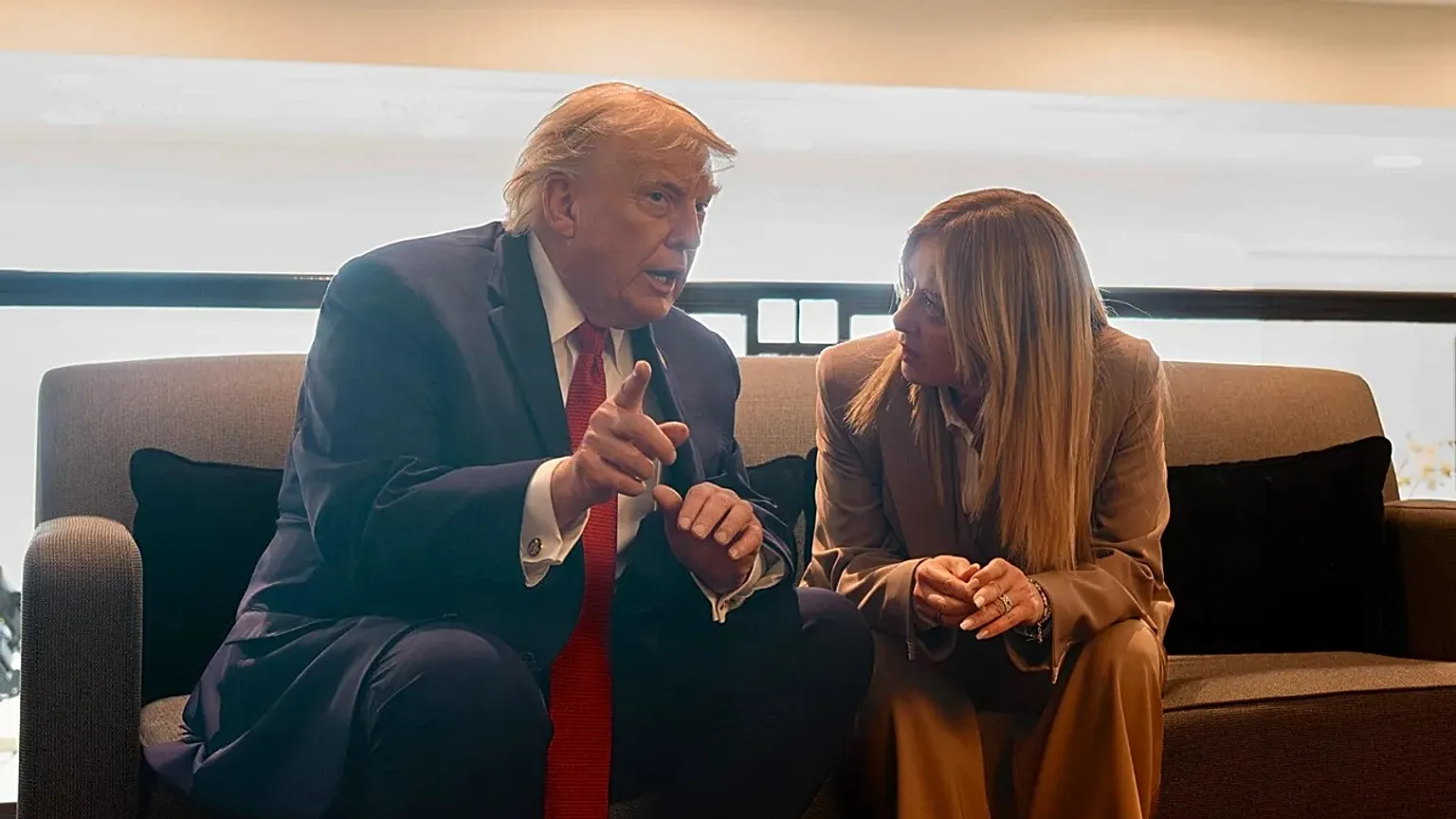
A fresh diplomatic dispute has erupted between U.S. President Donald Trump and Italian Prime Minister Giorgia Meloni following controversial remarks made by Trump about their interaction during the recent G7 Summit in France.
Speaking during an interview with an Italian television network, Trump claimed that Meloni had been eager to take a photograph with him during the summit and suggested that he agreed only out of sympathy. The remarks quickly drew attention across Europe and prompted a strong response from the Italian leader.
Meloni firmly rejected Trump’s account, describing it as entirely false and expressing surprise that such comments were directed toward a long-standing ally. In a public statement, she emphasized that neither she nor Italy would ever need to plead for a photograph or special attention from any world leader.
The disagreement marks a significant downturn in what was once considered a friendly political relationship. Meloni had often been viewed as one of Trump’s closest partners in Europe, but recent disagreements over international issues, including the conflict involving Iran and broader foreign policy matters, have strained ties between the two leaders.
The controversy triggered a wave of criticism across Italy’s political spectrum. Senior government officials condemned Trump’s comments, arguing that they were disrespectful not only to Meloni but also to Italy as a nation. In a sign of the seriousness of the dispute, Italian Foreign Minister Antonio Tajani reportedly canceled a planned trip to the United States following the incident.
Political analysts note that the clash comes at a sensitive moment for transatlantic relations. Both leaders had recently appeared together at the G7 Summit in Évian-les-Bains, where photographs showed them participating in meetings alongside other world leaders. However, the latest exchange has overshadowed those diplomatic engagements and raised questions about the future of cooperation between Washington and Rome.
As reactions continue to emerge from both sides of the Atlantic, the episode highlights how personal remarks between world leaders can quickly evolve into broader diplomatic controversies, particularly at a time of heightened geopolitical tensions.