



In democratic societies around the world, social media has become a powerful platform for citizens to express their views, question governments, and debate social and economic development. Ideally, these platforms should enable voters who elect governments to communicate their expectations, ideas, and concerns transparently and constructively. Unfortunately, the situation in Guyana presents a very different and troubling picture.
Instead of serving as a tool for informed civic engagement, social media in Guyana is increasingly misused to spread gossip, circulate unverified accusations, and fabricate fake news. Innocent individuals are often branded as corrupt without evidence, reputations are damaged overnight, and sensationalism replaces serious discussion. Equally worrying is the quality of the discourse itself. Many comments from opposition followers are written in extremely poor, broken English, raising serious questions about literacy in an English-speaking country. Those who loudly claim to be “intellectuals” also often fail to communicate coherently or responsibly.
During the last elections, the role of money in politics became especially visible. The main opposition forces, the WIN party, headed by a money launderer and a gold smuggler, were widely perceived as being influenced by individuals with questionable financial backgrounds.
Allegations circulated that election campaigning was fuelled by illicit wealth, including proceeds from gold smuggling, money laundering, and tax evasion. This corrupt businessman, particularly Azruddin Mohamed, became a central figure in public debate, with critics alleging that his financial power distorted the democratic process. These allegations have also drawn international attention, with claims that US authorities have sought to have Azruddin and Nazar Mohamed appear before a US court in Miami, Florida, USA, for many criminal activities in the USA. While such matters are for courts and investigators to decide, the perception alone has severely damaged public trust.
The extradition request by the US Attorney General, Pam Bondi, and the Secretary of State, Marco Rubio, for Nazar and Azruddin Mohamed will be decided by the Guyanese court soon.
Azruddin and his father, Nazar Mohamed, must be under tremendous stress to learn that Nicolas Maduro and his wife were captured by US forces in Venezuela and taken to another country. The Mohameds must understand, if they have any intelligence in their heads, that the US government always gets its criminals. Azruddin and Nazar Mohamed must prepare for extended stays in the Miami jail.
Many long-standing supporters of the PNC, particularly among Afro-Guyanese voters, appeared disillusioned and susceptible to financial inducements during the election period. Critics argue that loyalty to party ideology was replaced by short-term personal gain and money, thereby weakening the party’s moral authority.
The claim that social media influencers and vocal activists, including some women who regularly attack the government online, are being financed to shape narratives has further deepened suspicions about coordinated disinformation campaigns. For many observers, this pattern feels like a continuation of political practices dating back to the Burnham era, when control over civic space, the civil service, the police, and the army was seen as a means of maintaining power.
Guyana’s demographic history also helps explain current tensions. Afro-Guyanese make up roughly 29.3% of the population, alongside Indo-Guyanese, Amerindians, Portuguese, and other communities. Historically, access to state power and senior positions was unevenly distributed, prompting many Indo-Guyanese in the 1960s-70s to focus on entrepreneurship and private enterprise. Ironically, some now argue that this push into business was enabled by earlier political exclusion, a reality that still shapes economic and political behaviour today.
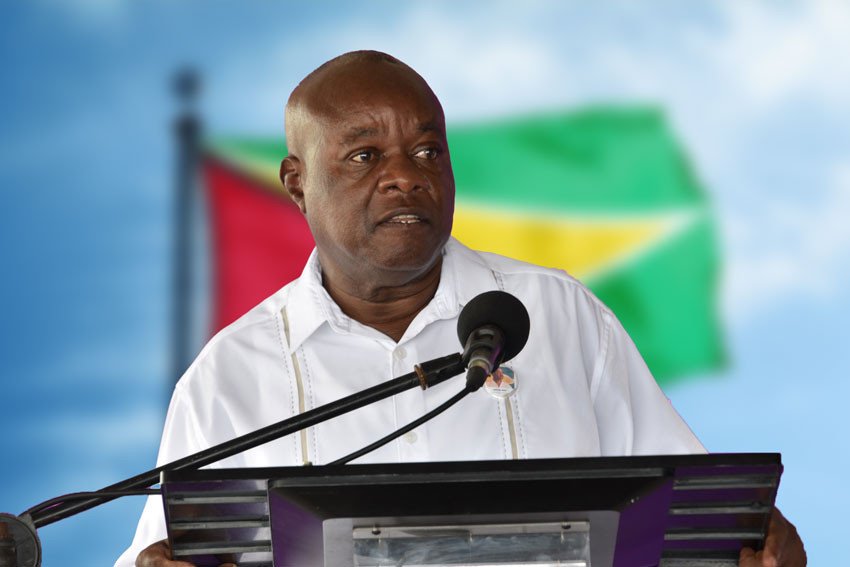
Within the opposition itself, leadership failures are becoming increasingly apparent. The head of a smaller third party, Aubrey Norton of the PNC, chose not to take a parliamentary seat, appointing, as many critics describe, an ineffective substitute, a poodle that barks when its leader whistles. Within the PNC, there appears to be no credible internal challenger capable of uniting the party. Instead of consolidating leadership around figures like Aubrey Norton, sections of the party’s voters are accused of aligning themselves with wealthy outsiders, such as Azruddin Mohamed, further weakening internal discipline and ideological clarity. Before challenging the government, opposition leaders arguably need to convince their own supporters of their integrity and purpose.
Social media usage patterns in Guyana add another layer of concern. TikTok is reportedly used by children aged 12 to 16, while Facebook dominates among users aged 18 and older. There is a limited understanding of digital responsibility, platform rules, or the long-term impact of online behaviour. This lack of awareness makes social media fertile ground for manipulation, misinformation, and political exploitation.
Azruddin Mohamed’s ability to attract votes across ethnic lines, particularly among Afro-Guyanese voters, through his wealth has also sparked intense debate. However, credit must be given to Azruddin for destroying the PNC and AFC.
While he has at times projected an image of Arabic ancestry, critics point out that his family history is more complex. Azruddin allegedly believes that the British colonials stopped their ship carrying indentured workers from India to collect the Azruddin Mohamed ancestors from Saudi Arabia, which was a desert at the time, and bring them to Guyana. The British selected the best sugar and rice farmers from India and sent them to many parts of the world, including Guyana, to work. Saudi Arabia did not have sugar and rice plantations then, and it still does not.
Regardless of ethnicity, many argue that votes should never be bought and that financial power should not replace political vision. That such strategies appear to have worked in Guyana is a serious indictment of the current opposition landscape. Azruddin Mohamed successfully bought PNC and AFC voters. The AFC has disappeared completely, and the PNC has only 12 seats in Parliament.
At this stage, Guyana stands at a critical crossroads. In the view of many analysts and observers, the ruling PPP should resist being dragged into the chaos of social media mudslinging.
Democracy does not collapse overnight. It erodes slowly through the misuse of power, money, and information. Guyana’s future depends on whether its political actors — especially those in opposition — choose responsible leadership over manipulation, and whether social media becomes a platform for progress rather than poison.
Development, economic growth, infrastructure, education, and long-term national planning matter far more than online noise; they must be the Guyanese government’s top priorities.